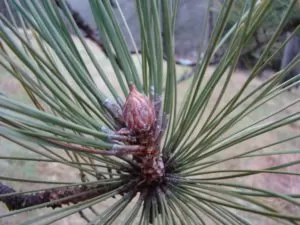
alt text: Close-up of red pine needles and buds, showing the characteristic two needles per fascicle and persistent sheath.
Ever wondered about the majestic evergreens gracing your landscape? Many are likely pine trees, but the world of conifers is diverse and fascinating. Identifying types of pine trees goes beyond just recognizing their needles. This guide will equip you with the knowledge to distinguish between various genera, from the familiar pines to the elegant spruces and the fragrant firs. Let’s embark on this journey of discovery and learn to appreciate the subtle nuances that differentiate these iconic trees.
Contents
While we often use “pine” as a blanket term, many evergreen trees belong to the broader pine family (Pinaceae). Most, but not all, have needles and cones. The term “evergreen” highlights their year-round foliage, although some needles do brown and drop annually. “Conifer” refers to the cone-bearing nature of most of these species, with exceptions like the eastern red cedar and pasture juniper, which bear berry-like cones. In the Northeast, the pine family includes pine (Pinus spp.), spruce (Picea spp.), fir (Abies spp.), hemlock (Tsuga spp.), and larch or tamarack (Larix spp.). The cedar family (Cupressaceae) includes cedar (Thuja) and juniper (Juniperus). Each genus has distinct characteristics, making identification a rewarding endeavor.
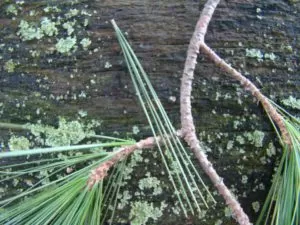
The hallmark of pines is their needle clusters, called fascicles, containing 2, 3, or 5 needles. Hard pines, like Scotch pine (Pinus sylvestris), jack pine (P. banksiana), black pine (P. nigra), and red pine (P. resinousa), have 2 needles per fascicle, while pitch pine (P. rigida) has 3. Their fascicles are wrapped in a persistent paper-thin sheath. The eastern white pine (P. strobus) is a soft pine, meaning its fascicle sheath falls off during the first growing season, giving it a softer appearance. Pine cones have fewer scales compared to other Pinaceae genera. Pines generally require plenty of sunlight.
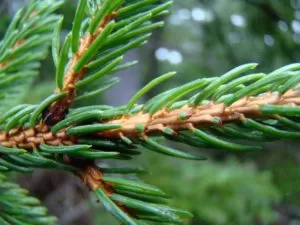
Spruces are distinguished by sterigmata, peg-like projections on the twig where needles attach. These are best seen on older twigs after needles have fallen. Spruce needles are four-sided and attach singly to the sterigmata. Spruce cones have more scales than pine cones, and cone size varies among species. Native spruces include black spruce (Picea mariana), red spruce (P. rubens), and white spruce (P. glauca), listed from smallest to largest cones. Blue spruce (P. pungens) and Norway spruce (P. abies), common in landscapes, are non-native. Spruce often has a pungent aroma. They tolerate shade better than pines.
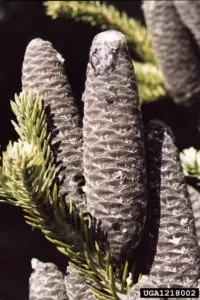
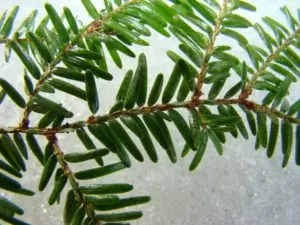
Fir needles attach singly to the twig, leaving a circular pad when they fall. Balsam fir (Abies balsamea), common in New York, features upright 3-inch cones with scales that fall off, leaving a bare stalk. The flat needles are usually arranged in two ranks along the twig. Firs often have a citrusy scent, though balsam fir’s is less pronounced. Young balsam firs may have resin blisters on their bark. They are shade-tolerant.
Eastern hemlock (Tsuga canadensis) resembles balsam fir but has key differences. Hemlock cones are small and pendant, with persistent scales. The foliage has a distinctive “hemlocky” scent. The two-ranked needles include smaller needles on the twig’s upper side. Hemlocks are shade-tolerant.
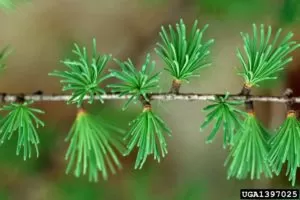
Eastern larch (Larix laricina) stands out with its deciduous needles. The needles appear clustered on spur shoots, short, stubby branches. The cones are small and held upright. European larch (L. decidua) and Japanese larch (L. kaempferi) are commonly planted and have larger cones.
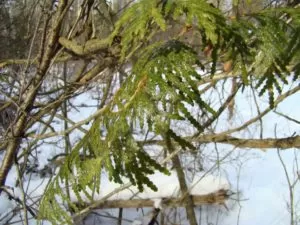
Northern white-cedar (Thuja occidentalis) has keeled, scale-like needles, creating a flattened, folded appearance. The cones resemble miniature wooden roses. It tolerates shade and provides winter cover for wildlife.
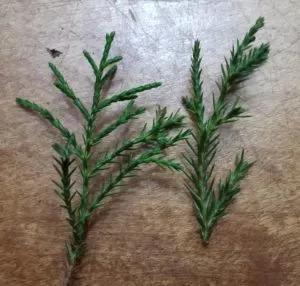
Junipers have two needle types: awl-like and scale-like. Eastern redcedar (Juniperus virginiana) is a tree-sized juniper. Pasture juniper (J. communis) is a shrub with only awl-like needles.
Identifying types of pine trees can be a rewarding experience, opening up a deeper appreciation for the diversity of the natural world. By observing their needles, cones, bark, and overall form, you can unlock the secrets of these majestic trees. Share your newfound knowledge, explore your local forests, and enjoy the beauty that these evergreens bring to our landscapes. We invite you to share your experiences and comments below, and explore more insightful articles on Thelittle.garden.
Wichtigste Erkenntnisse: Der Anbau eigener gemischter Blattsalate bietet unübertroffene Frische und Geschmack – direkt aus…
Here's how implementing no-dig techniques can transform your container gardening: Build Richer Soil: Layers of…
Healthy soil is teeming with beneficial microbes that act as a natural defense system for…
Transform your patio into a vibrant, wildlife-friendly oasis. Discover how to create beautiful, low-maintenance container…
Unlock the secret to a beautiful, resilient garden with Sedum & Yarrow blends. Discover why…
Beat the Heat: Discover resilient perennials that thrive in containers during the hottest summer months,…