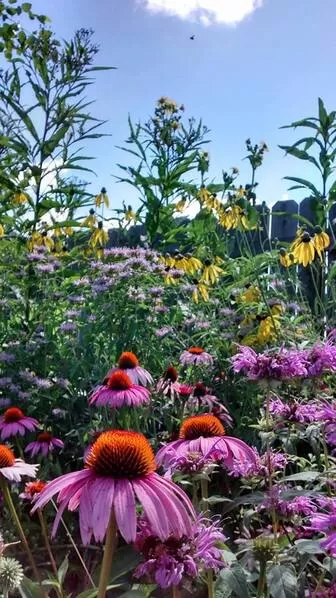
Dense native plant landscaping featuring a mix of grasses and flowering perennials for a naturalistic garden design.
Stepping into the world of native plant landscaping is an exciting journey! We often dream of gardens teeming with beneficial insects, supporting local ecosystems, and thriving with minimal fuss. But sometimes, reality hits, and those beautiful native plants we carefully selected end up looking… a little chaotic, maybe even overgrown. If you’ve ever felt like your native planting efforts resulted in a floppy, mismatched mess rather than a harmonious haven, you’re definitely not alone.
A frequent question I hear isn’t just what native plants to use, but how to make them look good and stay manageable in a typical home garden setting. It often comes after someone receives a less-than-friendly note about their “weedy” yard. While sometimes it’s a lack of maintenance cues like defined edges or paths, a core issue I see time and again is simply using the wrong plant in the wrong place, especially when it comes to height.
Traditionally, garden design follows a clear hierarchy: tall plants in the back, medium in the middle, low growers and groundcovers at the front. This tiered approach creates a sense of order. While we can absolutely adapt this for native plant landscaping, aiming for a more ecological approach – one that focuses on plant communities and density – often yields better results. The mistake comes when the idea of “native” landscaping is misinterpreted as a free pass to just plant any native anywhere.
Consider Grey-headed Coneflower, Ratibida pinnata. Out in its natural prairie habitat, this tall, airy plant has sturdy neighbors like Big Bluestem (Andropogon gerardii) and Indian Grass (Sorghastrum nutans) to lean on. But bring it into an open garden bed, perhaps surrounded by low mulch and shorter plants, and it suddenly stands alone, looking leggy and out of place. Without the natural competition and support of its prairie companions, it can grow taller and floppier than you’d expect.
One strategy is to plant it among other tall plants for support. But if this is a prominent bed in your front yard, creating a dense patch of 4-6 foot tall plants might look overgrown to many people accustomed to shorter garden aesthetics. Plus, those tall plants will inevitably lean towards the best light, adding to the disheveled look. This highlights a crucial point: in the pampered, competition-free environment of a garden bed, native plants often perform too well compared to their wild circumstances. We need to think about mimicking the conditions and interactions they experience naturally.
The goal of authentic native plant landscaping should be to mimic wild conditions by creating plant density and layers. This provides incredible ecological benefits – habitat for insects and birds, improved soil health, better water infiltration, and natural weed suppression (dense planting leaves no room for weeds!). However, in a smaller suburban or urban space, we must choose which natural plant communities translate best to a garden scale.
A powerful strategy is to observe nearby natural areas, like prairies or woodlands depending on your location. See which plants grow together, how densely they grow, and what their overall height and structure are like as a group. In places like eastern Nebraska, for example, you’ll find resilient communities featuring grasses like Little Bluestem (Schizachyrium scoparium) and Sideoats Grama (Bouteloua curtipendula) thriving alongside wildflowers like Dotted Gayfeather (Liatris punctata), Butterfly Milkweed (Asclepias tuberosa), Virginia Mountain Mint (Pycnanthemum virginianum), Winecup (Callirhoe involucrata), and various Sedges (Carex species).
Why do these plants work well together? Not only do their root systems complement each other (some deep, some fibrous), but they also tend to stay within respectable, manageable sizes even in a more fertile garden environment. They form a matrix that covers the ground effectively.
By building your garden around plants that naturally form communities and share similar, manageable growth styles (shape, robustness, spread), you create a harmonious look. If the average height of this core group is around 18-24 inches, you can then strategically add taller architectural elements like Rough Blazing Star (Liatris aspera) or Rattlesnake Master (Eryngium yuccifolium) for visual interest and structure without the whole bed becoming an unruly thicket.
At the heart of successful, lower-maintenance native plant landscaping is designing for density. Plants should intermingle and cover the ground, leaving no space for weeds to take hold. This naturalistic approach not only looks beautiful but also replicates the conditions where native plants thrive and outcompete unwanted species.
An ancillary tip, especially for smaller beds or new native gardeners, is to limit the number of different plant species you use initially. This prevents the space from feeling visually overwhelming and allows you to learn how each plant grows and interacts in your specific garden conditions. As you gain experience and confidence over the years, you can gradually introduce more diversity. Remember, every garden is a unique ecosystem, and what works perfectly in one spot might need adjustment in another.
Ultimately, the goal of native plant landscaping for the home gardener is to create a beautiful, functional space that supports nature and brings joy without becoming a constant battle against unruly growth or weeds. By focusing on plant selection based on growth habits and the idea of building compatible plant communities, you can unlock the secret to a truly thriving native garden.
What has your experience been when bringing “wild” native plants into your urban or suburban garden? Share your thoughts and tips in the comments below! If you found this helpful, please share it with fellow garden enthusiasts, and explore more of our articles for inspiration for your little garden.
Key takeaways: Discover 5 enchanting flowers to create a magical fairy garden Learn the symbolic…
Watermelon Red Crape Myrtle is a classic, versatile tree with stunning pink-red blooms Grows 20-25…
Key Takeaways: Oriental lilies are prized for their large, fragrant blooms They thrive in well-draining…
Key takeaways: Amaranth is easy to grow in containers, perfect for beginners and experienced gardeners…
Vibrant, low-maintenance flowers for sunny spots Continuous color throughout summer Perfect for borders, ground cover,…
Here's how implementing no-dig techniques can transform your container gardening: Build Richer Soil: Layers of…