Bright yellow Black-Eyed Susan flower with dark center cone in a sunny garden bed
Growing a vibrant, colorful garden doesn’t have to mean endless hours of work. Imagine flowers that return year after year, blooming reliably and asking for little in return. That’s the magic of perennial flowers. For anyone starting their gardening journey, or simply seeking more beauty with less fuss, selecting the right perennials is the key. These hardworking plants form the backbone of a beautiful landscape, providing consistent color and structure season after season.
Forget the hassle of replanting every spring. This guide introduces you to 20 fantastic, easy-to-grow perennial flowers perfect for beginners. We’ll delve into why these specific plants are so forgiving, offer tips for success, and share their key characteristics to help you choose the perfect blossoms for your own little garden haven. Get ready to discover the joy of effortless beauty!
Let’s start with the basics. In the world of gardening, plants are often categorized by their life cycle. Annuals are like fleeting fireworks – they burst onto the scene with incredible color for one season and then they’re gone, requiring you to replant them each year. Think petunias or impatiens.
Perennial flowers, on the other hand, are the enduring stars of the show. They live for more than two years, returning from their roots each spring after dying back in the fall or winter (depending on your climate). They provide the consistent structure and returning color that defines a garden’s identity. While annuals offer pops of seasonal flair, perennials are the reliable foundation, the friends you can count on year after year.
The beauty of perennials is that once they’re established, many require significantly less attention than annuals. Fewer pesticides, less frequent watering (once mature), and minimal pruning are common benefits. However, just like people, not all perennials are created equal in terms of how easy they are. With thousands of varieties out there, some are incredibly tough and low-maintenance, while others demand more specific care. This article focuses squarely on the “easy button” varieties!
Building a garden should be a joy, not a chore. The perennial flowers highlighted here have earned their reputation for being remarkably easy for several key reasons:
Choosing plants with these characteristics sets you up for gardening success, allowing you to spend more time enjoying your beautiful blooms and less time worrying about them.
While you can plant perennials almost any time the ground isn’t frozen, the absolute best windows for planting are typically fall and spring.
Planting in summer is possible, especially for potted plants, but it requires much more vigilant watering to help the plant cope with the heat and transplant stress. Whichever season you choose, ensure the plant gets adequate water during its first year as it establishes its root system.
Selecting native perennials whenever possible is also a wonderful practice. Plants that naturally grow in your region are already adapted to the local climate and soil conditions, making them inherently easier to grow and more beneficial for local pollinators and wildlife.
Ready to fill your garden with color that comes back year after year? Here are 20 simple, rewarding perennial flowers perfect for getting started.
These cheerful, daisy-like flowers are a garden classic for a reason. With sturdy stems topped by golden petals and a dark, cone-shaped center, Black-Eyed Susans (Rudbeckia hirta) bring sunny color, often blooming from late summer through fall. They are incredibly tough and adaptable. A popular cultivar, ‘Goldsturm’, is known for its prolific flowering, while ‘Early Bird Gold’ extends the bloom season even earlier.
A true superstar of the North American garden and a pollinator magnet, Purple Coneflower (Echinacea purpurea) features distinctive daisy-like flowers with petals that droop slightly downwards, surrounding a prominent, often spiky, central cone. These tough plants come in shades of purple, pink, and sometimes white, blooming from midsummer into fall. Butterflies and bees adore them, and their seed heads provide winter interest and food for birds. They are also known for their use in herbal remedies.
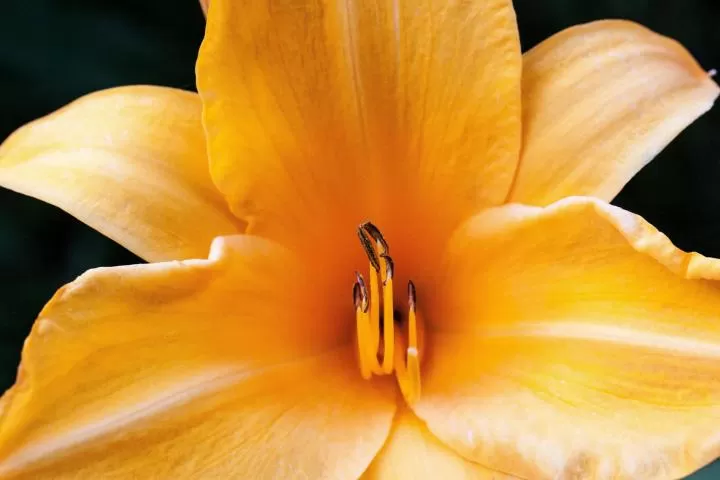
Often called the “perfect perennial” because they are so adaptable and low-maintenance, Daylilies (Hemerocallis spp.) are incredibly versatile. While each individual flower only lasts for a single day (hence the name), a single stem produces many buds, and a mature plant can send up dozens of stems, providing a long-lasting display. Available in a stunning array of colors, sizes, and bloom times, from early summer to fall. The popular ‘Stella de Oro’ cultivar is a reliable rebloomer.
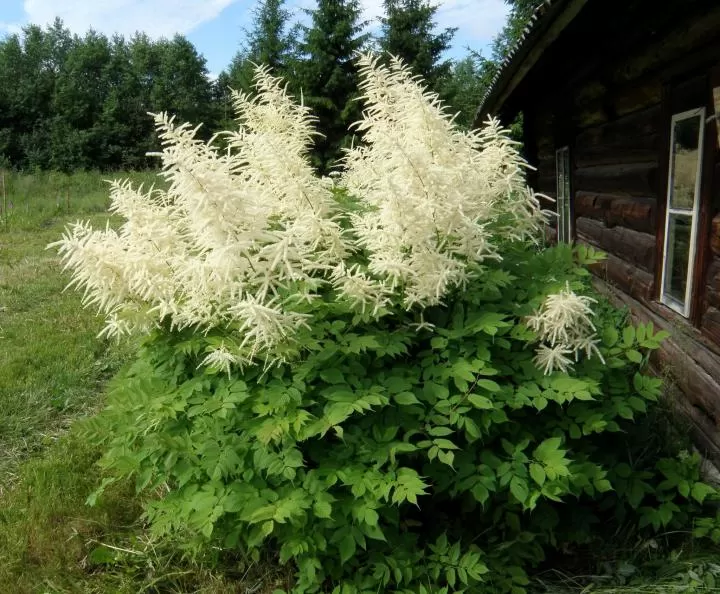
For a touch of airy elegance, consider Goatsbeard (Aruncus). This large, tough perennial features dramatic, fern-like foliage and produces stunning plumes of frothy, creamy-white flowers in early summer. It’s a statuesque plant that provides texture and height in the garden and is known for its longevity, potentially living for decades. Give it some space as it matures over several years.
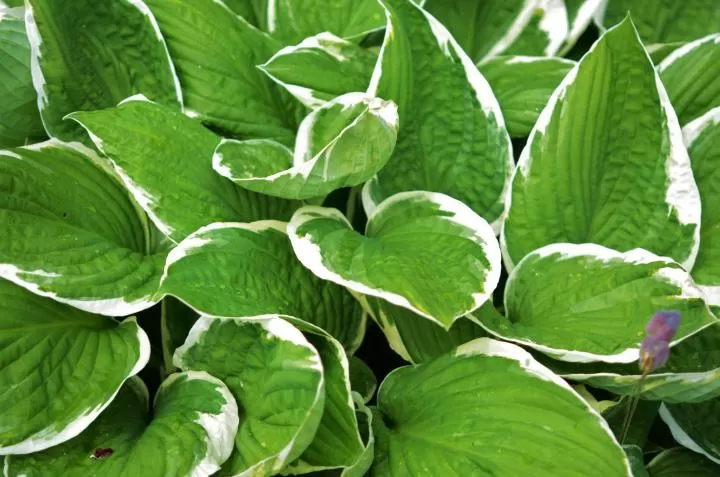
A staple for shady gardens, Hostas are primarily grown for their stunning foliage, which comes in an incredible variety of sizes, shapes, textures, and colors – from deep greens and blues to chartreuse and variegated patterns of yellow, white, and cream. While their trumpet-shaped white or purple flowers are generally less showy, some varieties offer fragrant blooms. Hostas are incredibly tough, but be mindful of slugs and deer, who find them particularly tasty. Choosing slug-resistant varieties with thicker leaves can help.
A true heirloom flower, Peonies (Paeonia spp.) are renowned for their massive, showy, and often fragrant blooms in late spring to early summer. Available in shades of pink, white, red, yellow, and coral, with flower forms ranging from single to bomb-double. Peonies are incredibly long-lived, often thriving in the same spot for generations. While some double varieties may need staking to support their heavy blooms, their beauty makes the minimal effort worthwhile. Their glossy foliage remains attractive throughout the summer.
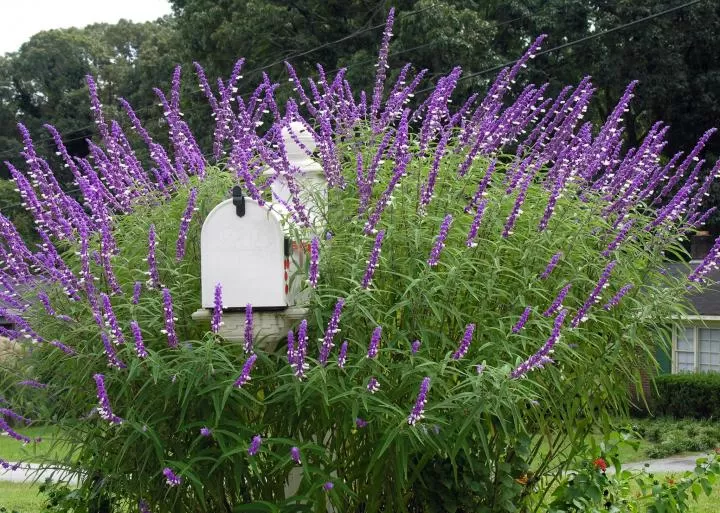
Salvias (also known as Sages) are workhorses in the garden, offering long bloom periods, often from late spring through fall. They feature spiky flower stalks in vibrant blues, purples, pinks, and reds, often with aromatic foliage. Many varieties are relatively compact, making them suitable for the front of borders. Salvias are magnets for hummingbirds and butterflies and are generally low-maintenance and drought-tolerant once established.
With their tall, spiky stalks lined with tubular, bell-shaped flowers, Foxgloves (Digitalis purpurea) add a vertical accent and old-fashioned charm to the garden. They are particularly effective planted at the back of a border. Common foxglove is a biennial (blooms in its second year and then dies), but it readily self-seeds, giving the appearance of a perennial patch. New perennial varieties are also available. Foxgloves are typically deer and rabbit resistant.
Offering unique color and texture, Cushion Spurge (Euphorbia polychroma) forms a neat, mounded shape with bright green foliage. In early spring, it bursts into bloom with brilliant, chartreuse-yellow flowers (actually modified leaves or “bracts”), creating a stunning display. The color changes to yellow in summer and develops fiery red tones in the fall. This plant is drought-resistant, deer-resistant, and attracts butterflies, making it a wonderful, low-care addition to borders.
With its delicate, bell-shaped flowers and intricate spurred petals, Columbine (Aquilegia) brings woodland charm to the garden. Available in a variety of colors, often bicolors, these nodding blooms are particularly attractive to hummingbirds. While individual plants may be relatively short-lived perennials, they readily self-seed, ensuring a continuous presence in your garden for years. They thrive in conditions mimicking their native woodland habitat.
Providing a long season of hazy, soft color and texture, Russian Sage (Perovskia atriplicifolia) is a woody perennial known for its upright, silvery-white stems, aromatic gray-green foliage, and cloud-like panicles of lavender-blue flowers. It blooms from midsummer into fall and is exceptionally drought-tolerant once established. This robust plant is a magnet for pollinators and its airy form provides a beautiful contrast to bolder plants.
A favorite for late-season color and architectural interest, Showy Stonecrop (Hylotelephium, formerly Sedum) is incredibly easy to grow. These succulents feature thick, blue-green leaves on upright stems, topped by broccoli-like clusters of flowers that open pink or white and mature to a deep reddish-pink or russet in the fall. The dried flower heads provide winter interest and structure. They are drought-tolerant and rarely bothered by pests.
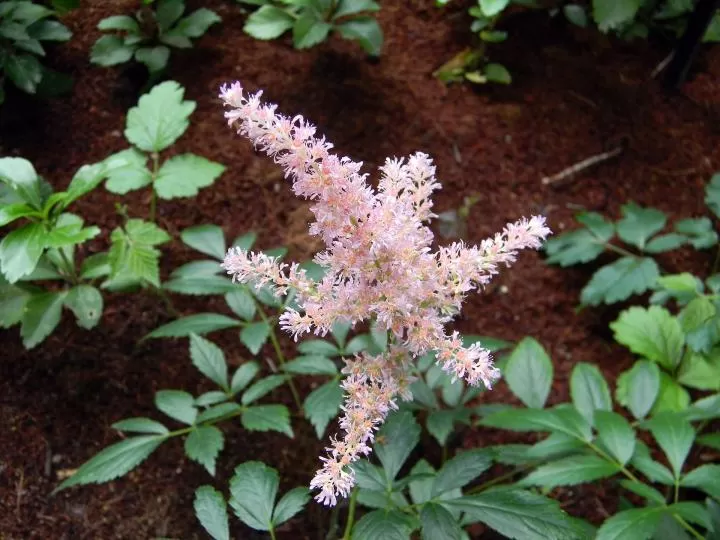
Bringing feathery texture and vibrant color to shady spots, Astilbe (Astilbe x arendsii) is a lovely choice for borders and woodland gardens. It forms mounds of attractive, fern-like foliage topped by upright, fluffy plumes of flowers in shades of pink, red, and white. Astilbe thrives in moist, shady conditions and requires minimal care beyond ensuring it doesn’t dry out, particularly in warmer climates.
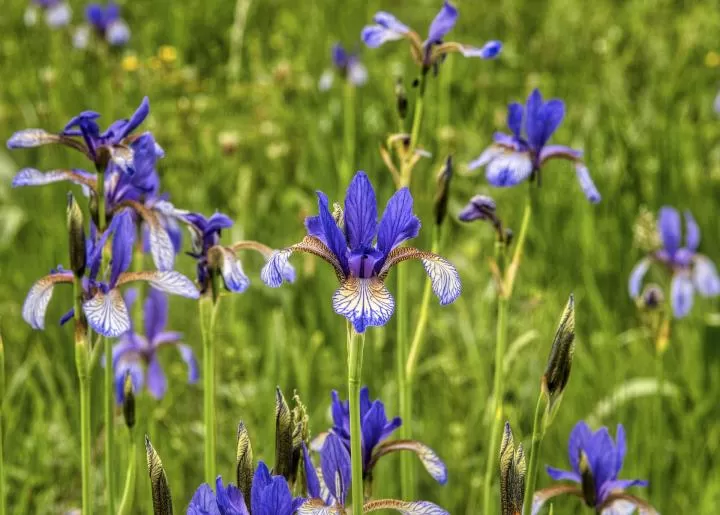
Often considered the easiest type of Iris to grow, Siberian Iris (Iris sibirica) is a reliable perennial that produces abundant, delicate blooms in shades of purple, blue, pink, white, and yellow. Its attractive, grass-like foliage remains upright and tidy throughout the season, unlike some bearded irises whose foliage can flop. Siberian Iris is adaptable, long-lived, and thrives in a variety of conditions, blooming reliably in late spring to early summer.
A classic garden favorite available in both upright and creeping forms, Garden Phlox (Phlox paniculata) produces fragrant clusters of flowers in pastel shades of pink, purple, and white throughout the summer. Creeping Phlox (Phlox subulata) forms a mat of foliage covered in blooms in spring. Most species prefer full sun and well-drained soil. Phlox is another fantastic plant for attracting butterflies and hummingbirds to your garden.
False Indigo (Baptisia australis) is a stately, upright perennial that earns its place in the garden with attractive blue-green, clover-like foliage and striking spires of blue-lavender, lupine-like flowers in late spring to early summer. Native to much of North America, it is incredibly tough, drought-tolerant, and rarely bothered by deer. The plant forms decorative dark seed pods in the fall, adding interest. A long-lived and carefree plant, it’s also a great choice for attracting butterflies.
Bringing sunny, late-season color, False Sunflower (Heliopsis helianthoides) is a rugged perennial often found growing wild along roadsides. This upright plant features daisy-like flowers with bright yellow-orange petals surrounding a yellow or orange center cone. It blooms prolifically from midsummer to fall, brightening up the garden when many other plants are finished. False Sunflower is drought-tolerant and adapts to average or even poor soils, making it incredibly easy to grow. It’s also a good source of nectar for late-season pollinators.
A favorite of bees, butterflies, and hummingbirds, Bee Balm (Monarda spp.) is a pollinator powerhouse! This native perennial features unique, spiky, whorled flowers in shades of pink, red, purple, and white, blooming from mid to late summer. The foliage is often fragrant, smelling minty, which helps deter deer. Bee Balm prefers moist soil and good air circulation to prevent powdery mildew, but many newer cultivars are more resistant.
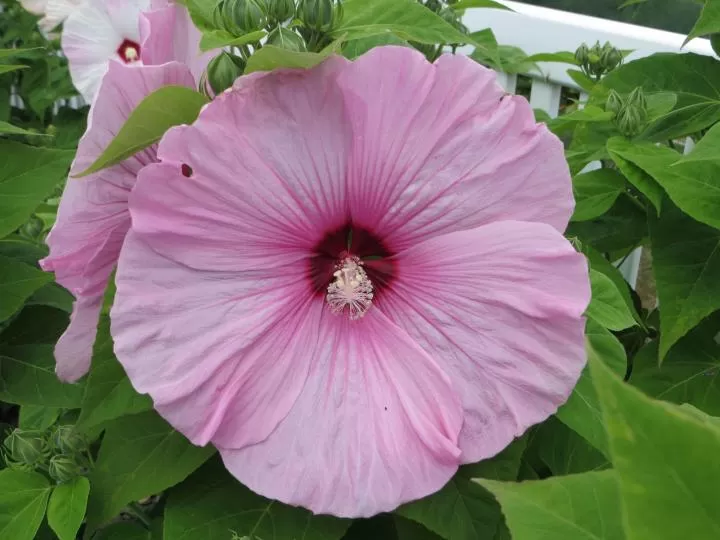
For a splash of tropical flair that’s surprisingly hardy, Perennial Hibiscus (Hibiscus moscheutos and related hybrids), also known as Rose Mallow, is a fantastic choice. These plants die back completely to the ground in winter but emerge late in spring to grow rapidly, producing dinner-plate-sized flowers in shades of white, pink, and red from midsummer into fall. Native to the eastern U.S., they thrive in sunny locations with consistent moisture. Deer tend to avoid them, but pollinators love their huge blossoms. They are not recommended for containers as they need significant root space and consistent water.
A glorious native perennial that signals the arrival of fall with a burst of color, New England Aster (Symphyotrichum novae-angliae, formerly Aster novae-angliae) is a must-have for late-season gardens. These tall, upright plants are covered in showy daisy-like flowers with ray petals in shades of lavender, blue, pink, and white, surrounding a yellow center. Asters are crucial food sources for pollinators preparing for winter. They can grow quite tall and dense, adding significant presence to the fall landscape.
Embracing perennial flowers is one of the most rewarding steps you can take in your gardening journey. They offer the promise of returning beauty, reduced maintenance, and a more sustainable landscape. The 20 varieties highlighted here are just a starting point, chosen specifically for their resilience and ease of care, making them perfect choices for beginners or anyone looking to add reliable color without the fuss.
Imagine your garden evolving year after year, becoming richer and more established with each passing season thanks to these hardworking plants. Choose a few that catch your eye, suit your growing conditions, and get them in the ground. You’ll be amazed at how much beauty they provide with so little effort.
Have you grown any of these easy perennials? Do you have other favorite low-maintenance perennial flowers you’d recommend? Share your experiences and tips in the comments below!
Ready to learn more? Explore other helpful articles on Thelittle.garden for tips on perennial garden care and more plant profiles.
Key takeaways: Discover 5 enchanting flowers to create a magical fairy garden Learn the symbolic…
Watermelon Red Crape Myrtle is a classic, versatile tree with stunning pink-red blooms Grows 20-25…
Key Takeaways: Oriental lilies are prized for their large, fragrant blooms They thrive in well-draining…
Key takeaways: Amaranth is easy to grow in containers, perfect for beginners and experienced gardeners…
Vibrant, low-maintenance flowers for sunny spots Continuous color throughout summer Perfect for borders, ground cover,…
Here's how implementing no-dig techniques can transform your container gardening: Build Richer Soil: Layers of…