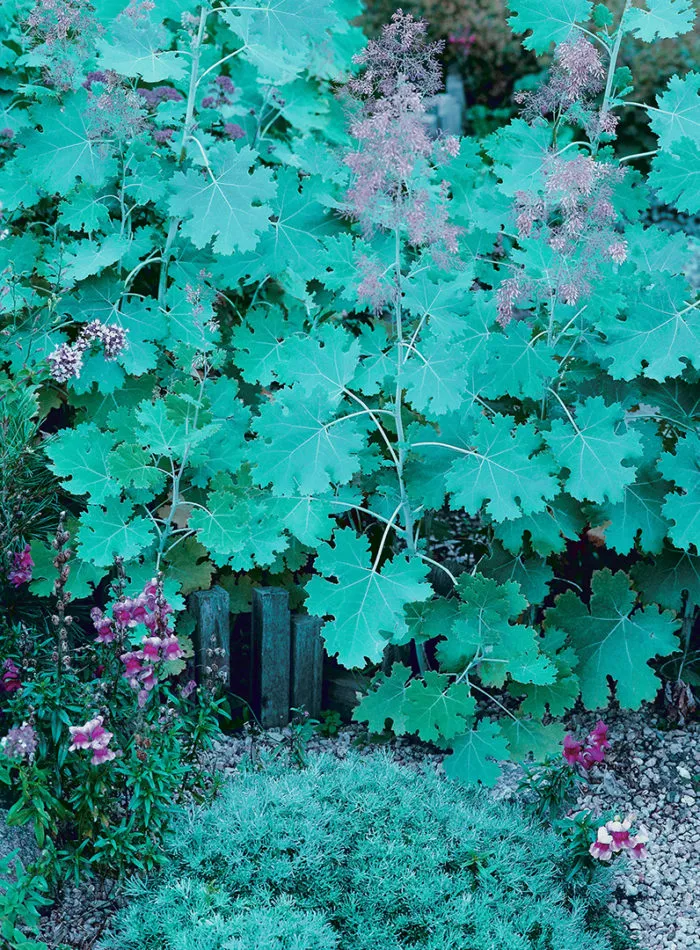
Large plume poppy leaves tower over finely textured, low-growing pussytoes
Here’s what you’ll discover about creating stunning garden textures:
Ever wished for a garden that captivates you year-round, pulling your gaze from one delightful spot to another? The secret often lies not just in colorful blooms, but in the fascinating world of texture. Thinking about gardening like a kind of “alchemy” – the ancient art of transforming simple elements into something extraordinary – has helped me unlock this magic. By thoughtfully combining plants and materials with radically different textures, we can create captivating garden pictures, compositions that feel far richer and more exciting than their individual parts. Let’s explore how focusing on texture-based foliage pairings can elevate your garden design from simply pretty to truly unforgettable.
One of the most exciting ways to create visual energy in the garden is by placing things that are fundamentally different right next to each other. Think rough against smooth, large against small, or upright against weeping. This principle of contrasting opposites is incredibly effective when working with plant textures.
Putting a plant with huge, bold leaves next to one with tiny, delicate foliage immediately highlights the unique qualities of each. For instance, the towering presence and expansive leaves of Plume Poppy create a striking contrast when paired with the fine, ground-hugging texture of Pussytoes.
Here’s a look at these contrasting textures:
Ornamental grasses are fantastic for exploring textural opposites. The rigidly vertical, feathery plumes of Feather Reed Grass (Calamagrostis acutiflora ‘Karl Foerster’) make a dramatic statement next to a soft, billowy clump of Hairy Brome (Bromus ramosus). Even if their color is similar later in the season, their completely different forms provide compelling visual interest. Add the spiky, almost alien-looking blue orbs of Flat Sea Holly (Eryngium planum), and you introduce yet another layer of intriguing texture to the composition.
Varying plant height also works hand-in-hand with texture to create dynamic arrangements. Consider setting groups of smaller plants with intricate details against a backdrop of taller, bolder textures. This layered approach adds depth and movement to your garden beds.
A garden isn’t static; it’s a constantly evolving tapestry. Recognizing that plants offer different textural gifts throughout the seasons opens up a world of design possibilities. A plant might start with soft, downy leaves in spring, offer silky flowers in summer, and finish the year with dramatic, spiky seed heads. All these phases contribute unique textures.
Love-in-a-mist (Nigella damascena) is a perfect example of a plant that changes its look dramatically. Its delicate, ferny foliage gives way to whimsical, frilly flowers, which then transform into fascinating, swollen seedpods with a distinctly prickly appearance. Paired with the warm, rounded blossoms of Blanket Flower (Gaillardia spp.), the cool, spiky texture of the Love-in-a-mist seedpods creates a captivating contrast that begs a closer look.
Let’s look at these evolving beauties:
Grasses aren’t just useful for their form; their seed heads add incredible fine texture. The airy, wand-like seed heads of Sheep’s Fescue (Festuca ovina) float above the ground, providing a sense of lightness and fragility. This offers a wonderful contrast to the more robust, intricate leaves of plants like Bloody Cranesbill (Geranium sanguineum) or the dense, spreading texture of Cypress Spurge (Euphorbia cyparissias).
Don’t limit your textural thinking to just plants! The non-living elements in your garden – the hardscape – are powerful allies in creating visual interest through texture. Gravel paths, smooth ceramic pots, and rugged boulders all have their own distinct “feel.”
The trick is to combine the hard, smooth, or coarse texture of these inorganic elements with something visually different from the plant world. Imagine a smooth, glazed ceramic pot placed next to a rough gravel path. The contrast between the sleek pot and the bumpy stones is immediately apparent. Add a plant with fuzzy foliage, like Borage (Borago officinalis), tumbling over the edge, and you introduce a soft, yielding texture that plays against both the pot and the gravel. Even the colors – the blue of the borage flowers, the warm tone of the pot, the earthy gravel – work together in this textural tableau.
Strategically placed boulders can ground a planting, providing a sense of permanence and solidity. Their rugged surface offers a resting place for the eye amid the softer, more dynamic textures of foliage and flowers. Planting tufts of finely textured grass or delicate plants near these stones creates a recurring, textural theme that helps tie different parts of the garden together. It’s like echoing the larger landscape (if you’re lucky enough to garden near mountains!) on a smaller, more intimate scale.
While the play of opposites is key to creating exciting texture-based foliage pairings, it’s important not to overdo it. Too much contrast can become overwhelming and chaotic, turning dynamic into simply messy. The goal is to create a harmonious dialogue, a graceful dance between textures, rather than a shouting match.
Achieving this balance takes practice and observation. There’s no hard and fast rule; it comes down to trusting your own eye and instincts. Walk around your garden, look closely at the combinations, and see how they make you feel.
We all make mistakes in the garden – I certainly have! If a pairing feels “over the top,” don’t fret. Plants and small objects can be easily moved. Refining and improving the garden is part of the joy. Watching your garden grow and evolve, experimenting with the endless possibilities of texture-based foliage pairings, is a journey of discovery. Embrace the process, and you’ll find that the alchemy of combining simple elements can indeed transform your garden into something truly golden.
What are your favorite texture pairings in the garden? Share your thoughts in the comments below! If you enjoyed this article, please share it with fellow gardeners, and explore more tips and inspiration on Thelittle.garden.
Here's how implementing no-dig techniques can transform your container gardening: Build Richer Soil: Layers of…
Healthy soil is teeming with beneficial microbes that act as a natural defense system for…
Transform your patio into a vibrant, wildlife-friendly oasis. Discover how to create beautiful, low-maintenance container…
Unlock the secret to a beautiful, resilient garden with Sedum & Yarrow blends. Discover why…
Beat the Heat: Discover resilient perennials that thrive in containers during the hottest summer months,…
Variegated Pothos, like the Golden Pothos and Marble Queen, are stunning, easy-care houseplants perfect for…