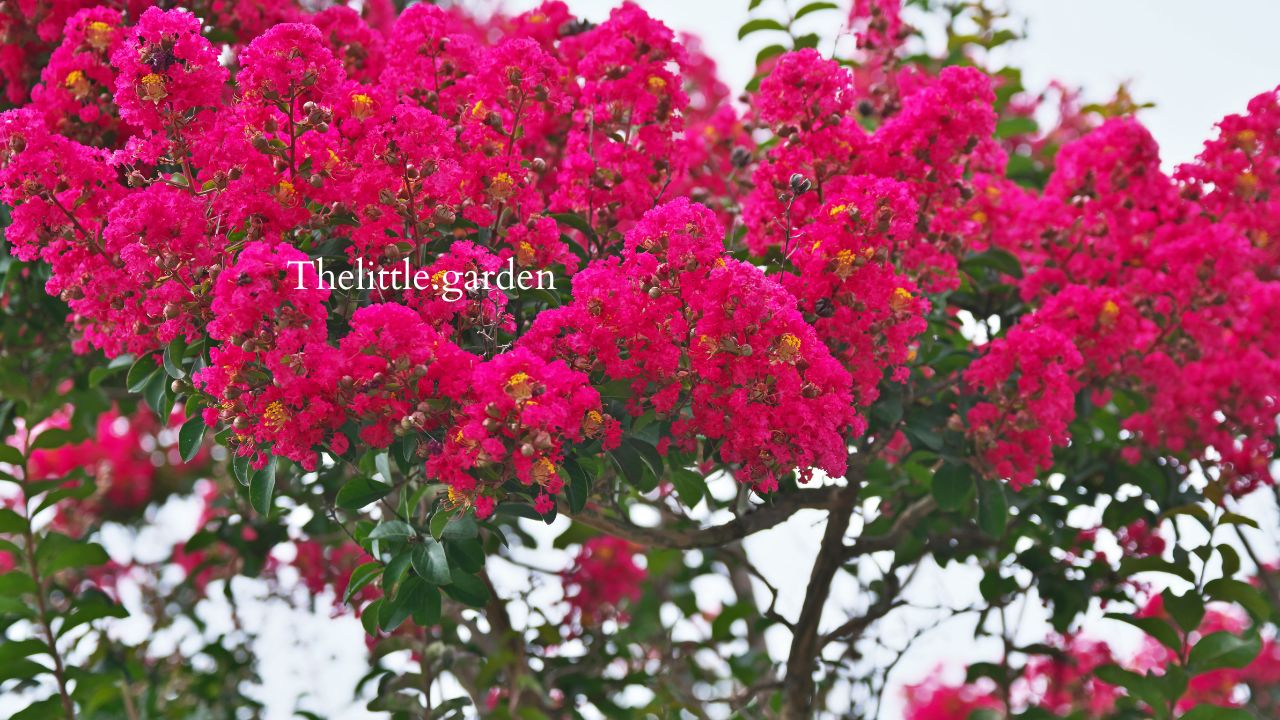
Watermelon Red Crape Myrtle: A Timeless Beauty for Your Garden
Imagine stepping into your garden on a warm summer day, greeted by the vibrant sight of a Watermelon Red Crape Myrtle in full bloom. Its luscious pink-red flowers, reminiscent of juicy watermelon flesh, dance in the breeze, creating a breathtaking focal point that’s sure to turn heads. This timeless beauty has been captivating gardeners for nearly a century, and it’s not hard to see why. Let’s dive into the world of this magnificent tree and discover how it can transform your outdoor space into a paradise of color and charm.
The Watermelon Red Crape Myrtle is a true showstopper in the garden. Its most striking feature is, of course, the abundance of vibrant pink-red blooms that adorn the tree from mid-summer through early fall. These foot-long sprays of crinkled, crepe-paper-like flowers are a sight to behold, creating a spectacular display that’s sure to be the envy of your neighborhood.
But the beauty of this tree doesn’t end with its flowers. As garden expert Sarah Green notes, “The Watermelon Red Crape Myrtle is a tree that offers year-round interest. From its attractive mottled bark in winter to its lush green foliage in summer and brilliant fall colors, it’s always a treat for the eyes.”
Standing at a modest 20-25 feet tall with a similar spread, the Watermelon Red Crape Myrtle is perfect for smaller gardens or as a striking accent in larger landscapes. Its broad, rounded crown creates a beautiful silhouette, whether you choose to grow it as a single-trunk specimen or a multi-stemmed tree.
Landscape designer Tom Brown shares, “I love using Watermelon Red Crape Myrtles in my designs. Their compact size makes them versatile enough to fit in almost any garden, and their stunning form adds structure and elegance to the landscape.”
To ensure your Watermelon Red Crape Myrtle thrives, follow these key guidelines:
While this tree flourishes in USDA Zone 7 and warmer, don’t despair if you’re in Zone 6. Horticulturist Emily White explains, “In Zone 6, the Watermelon Red Crape Myrtle may experience some winter damage, but it can still be grown as a large shrub. The amazing thing is, even with this setback, it will still produce an abundance of flowers each year.”
One of the great advantages of the Watermelon Red Crape Myrtle is its low-maintenance nature. Here are some tips to keep your tree looking its best:
Arborist John Smith advises, “Less is more when it comes to pruning Crape Myrtles. The natural form of the tree is beautiful on its own, and excessive pruning can actually harm the tree’s structure and flowering potential.”
The versatility of this tree makes it a fantastic addition to various garden styles. Here are some creative ways to use it in your landscape:
Garden designer Lisa Johnson shares her experience, “I once used a trio of Watermelon Red Crape Myrtles to frame a client’s outdoor dining area. The effect was magical – the trees provided just enough shade during summer meals, and the vibrant blooms created a stunning backdrop for entertaining.”
The Watermelon Red Crape Myrtle’s story is as fascinating as the tree itself. Introduced in the 1920s, it quickly became a beloved variety in the southern United States. Its enduring popularity is a testament to its beauty and resilience.
Historian Dr. Robert Green notes, “The Watermelon Red Crape Myrtle represents a beautiful blend of Eastern and Western horticultural traditions. Its journey from China to Europe and then to America reflects the global nature of plant cultivation and the timeless appeal of beautiful flowering trees.”
The Watermelon Red Crape Myrtle is more than just a tree – it’s a living work of art that can transform your garden into a vibrant oasis. With its stunning flowers, attractive bark, and low-maintenance nature, it’s no wonder this classic variety has stood the test of time.
Whether you’re a seasoned gardener or a newcomer to the world of landscaping, the Watermelon Red Crape Myrtle offers an opportunity to add a touch of timeless beauty to your outdoor space. So why not plant one (or several) in your garden this season? Your future self will thank you as you sit in the dappled shade of its canopy, surrounded by a sea of watermelon-hued blooms.
We’d love to hear about your experiences with Crape Myrtles or any questions you might have about incorporating this stunning tree into your landscape. Leave a comment below or share this article with fellow garden enthusiasts. Happy gardening!
Key takeaways: Discover 5 enchanting flowers to create a magical fairy garden Learn the symbolic…
Key Takeaways: Oriental lilies are prized for their large, fragrant blooms They thrive in well-draining…
Key takeaways: Amaranth is easy to grow in containers, perfect for beginners and experienced gardeners…
Vibrant, low-maintenance flowers for sunny spots Continuous color throughout summer Perfect for borders, ground cover,…
Here's how implementing no-dig techniques can transform your container gardening: Build Richer Soil: Layers of…
Healthy soil is teeming with beneficial microbes that act as a natural defense system for…