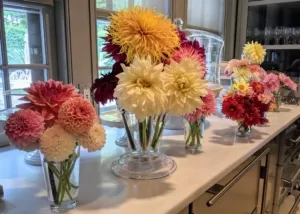
Cut dahlia blooms in various colors arranged in glass vases on a servery counter.
Dahlias are the showstoppers of the late summer and fall garden! Their incredible range of hues and fascinating forms can transform any space into a vibrant paradise.
As the garden enters its peak display, nothing quite captures the eye like a bed bursting with colorful dahlia varieties. From delicate pastels to fiery reds and oranges, these beauties offer something for every taste. Growing dahlias might seem daunting, but with a few simple tips, you can enjoy their spectacular show in your own garden. Let’s dive into the wonderful world of dahlias and discover why they are a must-have for adding reliable, late-season color.
Beyond their undeniable beauty, colorful dahlias bring life to the garden when many other blooms are starting to fade. Their extended flowering period means you can enjoy fresh flowers for months on end. Whether you’re planting them in borders, containers, or dedicated cutting gardens, dahlias provide a visual feast that attracts admiration and beneficial insects alike. Their structure and height can also add wonderful dimension to garden beds.
One of the most captivating aspects of dahlias is their astonishing color palette. You can find these vibrant flowers in shades of white, every imaginable pink, striking reds, sunny yellows, warm oranges, and deep purples. Many varieties also feature stunning combinations, with bi-colors, stripes, and tips adding extra flair.
While you won’t find a true blue dahlia (despite historical attempts!), breeders have come remarkably close with some lovely lavender-blue tones. Similarly, what appears as black is typically a very deep shade of red or purple, adding dramatic depth to arrangements and garden displays. This vast spectrum ensures that you can find a dahlia color to complement any garden design or floral arrangement.
When arranging cut dahlias, remember to remove all leaves that will be submerged in water. This simple step helps prevent bacterial growth, keeping your beautiful blooms fresh for longer. Changing the water daily also contributes to extending their vase life.
The world of dahlias isn’t just about color; it’s also about shape! Dahlias are classified into numerous groups based on their flower shape and petal arrangement, offering an incredible variety of textures and forms. From simple daisy-like singles to intricate pompons and massive dinner plates, there’s a dahlia form to fascinate everyone.
The American Dahlia Society currently recognizes 10 main groups, including Single, Anemone, Collarette, Waterlily, Decorative, Ball, Pompon, Cactus, Semi-Cactus, and Miscellaneous. This classification highlights the dramatic differences you can find, from petals that are flat or slightly curved (Decorative) to those that are rolled tightly into quills (Cactus).
This soft pink variety showcases the lush, full form often found in Decorative or Dinner Plate types.
Cultivating spectacular dahlias is achievable if you provide them with the right conditions.
Dahlias are sun-lovers! They need at least six to eight hours of direct sunlight daily to produce the most abundant blooms. Planting them in a sunny spot also helps keep the soil from staying too wet, which is crucial for their tuberous roots.
Dahlias thrive in rich, well-drained soil. Good drainage is perhaps the most critical factor, as tubers can rot in soggy conditions. Amend your soil with compost to improve fertility and structure. A slightly acidic soil pH between 6.5 and 7.0 is generally ideal.
This image shows a stunning cactus dahlia with its characteristic quilled petals. Dahlias like this need well-drained soil to thrive.
Many dahlia varieties, especially those with large blooms or tall stems, require support. Their stems can be slender relative to the size and weight of the flowers. Staking early in the season prevents damage from wind or the weight of heavy blooms. Simple metal stakes or cages work well to keep your plants upright and prevent stems from snapping.
Providing adequate support is key to enjoying your dahlia blooms all season long.
Bringing your colorful dahlia varieties indoors is one of the great joys of growing them. To ensure your cut flowers last as long as possible:
Experimenting with different colorful dahlia varieties together creates truly spectacular arrangements.
Even a simple bunch of one striking variety makes a powerful statement. Cut stems to the desired length to fit your vases.
Here’s a little more about the fascinating history and characteristics of this beloved flower:
Dahlias are named after the 18th-century Swedish botanist Anders Dahl. Interestingly, he initially categorized them as a vegetable because of their edible tubers, which are sometimes described as having a taste similar to a mix of potatoes and radishes! Native to the high plains of Mexico and parts of Central and South America, the genus Dahlia belongs to the Asteraceae family, making them relatives of familiar garden flowers like sunflowers, daisies, chrysanthemums, and zinnias.
Currently, there are about 42 recognized species, with the vast majority of garden plants being hybrids developed for their ornamental value. While most lack fragrance, their bright, cheerful colors are highly effective at attracting pollinators like bees and hummingbirds to your garden.
This beautiful bicolor dahlia displays petals in soft white and lavender tones. Dahlias are native to Mexico and nearby regions.
Dahlias offer a range of soft, creamy colors like this white variety with a hint of yellow. They bloom reliably from mid-summer until frost.
Colorful dahlia varieties truly offer a spectacular display for any garden, bringing unparalleled color, form, and cheer from summer until the first frost. By understanding their needs for sun, well-drained soil, and support, you can successfully grow these stunning blooms. Whether you enjoy them in the garden or cut for vibrant indoor arrangements, dahlias are a rewarding addition to your landscape.
Ready to add some spectacular color to your garden? What are your favorite dahlia colors or varieties? Share your thoughts and experiences in the comments below, and feel free to share this article with fellow garden enthusiasts! Explore more gardening tips and inspiration here at The Little Garden.
Key takeaways: Discover 5 enchanting flowers to create a magical fairy garden Learn the symbolic…
Watermelon Red Crape Myrtle is a classic, versatile tree with stunning pink-red blooms Grows 20-25…
Key Takeaways: Oriental lilies are prized for their large, fragrant blooms They thrive in well-draining…
Key takeaways: Amaranth is easy to grow in containers, perfect for beginners and experienced gardeners…
Vibrant, low-maintenance flowers for sunny spots Continuous color throughout summer Perfect for borders, ground cover,…
Here's how implementing no-dig techniques can transform your container gardening: Build Richer Soil: Layers of…