- Add enchanting fragrance to small spaces.
- Elevate your patio or balcony with vertical blooms.
- Discover hardy and manageable vines perfect for containers.
- Learn essential tips for success with potted climbers.
Imagine stepping onto your patio or balcony and being greeted by a wave of exquisite fragrance. That’s the magic that scented flowering vines can bring, and the best part? You don’t need a vast garden to enjoy them. Growing scented flowering vines in pots is a fantastic way to add vertical interest, lush greenery, and intoxicating perfumes to even the smallest urban oasis. Whether you’re dreaming of a relaxing evening scent or bright morning fragrance, these versatile climbers can transform your outdoor living area into a fragrant retreat. Let’s explore some of the most delightful options perfect for container living.
Why Choose Scented Vines for Pots?
Growing vines in containers offers incredible flexibility. You can position them exactly where you want to maximize their fragrance – near a window, a doorway, or seating areas. They add height and dimension without taking up much ground space, making them ideal for balconies, patios, and small yards. Plus, in some climates, growing certain vines in pots allows you to protect them from harsh winter weather more easily.
Top Picks for Fragrant Container Vines
When selecting scented flowering vines in pots, it’s important to consider their vigor, eventual size, and care requirements to ensure they thrive in a confined space.
Honeysuckle’s Evening Perfume
Few scents are as evocative of a warm summer evening as honeysuckle. While many varieties are rambunctious growers, some species are more manageable for containers or can be kept in check with regular pruning. Their sweet, heavy perfume is often most potent as dusk settles.
- Scientific Name: Lonicera (various species like periclymenum)
- Common Name: Honeysuckle
- Zone: Varies by species, typically 4-9
- Light: Full sun to partial shade (partial shade often preferred, especially in hot climates)
- Humidity: Moderate
- Water: Keep soil consistently moist but not waterlogged, especially in pots.
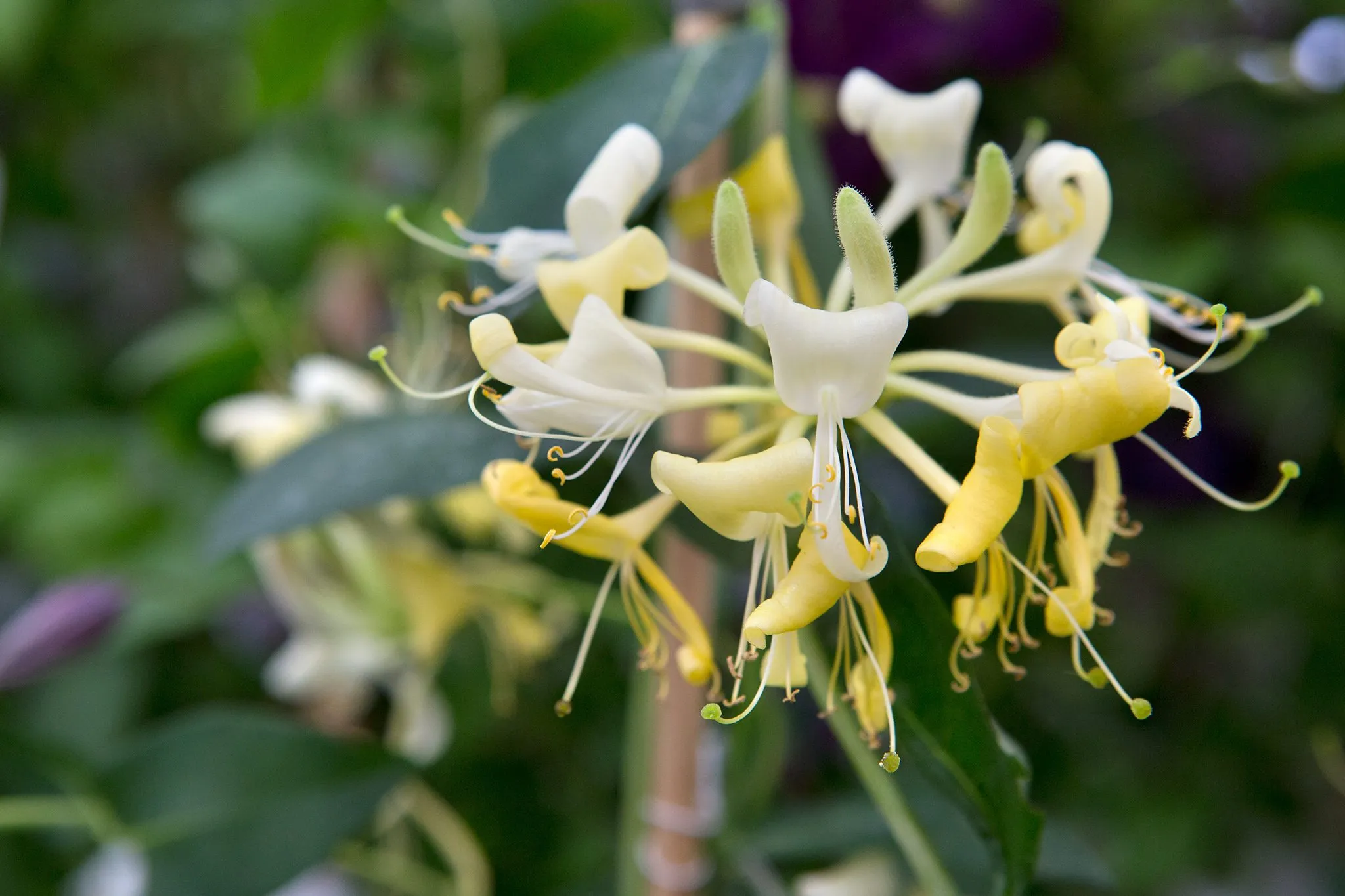 Fragrant Honeysuckle vine suitable for growing in a large patio pot
Growing honeysuckle in a pot requires a sturdy container and a robust trellis or support structure from day one. Choose a large pot (at least 15-20 inches in diameter) to give its roots room to grow. Use a good quality potting mix with excellent drainage.
Sweet Peas: Annual Delight in a Pot
For a burst of color and incredible scent in a single season, you can’t beat annual sweet peas. These charming vines are perfect for smaller pots or window boxes and require minimal commitment, delivering huge fragrance payoff from late spring through summer with consistent deadheading.
- Scientific Name: Lathyrus odoratus
- Common Name: Sweet Pea
- Zone: Grown as an annual in all zones; Perennial varieties exist but are less common for scent/vining in typical containers.
- Light: Full sun (at least 6-8 hours)
- Humidity: Moderate
- Water: Consistent moisture is key, especially during flowering.
 Colorful Cupani sweet peas blooming on a trellis in a pot
Sweet peas are easy to start from seed directly in the pot. Provide a small obelisk or trellis for them to climb. A peat-based potting mix works well, and regular feeding will encourage more blooms and fragrance. Don’t forget to pick them often – they make wonderful cut flowers!
Star Jasmine: Evergreen Fragrance
Trachelospermum jasminoides is a stunning evergreen vine that provides year-round foliage and a profusion of incredibly fragrant, star-shaped white flowers in summer. While it can be slow to start, once established, it offers reliable beauty and scent, making it an excellent choice for a container near an entrance or frequently used seating area.
- Scientific Name: Trachelospermum jasminoides
- Common Name: Star Jasmine
- Zone: 8-10 (Can be grown in pots in cooler zones and moved indoors or protected)
- Light: Full sun to partial shade (prefers some afternoon shade in very hot climates)
- Humidity: Moderate
- Water: Allow soil to dry slightly between waterings; avoid soggy conditions.
 Lush green foliage and fragrant white star jasmine flowers on a trellis
In cooler climates, planting star jasmine in a pot allows you to bring it indoors or into a sheltered location for the winter. Choose a well-draining potting mix and a pot large enough to accommodate its root system for a few years (starting around 12-14 inches). Provide sturdy support as it grows.
Clematis montana: Early Almond Scent
For early season fragrance, Clematis montana delivers with a shower of flowers that carry a sweet, almond-like scent. This clematis is known for its vigorous growth, so planting it in a pot requires a very large container (think half whiskey barrel size) and consistent pruning to keep it managed. However, its early bloom is a welcome sign of spring.
- Scientific Name: Clematis montana
- Common Name: Anemone Clematis
- Zone: 6-8
- Light: Full sun to partial shade (roots prefer shade)
- Humidity: Moderate
- Water: Keep roots cool and moist; consistent watering is crucial in containers.
 Pink Clematis montana blooms covering a structure
Growing vigorous clematis varieties like Clematis montana in pots is a challenge but possible with the right approach. Use a very large, deep pot to keep the roots cool and provide plenty of space. Ensure excellent drainage. Prune immediately after flowering to control size and shape.
Chocolate Vine (Akebia quinata)
Offering a uniquely spicy, vanilla-like scent with hints of chocolate, the chocolate vine (Akebia quinata) is an intriguing choice. Its maroon-chocolate flowers appear in spring. Like Clematis montana, it can be vigorous and needs a large pot and pruning to manage its size effectively.
- Scientific Name: Akebia quinata
- Common Name: Chocolate Vine, Five-leaf Akebia
- Zone: 4-8
- Light: Full sun to partial shade
- Humidity: Moderate
- Water: Keep soil consistently moist, especially when fruiting.
 Purple and brown flowers of Akebia quinata
Growing chocolate vine in a pot can help curb its sometimes rampant growth habit. Choose a large, sturdy container and provide a strong trellis. Protect from harsh late frosts which can damage the early spring flowers.
Classic Jasmine (Jasminum officinale)
When most people think of scented vines, classic jasmine often comes to mind. Jasminum officinale produces delicate, intensely fragrant white flowers throughout summer and into early autumn. It’s a fast grower, perfect for quickly covering a small trellis in a pot.
- Scientific Name: Jasminum officinale
- Common Name: Common Jasmine, True Jasmine
- Zone: 7-10
- Light: Full sun to partial shade
- Humidity: Moderate
- Water: Keep soil evenly moist; water more frequently during flowering.
 Clusters of fragrant white Jasminum officinale flowers
A substantial pot (14 inches or more) and a reliable support structure are essential for common jasmine. Its vigorous nature means it will appreciate regular feeding during the growing season to support its abundant blooms.
Clematis armandii: Early Spring Perfume
An evergreen clematis with leathery, lance-shaped leaves, Clematis armandii is cherished for its early spring flush of fragrant white flowers, often with a sweet, vanilla-like scent. It provides beautiful foliage interest year-round, making it a valuable addition to a container garden.
- Scientific Name: Clematis armandii
- Common Name: Evergreen Clematis
- Zone: 7-9
- Light: Full sun to partial shade (protect from harsh afternoon sun)
- Humidity: Moderate
- Water: Keep soil consistently moist; does not like to dry out completely.
 Glossy evergreen leaves and white flowers of Clematis armandii
Plant Clematis armandii in a large, deep pot with a sturdy trellis or support. Protect it from strong, cold winds, especially in borderline zones. A humus-rich, well-draining potting mix is ideal.
Scented Climbing Roses
Many climbing and rambling roses offer breathtaking fragrance, and some varieties are suitable for larger pots. Look for less vigorous climbers or choose a large container (minimum 20 inches in diameter and depth) to give the rose room to establish.
- Scientific Name: Rosa (Climbing/Rambling varieties)
- Common Name: Climbing Rose
- Zone: Varies widely by variety, typically 5-9
- Light: Full sun (minimum 6-8 hours)
- Humidity: Moderate
- Water: Requires consistent, deep watering, especially in pots.
 Pink climbing rose blooms on a structure
Growing roses in pots demands attention to watering and feeding. Use a high-quality potting mix designed for containers, possibly with some added compost. Regular pruning is necessary to train the rose and encourage blooming.
Clematis x triternata ‘Rubromarginata’: Summer Almond Clouds
Often cited as one of the most heavily scented clematis, this late-blooming variety offers masses of almond-scented white flowers with distinctive red edges from midsummer into autumn. While vigorous, its later blooming period and preference for dry shade make it an interesting candidate for a large container in a challenging spot.
- Scientific Name: Clematis x triternata ‘Rubromarginata’
- Common Name: Almond Scented Clematis
- Zone: 5-9
- Light: Partial shade to full shade (can tolerate dry shade)
- Humidity: Moderate
- Water: Tolerates drier conditions once established but still needs consistent watering in a pot.
 White Clematis flowers with red edges
This clematis’s tolerance for dry shade makes it unique. In a pot, this might translate to needing less frequent watering than other clematis, but monitoring soil moisture is still vital. A large container with good drainage is a must.
Wisteria: Cascading Fragrance (Use Caution in Pots!)
Wisteria is famed for its breathtaking cascades of fragrant flowers in spring, but it’s also incredibly vigorous and can become quite large and heavy. Growing wisteria in a pot is challenging and requires a very large, heavy container and rigorous annual pruning (both summer and winter) to keep it manageable and encourage flowering. It’s not for the faint of heart!
- Scientific Name: Wisteria (e.g., floribunda, sinensis)
- Common Name: Wisteria
- Zone: Varies by species, typically 4-9
- Light: Full sun (essential for flowering)
- Humidity: Moderate
- Water: Keep soil consistently moist, especially during flowering.
 Purple Wisteria floribunda flower clusters hanging from a branch
If you choose to grow wisteria in a pot, select a Japanese or American variety which tend to be slightly less aggressive than Chinese wisteria. Use the largest, sturdiest pot you can manage, ideally something heavy like ceramic or concrete to prevent tipping. Be prepared for dedicated pruning.
Essential Tips for Growing Scented Vines in Pots
- Choose the Right Pot: Size matters! Pick a container large enough to accommodate the plant’s roots for a few years (minimum 12-15 inches for smaller vines, 20+ inches for vigorous ones). Ensure it has drainage holes.
- Use Quality Potting Mix: Don’t use garden soil. A good quality potting mix designed for containers provides the necessary drainage and aeration. Adding some slow-release fertilizer at planting can help.
- Provide Support: Install a trellis, obelisk, or stakes at the time of planting. It’s much harder to do later without damaging the roots. Guide young vines onto the support as they grow.
- Watering is Key: Potted plants dry out faster than those in the ground. Check soil moisture regularly (stick your finger an inch or two deep). Water deeply until water runs from the drainage holes. Consider drip irrigation for convenience.
- Fertilize Regularly: Vines in pots deplete nutrients faster. Use a balanced liquid fertilizer every 2-4 weeks during the growing season, or incorporate a slow-release fertilizer in spring.
- Prune for Shape and Health: Pruning helps control size, encourages bushier growth, improves airflow, and often promotes more blooms. Research the specific pruning needs of your chosen vine.
- Winter Protection: In colder zones, potted vines are more vulnerable to frost. Move pots to a sheltered location (like a garage or unheated shed), wrap the pot with burlap or bubble wrap, or plant in a pot rated for freeze/thaw cycles.
Conclusion
Adding scented flowering vines in pots is a delightful way to enhance your patio, balcony, or small garden with beauty and fragrance. By choosing appropriate varieties and providing the right care, you can enjoy their intoxicating perfumes and charming vertical growth right outside your door. Get started today and transform your outdoor space into a fragrant paradise!
What scented vine are you most excited to grow in a pot? Share your thoughts in the comments below!