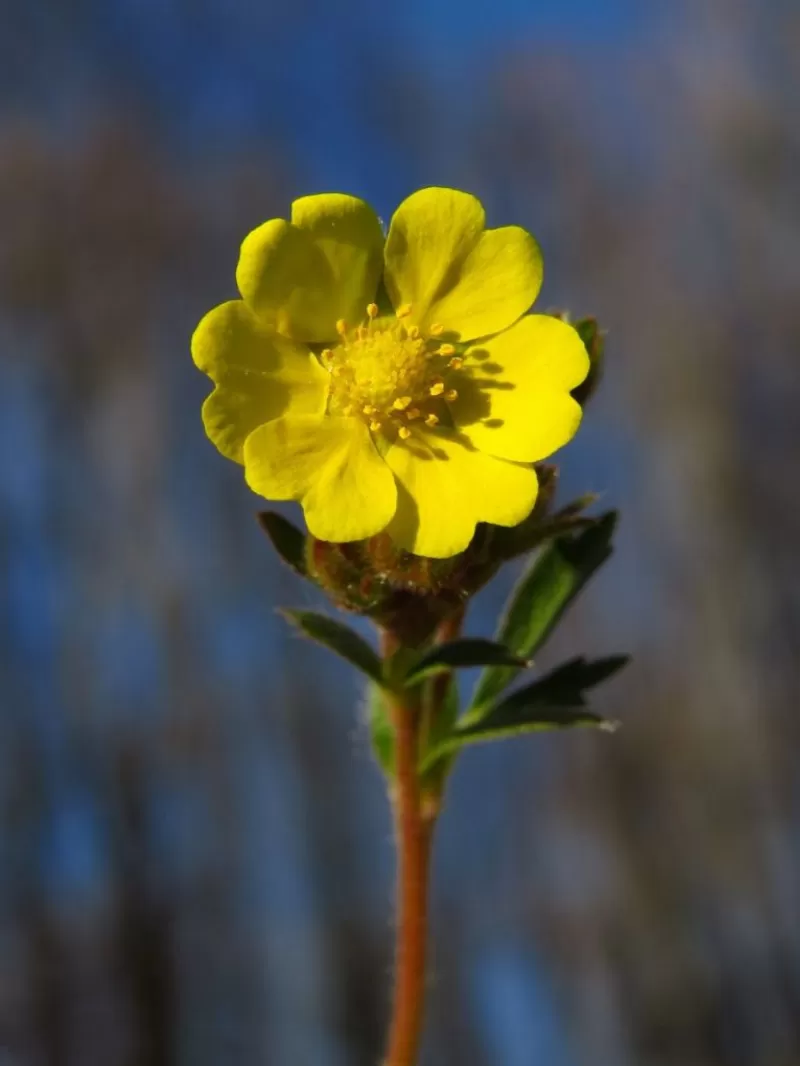
Awwww…Aren't the heart-shaped petals lovely?
As I strolled through my garden one spring morning, a flash of yellow caught my eye. There, nestled among my carefully tended plants, was a charming little flower with heart-shaped petals. “How lovely!” I thought, admiring its delicate beauty. Little did I know that this innocent-looking bloom would soon become the bane of my gardening existence.
That, my friends, was my first encounter with creeping cinquefoil (Potentilla reptans). While it may seem like a delightful addition to your garden at first glance, this hardy and invasive weed can quickly turn into a formidable adversary for even the most experienced gardeners. If you’ve found yourself battling this persistent plant, you’re not alone. Let’s dive into understanding this beautiful menace and explore effective ways to reclaim your green space.
Potentilla reptans, the scientific name for creeping cinquefoil, tells us a lot about its nature. “Potentilla” is the ancient name for a genus encompassing over 300 plant species, while “reptans” means creeping or crawling – a perfect description of its growth pattern.
In some areas, creeping cinquefoil is actually encouraged to grow along riverbanks, adding a touch of sophistication to the scenery with its cheery yellow flowers. However, its robust nature means it requires constant attention to keep it in check.
While creeping cinquefoil can be beneficial in stabilizing sloping ground with its taproots and runners, it’s a different story when it starts to invade your carefully cultivated garden. I learned this the hard way when I noticed it prospering like a marching army among my prized plants.
It’s worth noting that creeping cinquefoil can sometimes be mistaken for silverweed (Argentina anserina). Both produce yellow flowers with similar petal numbers and sizes. However, the leaves are quite distinctive, with silverweed featuring long creeping red stolons and possessing medicinal properties.
Creeping cinquefoil is a hardy plant that thrives even in cold winters. It prefers full sunlight, which is why it often flourishes in lawns. However, don’t be fooled – it can still pose problems in shady areas. This adaptable plant can grow in various soil types and becomes most visible in spring, leafing early after winter. You might often spot it alongside Lesser celandine (Ficaria verna) during this time.
Identifying creeping cinquefoil is crucial in managing its spread. Here are the key features to look out for:
Creeping cinquefoil spreads rapidly through creeping stems and autumn seeding, often infiltrating lawns from flower beds and vice versa. This tenacious weed competes with other plants for light, water, and nutrients, making it a challenge to control. Its low-growing habit and ability to form dense mats make it a common sight in hedge rows, along banks, and in grassy areas.
Using your hands to pull out creeping cinquefoil is a quick and straightforward approach. However, it doesn’t guarantee complete removal from your soil. New plants will keep sprouting from the remaining root systems. For more effective manual removal:
The Royal Horticultural Society (RHS) suggests using tools designed specifically for weeding dandelions, which can be a real time-saver.
Another approach recommended by the RHS is essentially suffocating the plant:
While this method can be effective, it requires patience as it may take years to see results.
As a last resort, systemic weed killers like glyphosate can be used. However, exercise extreme caution to avoid harming adjacent plants. Consider wrapping nearby plants in plastic before spraying to minimize impact.
Remember:
Controlling creeping cinquefoil requires persistence and a multi-faceted approach:
Remember, the key to managing creeping cinquefoil is early identification and consistent control measures. With patience and the right techniques, you can reclaim your garden from this beautiful but troublesome weed.
Have you encountered creeping cinquefoil in your garden? Share your experiences and tips in the comments below. Let’s learn from each other and create thriving, weed-free gardens together!
Key takeaways: Discover 5 enchanting flowers to create a magical fairy garden Learn the symbolic…
Watermelon Red Crape Myrtle is a classic, versatile tree with stunning pink-red blooms Grows 20-25…
Key Takeaways: Oriental lilies are prized for their large, fragrant blooms They thrive in well-draining…
Key takeaways: Amaranth is easy to grow in containers, perfect for beginners and experienced gardeners…
Vibrant, low-maintenance flowers for sunny spots Continuous color throughout summer Perfect for borders, ground cover,…
Here's how implementing no-dig techniques can transform your container gardening: Build Richer Soil: Layers of…