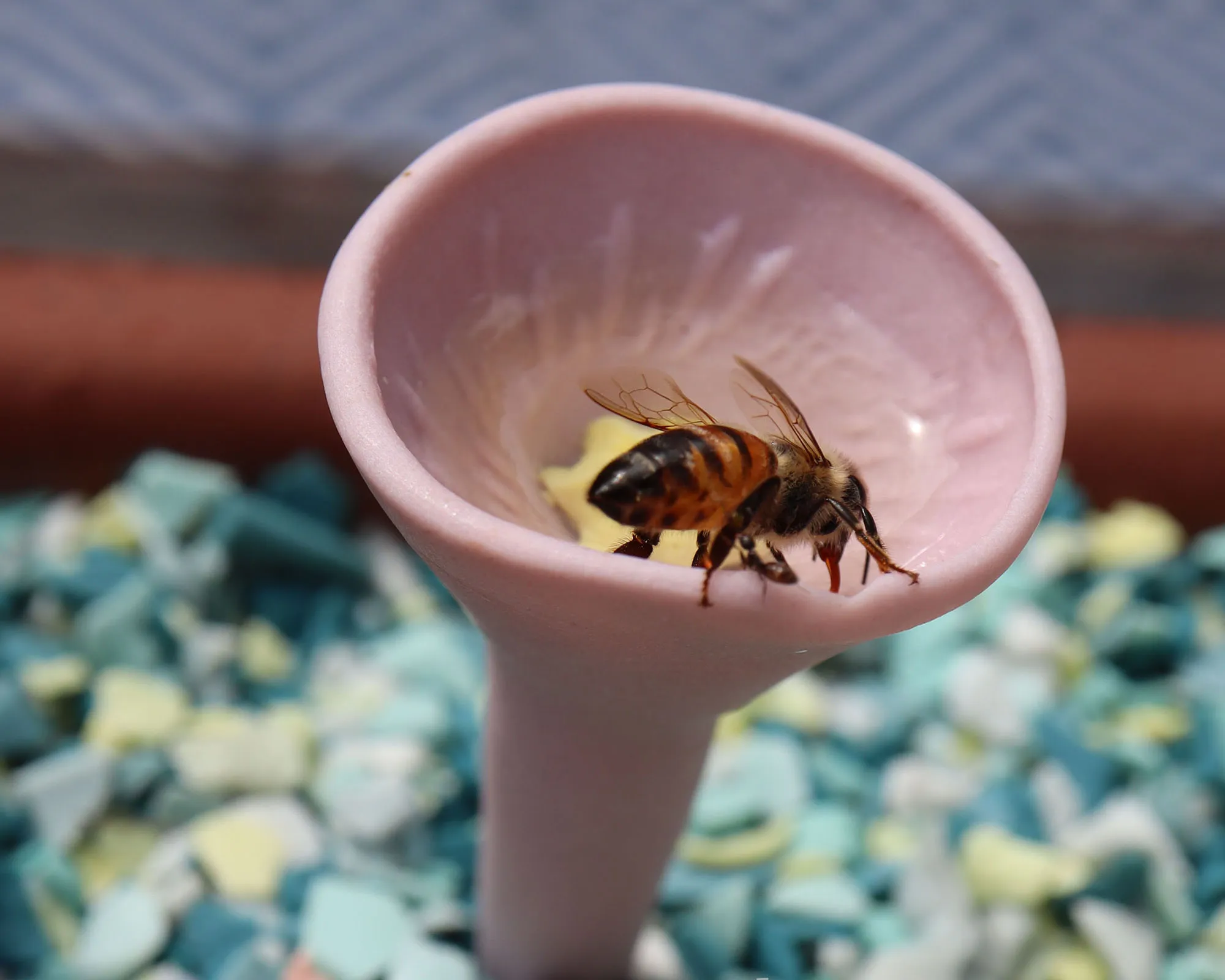
Bee resting on a textured porcelain bee cup
Providing water for garden visitors is a crucial act of kindness that every gardener should consider. While we often remember our feathered friends with bird baths, let’s not forget the tiny, hardworking pollinators like bees and butterflies. During scorching summer days or unexpected dry spells, finding a safe water source can be a matter of survival for them.
Here’s why you should consider adding bee cups and water stations to your garden:
As a gardener who loves watching the buzz and flutter of life in my patch, I know the joy that comes from seeing these creatures thrive. Providing safe access to water feels like a small but significant way to support the ecosystem I cherish. Let’s dive into why water is so vital and how you can easily add these life-saving spots to your own garden.
Most of us know bees drink nectar, but water is just as essential for their survival and the health of their hive. Think about it: on a hot day, wouldn’t you crave a cool drink? Bees do too! They drink water for hydration, much like us, but they also use it for a surprising purpose within the hive.
Honey bees specifically use water for evaporative cooling. Worker bees will carry water back to the hive and spread it in thin films on the inside walls. Then, other bees will fan their wings, creating airflow that evaporates the water, effectively acting as a natural air conditioner for the hive. Without enough water, maintaining the correct temperature for the brood and honey can be challenging. Providing easy access to water helps them perform this vital task efficiently.
Before we explore the joys of creating your own, it’s worth knowing about purpose-designed bee cups. These are often small, elegant vessels made from materials like porcelain, metal, or glass, mounted on spikes to be inserted into the ground. Their design is intentionally shallow, holding just a small amount of water to minimize the risk of drowning.
Artists like Jen Rose have even designed porcelain Bee Cups with intricate details tailored to insect needs. Her cups hold only about a teaspoon of water and feature a textured surface, giving bees and butterflies a secure grip while they drink. What’s fascinating is that these cups are sometimes glazed with UV-reactive materials. Since bees can see ultraviolet light, these glazes can make the cups appear brighter and more like a desirable flower to them, drawing them in safely. The small water volume also tends to evaporate by day’s end, preventing them from becoming mosquito breeding grounds.
You don’t need fancy equipment to help pollinators stay hydrated. Creating a DIY bee cup or a larger water station is incredibly simple and can often be done with items you already have around the house or garden. The key is providing shallow access and a safe landing spot.
One of the easiest ways to create a bee water station is using a shallow dish or saucer. A plant pot saucer works perfectly.
Place this saucer in a visible spot in your garden, ideally near plants that attract bees, but make sure it’s not hidden by dense foliage. I love watching a tired bee land carefully on a warm stone for a quick sip!
Can you use your existing bird bath? Possibly, but there are a couple of considerations.
If you’re feeling a bit more ambitious, a small container pond can be a fantastic multi-purpose wildlife feature, including providing water for pollinators.
This creates a more naturalistic water source that benefits a wider range of garden critters, from pond dwellers to thirsty pollinators.
A small, trickling garden fountain can also be a draw for bees, provided the water flow is very gentle. Bees prefer calm water sources. If you have a fountain with shallow edges or stones where water pools briefly before flowing down, this can double as a drinking station. Avoid fast-moving or turbulent water.
Where you place your DIY bee cups or water stations matters.
Adding water sources like DIY bee cups is just one piece of the puzzle in creating a garden that supports wildlife. When combined with planting a diverse range of flowering plants that provide nectar and pollen throughout the seasons, you create a truly welcoming habitat. This encourages a healthy biodiversity, bringing in not just bees and butterflies, but also beneficial insects that prey on garden pests, and providing food sources for larger animals like birds. Every drop of water and every flower planted contributes to a more resilient and vibrant garden ecosystem.
Taking a few minutes to set up a DIY bee cup or water station is a simple yet incredibly impactful action you can take for your garden and the wider environment. By providing safe, accessible water, you help ensure that the precious pollinators we rely on can continue their vital work, keeping our gardens productive and our world beautiful.
Have you tried making your own bee water station? Share your ideas and experiences in the comments below! What other ways do you support pollinators in your garden? Explore more tips and inspiration for creating a wildlife-friendly garden here on Thelittle.garden.
Here's how implementing no-dig techniques can transform your container gardening: Build Richer Soil: Layers of…
Healthy soil is teeming with beneficial microbes that act as a natural defense system for…
Transform your patio into a vibrant, wildlife-friendly oasis. Discover how to create beautiful, low-maintenance container…
Unlock the secret to a beautiful, resilient garden with Sedum & Yarrow blends. Discover why…
Beat the Heat: Discover resilient perennials that thrive in containers during the hottest summer months,…
Variegated Pothos, like the Golden Pothos and Marble Queen, are stunning, easy-care houseplants perfect for…