Here’s what you need to know about growing perennial vegetables in containers:
- Many common perennial vegetables, like asparagus and artichokes, can thrive in pots.
- Container gardening makes perennial vegetables accessible even in small spaces.
- Choosing the right pot size and soil is crucial for long-term success.
- Proper watering, feeding, and overwintering are key to keeping your perennial plants happy year after year.
Imagine harvesting fresh, homegrown vegetables not just for one season, but for years to come, all from the convenience of your patio, balcony, or small garden space! While traditional garden beds offer endless possibilities, the dream of a perpetual harvest isn’t limited to those with sprawling plots. Growing perennial veggies like asparagus & artichoke in pots is absolutely achievable, offering a low-maintenance way to enjoy gourmet produce right outside your door. Let’s dive into how you can turn your containers into productive, long-lasting vegetable patches.
Why Grow Perennial Vegetables in Pots?
Perennial vegetables are the unsung heroes of the edible garden. Plant them once, and they return year after year, often being the first crops to emerge in spring. They require less effort than annuals once established, saving you time, money on seeds or seedlings, and the yearly chore of replanting.
Choosing to grow these long-lived plants in pots offers unique advantages:
- Space-Saving: Ideal for small gardens, balconies, patios, or even sunny windowsills.
- Flexibility: You can move pots to optimize sunlight, protect plants from harsh weather, or simply rearrange your space.
- Soil Control: You have complete control over soil composition, drainage, and nutrients, which is especially beneficial for plants with specific needs.
- Pest & Disease Management: Containers can sometimes help isolate plants, making it easier to spot and manage pests or diseases early on.
- Overwintering: For perennial vegetables less hardy in your climate, growing them in pots allows you to move them to a sheltered location like a garage or greenhouse for winter.
While many perennial vegetables can technically be grown in containers, asparagus and artichokes are particularly rewarding choices for those looking for high-value, long-term crops. They require significant space and depth, but with the right approach, they can flourish in large pots.
Choosing the Right Containers and Soil
Success with growing perennial veggies like asparagus & artichoke in pots starts with selecting the proper home. Perennial plants develop extensive root systems over time, so they need generously sized containers.
- Size Matters: For plants like asparagus and artichokes, think big. Asparagus needs depth, while artichokes need width and depth. Aim for containers that are at least 15-20 gallons (around 18-24 inches in diameter and depth) per plant. Tubs, half whiskey barrels, large grow bags, or sturdy plastic pots are good options. Ensure they have ample drainage holes.
- Material: Porous materials like terracotta can dry out quickly, while plastic retains moisture better. Dark colors absorb more heat. Consider your climate and watering habits. Fabric grow bags offer excellent aeration, promoting healthy root growth, but also dry out faster.
- Soil: Don’t just use garden soil, which can compact in pots. A high-quality potting mix is essential. Look for mixes that are well-draining but also retain some moisture and nutrients. You can amend potting mix with compost for added fertility and structure. A slightly alkaline soil is often preferred by asparagus and artichokes.
Focus: Growing Asparagus in Pots
Asparagus (Asparagus officinalis) is often seen as a garden bed staple, but it can be a surprisingly fruitful container plant if given the right conditions. Known for its tender spears emerging in spring, a single asparagus plant can produce for 15-20 years!
- Scientific Name: Asparagus officinalis
- Common Name: Asparagus
- Zone: USDA Zones 3-8 (varies by variety)
- Light: Full sun (at least 6-8 hours per day)
- Humidity: Moderate
- Water: Consistent moisture, especially during establishment and spear production. Avoid waterlogging.
Growing asparagus from crowns (dormant root systems) is the fastest way to get a harvest, though it still takes a few years.
- Planting: Choose a large, deep pot (minimum 15-20 gallons). Fill the bottom few inches with potting mix. Create a small mound in the center and spread the asparagus crown roots over it. Cover with about 2-3 inches of soil. As the shoots grow, gradually add more soil until the container is full.
- Establishment: The first 1-2 years are crucial for establishing a strong root system. Resist the urge to harvest spears during this time. Let the feathery foliage (called ferns) grow, photosynthesize, and store energy for future years.
- Care: Water deeply and consistently, especially during dry periods. Fertilize in spring and after the harvest season with a balanced, slow-release fertilizer or compost.
- Harvesting: Typically, you can begin light harvesting in the third year. Harvest spears when they are 6-8 inches tall and about the thickness of your finger, snapping or cutting them just below the soil line. Stop harvesting when the spears become thin (usually late spring/early summer) and let the ferns grow.
- Overwintering: Asparagus is very cold hardy. Once the ferns turn yellow or brown after a frost, cut them back to the soil level. The pot can remain outdoors. In very cold climates or exposed locations, you can add a layer of mulch or wrap the container for extra insulation.
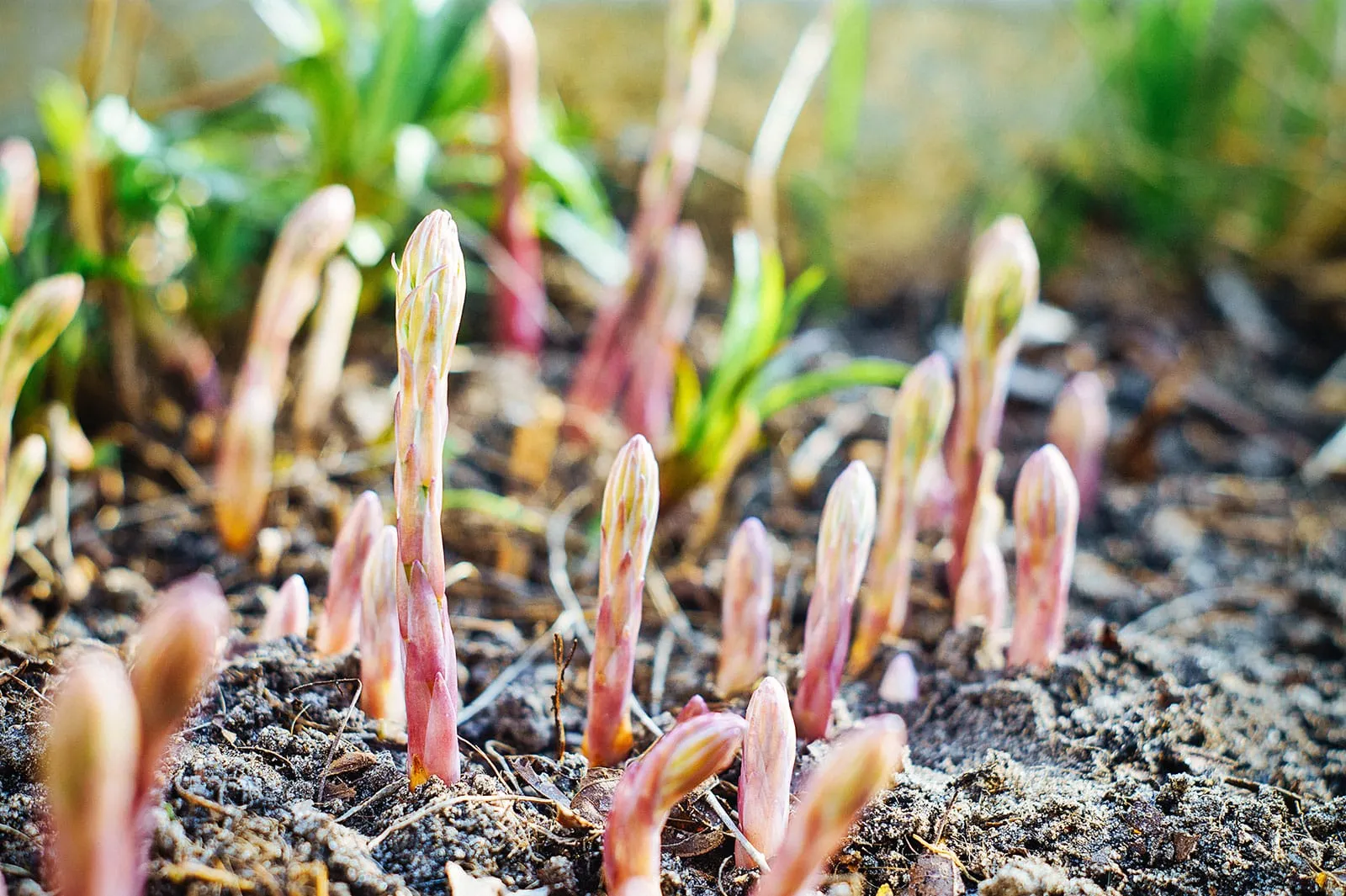
Purple asparagus coming out of the soilPurple asparagus spears emerge from potting mix in a container, showing the first signs of spring growth in a container garden.
Focus: Growing Artichoke in Containers
The majestic Artichoke (Cynara cardunculus) adds dramatic flair to any garden with its silvery foliage and impressive thistle-like buds. While they need space, they are excellent candidates for large containers, allowing you to enjoy their unique harvest.
- Scientific Name: Cynara cardunculus
- Common Name: Artichoke, Globe Artichoke
- Zone: USDA Zones 7-10 (often grown as annuals in colder zones)
- Light: Full sun (at least 6-8 hours per day)
- Humidity: Moderate
- Water: Regular, deep watering is crucial for developing large, tender buds.
Artichokes are perennials in warmer climates (Zones 7 and up), where they can produce for many years. In colder zones, they are typically grown as annuals from seed or plant starts, producing a harvest in their first year.
- Planting: Use a very large container, ideally 20 gallons or more, per plant. Artichokes grow into substantial plants (3-4 feet tall and wide). Plant from seed (start indoors) or transplant starts into well-draining potting mix amended with compost.
- Care: Water deeply whenever the top inch of soil feels dry, especially as buds develop. Fertilize monthly during the growing season with a balanced liquid fertilizer or work slow-release granules into the soil in spring.
- Harvesting: Bud formation usually occurs in the second year for perennial plants (or the first year if grown as annuals or if a cold stratification period is simulated). Harvest the main central bud when it’s firm and tight, before the bracts begin to open. Cut the stem about 2-3 inches below the bud. Side buds will then develop, providing a continuous harvest. Expect 6-10 buds per plant per season in perennial zones.
- Overwintering: In Zones 7-10, cut the plants back to about 6-12 inches after they finish producing or after the first light frost. Cover the crown with a thick layer of mulch (straw or leaves) in the pot for insulation. In Zones below 7, they are typically grown as annuals and will not survive the winter outdoors. You could try moving a potted plant to a protected, unheated space (like a garage) and keeping it mostly dry, hoping it survives dormancy, but success varies.
Artichoke plant with purple flower budsA thriving artichoke plant displays characteristic large, spiny leaves and developing purple flower buds in a sunny garden container.
General Tips for Perennial Veggies in Pots
Whether you’re growing perennial veggies like asparagus & artichoke in pots or trying other container-friendly perennials, here are some universal tips:
- Watering: Containers dry out faster than garden beds. Check soil moisture regularly, especially during hot or windy weather. Water until it drains from the bottom.
- Feeding: Perennial plants live in the same soil for years. Replenish nutrients regularly. Top-dress with compost annually and use a balanced fertilizer during the growing season.
- Mulching: A layer of mulch (straw, shredded bark, or compost) on top of the soil helps retain moisture, regulate soil temperature, and suppress weeds.
- Repotting: Eventually, some perennial vegetables may benefit from being divided and repotted (like rhubarb or certain clumping alliums). This rejuvenates the plant and prevents overcrowding. Asparagus and artichokes, however, prefer not to be disturbed once established.
- Pest & Disease Watch: Inspect your container plants regularly for signs of issues. Healthy plants in appropriate conditions are less susceptible.
Other Potential Perennial Veggies for Pots
While asparagus and artichokes are highlights for their yield and longevity, many other perennial vegetables can do well in containers, especially smaller varieties or those that can be managed:
- Rhubarb: Needs a very large pot and cold winter chill (Zones 3-7).
- Sorrel: Clumping habit, great in medium pots (Zones 5+).
- Walking Onions / Bunching Onions: Easily grown in medium to large pots, multiply readily (Zones 3-10).
- Radicchio: Can be perennial in warmer zones (8+), grows well in medium pots.
- Horseradish: Needs a very large, dedicated pot due to its vigorous, spreading root system (Zones 2-9).
- Jerusalem Artichokes: Can be grown in large, deep pots to contain their spread, though yields might be lower than in-ground (Zones 3-8).
Growing these long-lasting crops in pots is a rewarding way to enjoy homegrown food with less seasonal effort. It proves that delicious, sustainable gardening is possible, no matter the size of your space.
Ready to give it a try? Growing perennial veggies like asparagus & artichoke in pots might just become your new favorite gardening hack! What perennial vegetables are you excited to grow in containers? Share your thoughts in the comments below, or share this article with fellow container gardening enthusiasts! Don’t forget to explore more edible gardening ideas on our website!