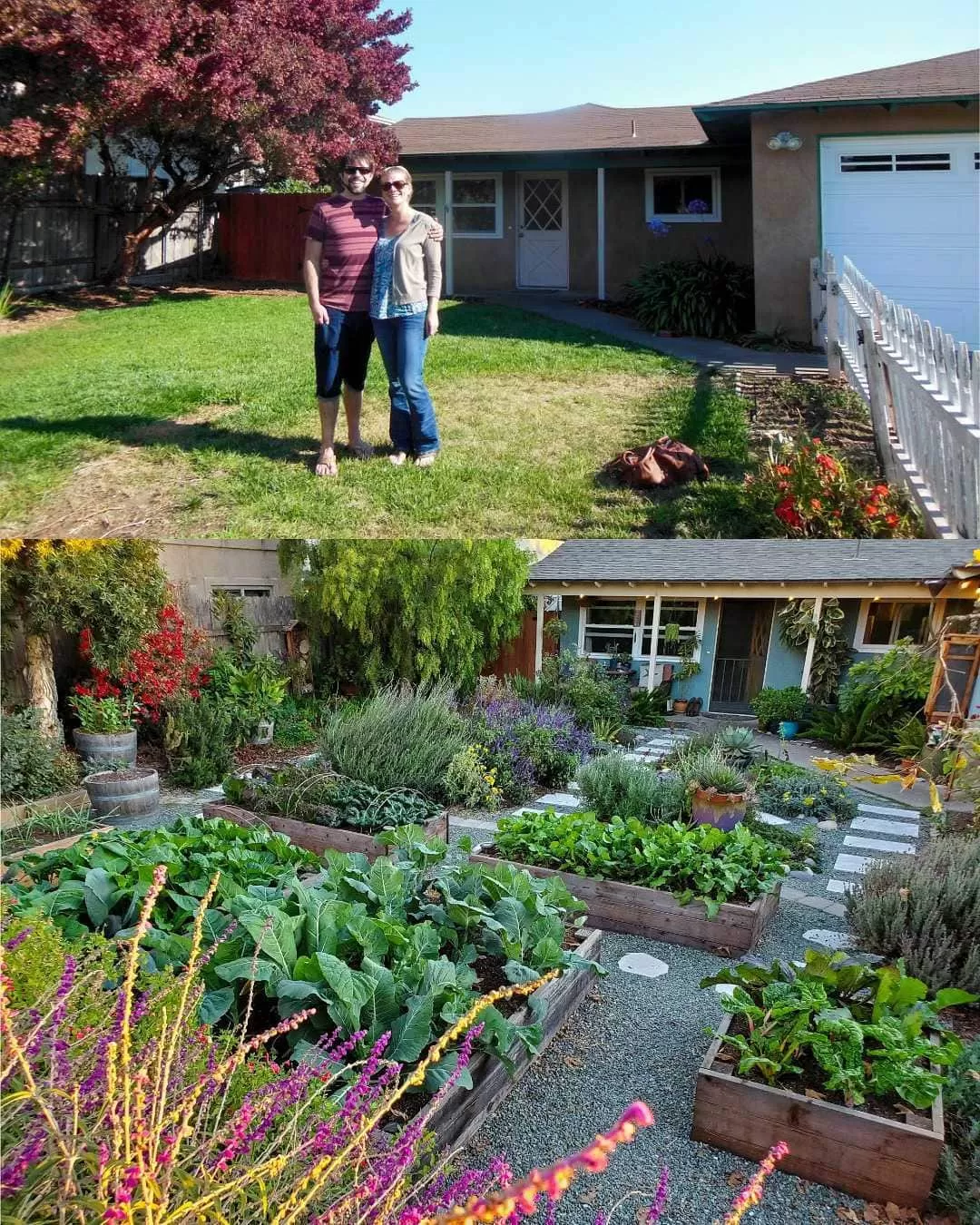
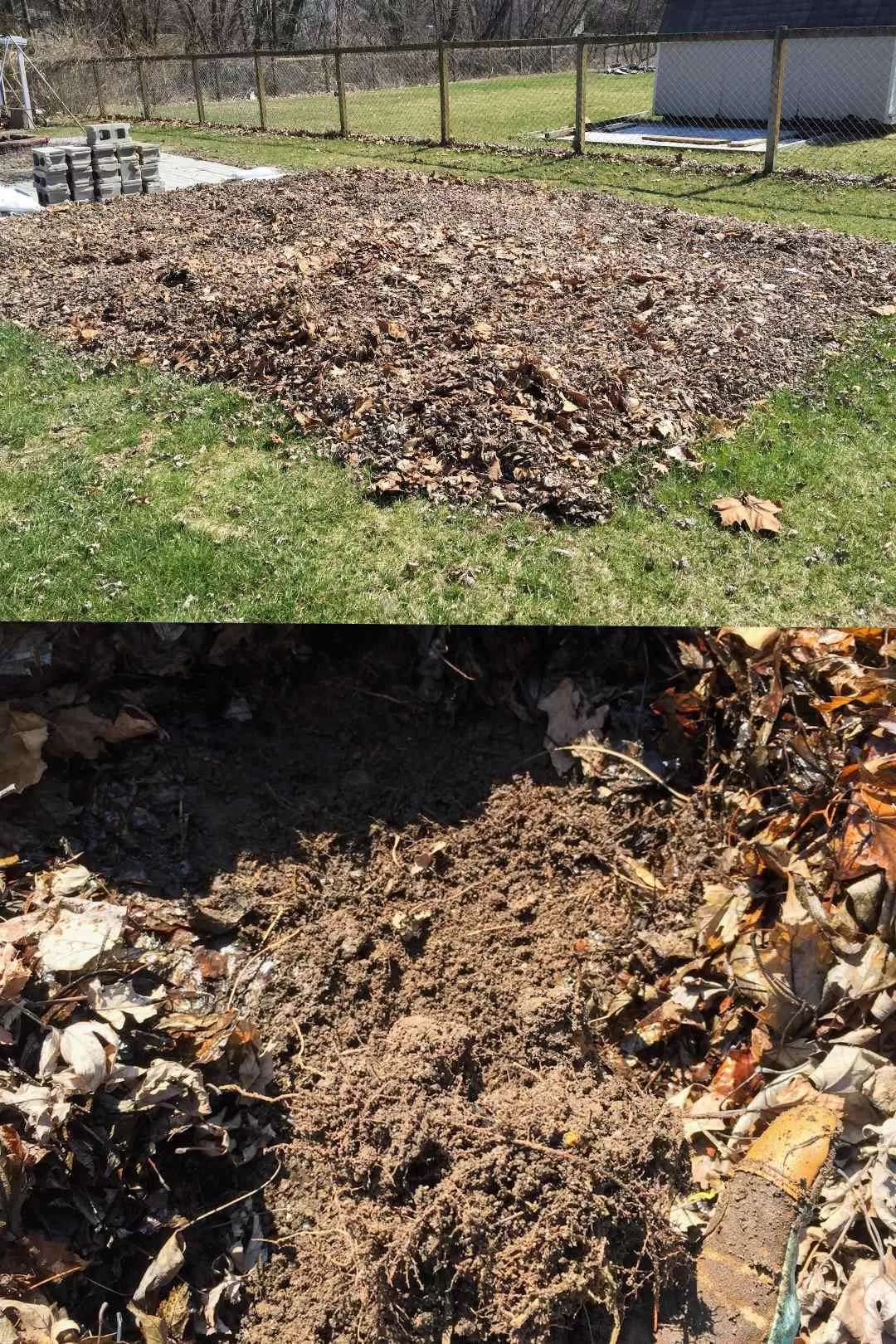
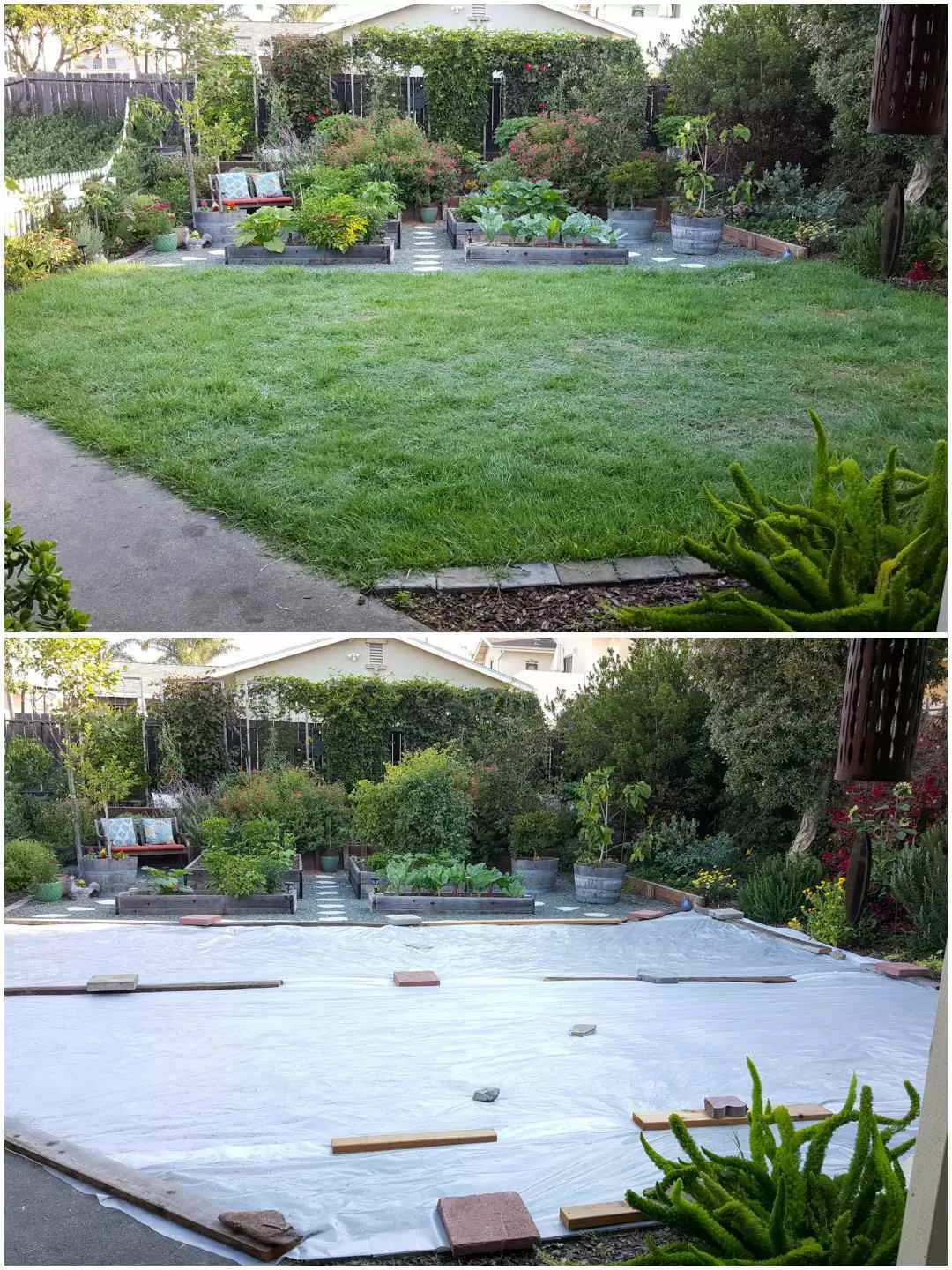
A two way image collage of grass removal by deep mulching. The first image shows a thick layer of leaves covering the grass. The second image reveals the dead grass underneath after several months.
Tired of battling a stubborn lawn? Yearning for a vibrant garden bursting with life? You’ve come to the right place! This guide will walk you through various methods to effectively kill grass, from quick removal techniques to slower smothering strategies. We’ll also explore ground cover options and edging solutions to transform your lawn into a thriving ecosystem. Let’s get started!
While a small patch of grass can be a pleasant play area or pet relief spot, vast expanses of manicured lawn come with a hidden cost. The relentless pursuit of the perfect green carpet consumes trillions of gallons of water annually, not to mention the millions of gallons of gas guzzled by lawnmowers and the tons of pesticides polluting our waterways and harming wildlife. These lifeless monocultures offer little in terms of biodiversity and habitat, unlike vibrant gardens that support a complex web of life.
Transforming a grassy area into a garden can be approached in several ways: complete grass removal, smothering it in place, or a combination of both. The best approach depends on several factors:
If you opt for complete grass removal, here are four effective methods:
For smaller areas or intricate spaces, manual removal with a flat-edge shovel or lawn edging shovel offers a cost-effective solution. Cut deep lines in the sod, loosen it with the shovel, and pry up the squares for disposal.
For larger areas, a sod cutter, either manual or engine-powered, offers greater efficiency. These machines cut the grass into neat strips that can be rolled up and removed or even replanted elsewhere.
Tilling breaks up the grass and incorporates it back into the soil. While this method retains organic matter and prepares the soil for planting, it can also promote weed growth and is unsuitable for rocky or clay soils.
If DIY isn’t your forte, consider hiring a landscaping company. This is the quickest and easiest, though more expensive, option.
Smothering is a slower but less labor-intensive way to kill grass:
Covering the grass with a thick layer of organic mulch, such as leaves, wood chips, or compost, effectively blocks sunlight and smothers the grass. Layering newspaper or cardboard beneath the mulch accelerates the process.
Solarization involves covering the grass with clear plastic to trap heat and “cook” the grass and weeds. While effective, it requires a hot climate and a substantial amount of plastic.
Once the grass is gone, choose a ground cover to suppress weeds and enhance your landscape:
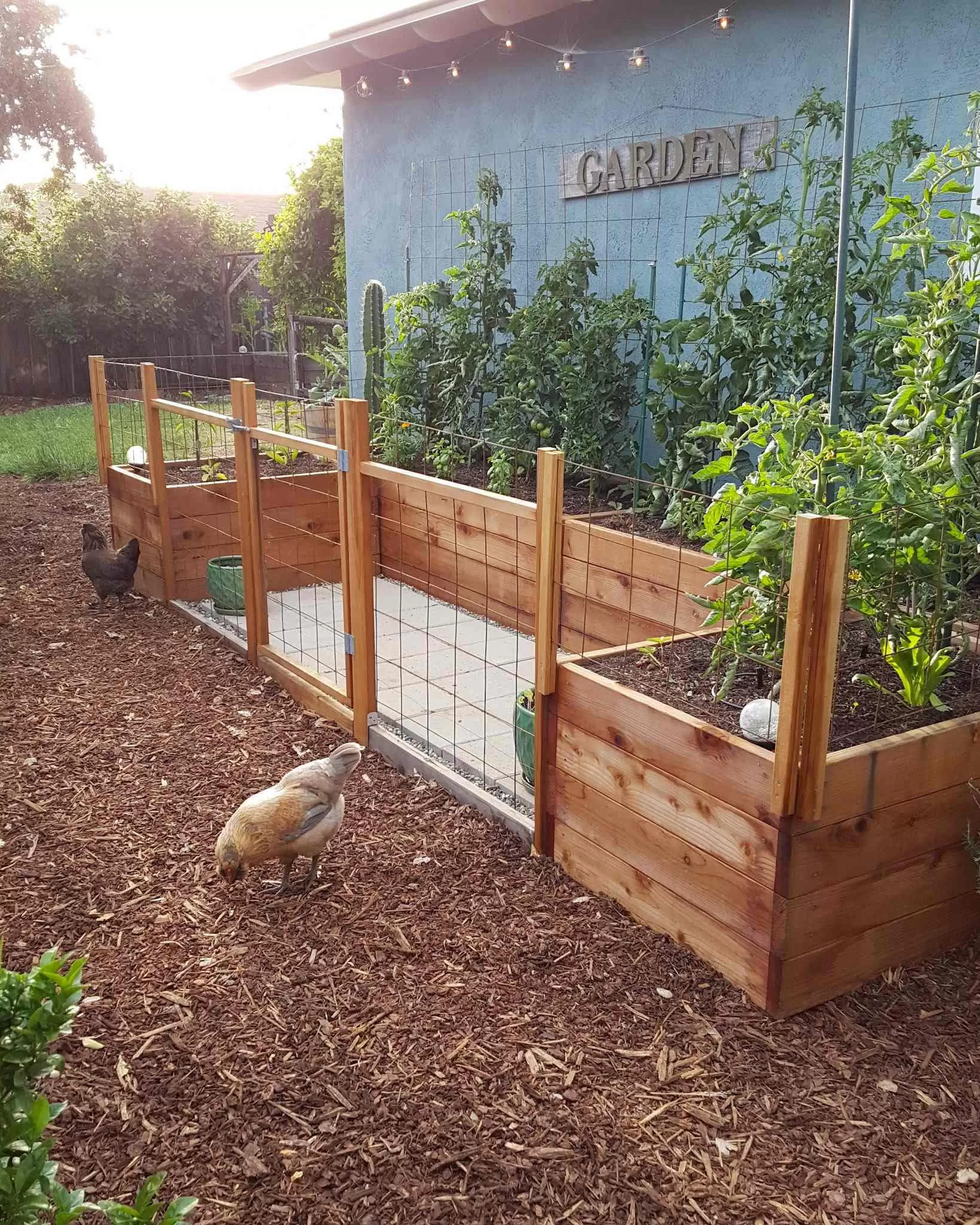
Commercial-grade landscape fabric effectively blocks weeds while allowing water and air to penetrate. Ideal for under raised beds and pathways.
A more eco-friendly option for weed suppression, cardboard or paper biodegrades over time. Perfect for lining the bottom of raised beds or covering pathways.
A layer of mulch conserves moisture, improves soil health, and adds aesthetic appeal. Options include bark, wood chips, straw, gravel, and even larger rocks.
Low-growing plants like creeping thyme or trailing rosemary provide a lush, living carpet. Choose varieties suited to your climate and watering needs.
Define the boundaries of your garden and prevent grass encroachment with borders and edging materials like cobblestones, pavers, or terrace boards.
Transforming your lawn into a thriving garden is a rewarding endeavor. Choose the grass removal and ground cover options that best suit your needs and preferences. With a little effort and planning, you can create a beautiful, productive, and eco-friendly space you’ll cherish for years to come.
Here's how implementing no-dig techniques can transform your container gardening: Build Richer Soil: Layers of…
Healthy soil is teeming with beneficial microbes that act as a natural defense system for…
Transform your patio into a vibrant, wildlife-friendly oasis. Discover how to create beautiful, low-maintenance container…
Unlock the secret to a beautiful, resilient garden with Sedum & Yarrow blends. Discover why…
Beat the Heat: Discover resilient perennials that thrive in containers during the hottest summer months,…
Variegated Pothos, like the Golden Pothos and Marble Queen, are stunning, easy-care houseplants perfect for…