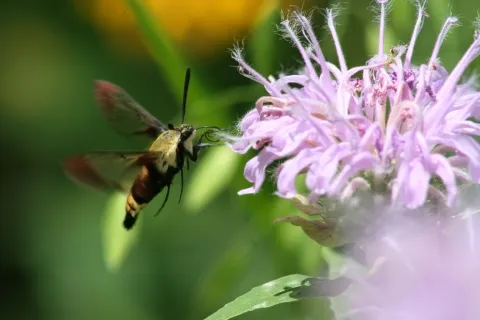
Vibrant wild bergamot flower attracting a hummingbird clearwing moth, showcasing a healthy pollinator garden ecosystem.
Making a difference for our vital pollinator friends – bees, butterflies, moths, hummingbirds, and more – is easier than you think! Creating a welcoming spot for them, even a small one, can have a huge impact on the local ecosystem and bring incredible beauty and activity right to your doorstep.
Here are the key takeaways for starting your own pollinator garden:
Imagine stepping into your garden and being greeted by the gentle hum of bees busily collecting pollen, or watching a vibrant butterfly flit from flower to flower. These magical moments are more than just a beautiful sight; they’re a sign of a healthy, thriving ecosystem, right in your own backyard. Pollinators are the unsung heroes of our planet, responsible for the reproduction of countless plants, including many of the fruits, vegetables, and nuts we rely on. Sadly, habitat loss and other environmental factors are putting these essential creatures at risk. But here’s the good news: you have the power to help! By creating a pollinator garden, you can provide a vital food source and habitat, turning your outdoor space into a vibrant sanctuary for wildlife. Ready to get started? Let’s dig in!
Success in gardening, especially when inviting specific wildlife, starts with thoughtful planning. Before you even think about getting your hands dirty, taking some time to consider a few key factors will set you up for a beautiful and effective pollinator garden.
Pollinators, especially butterflies, love to bask in the sun. While some flowering plants tolerate shade, many of the best nectar and pollen producers thrive in full or partial sun. Aim for a spot that gets at least six hours of sunlight daily. Also, consider protection from strong winds, which can make it difficult for smaller insects to feed and fly. A location near a fence, building, or shrubs can provide a helpful windbreak.
Just like us, plants have preferences for where they put down roots. Your soil type and how much sunlight it receives are the two biggest factors in determining which plants will flourish. Is your soil sandy and drains quickly, or is it heavy and clay-like, holding onto moisture? You can easily check your soil by digging a small test hole or even looking up resources for your local area. Knowing your soil conditions and sun exposure is like knowing the perfect recipe – it guides you to the right ingredients (plants!).
This is arguably the most exciting part – selecting the flowers that will make up your garden! The golden rule for a successful pollinator garden is to prioritize native plants. Why native? Because they are perfectly adapted to your local climate, soil, and precipitation, making them low-maintenance powerhouses. More importantly, native insects and pollinators have evolved alongside these plants and rely on them for specific food sources and habitats.
It is absolutely crucial to source plants or seeds that have not been treated with systemic pesticides, especially neonicotinoids. These chemicals are absorbed by the plant and are present in the pollen and nectar, which are lethal to pollinators. Seek out nurseries specializing in native, organically grown plants.
Think beyond just one season! Pollinators need food from early spring through late fall. Choose a variety of plants that bloom at different times to provide a continuous buffet. Focusing on perennials means many of your plants will return year after year, requiring less effort in the long run and providing established resources for pollinators.
Here are details for some wonderful native plants often featured in pollinator gardens, like those shown in thriving natural habitats:
Once you’ve chosen your desired plant species, you’ll decide whether to sow seeds or plant nursery-grown starts. Both approaches have their merits and often come down to budget, timeline, and garden size. Seeds are more economical, especially for larger areas, but require more patience as they take time to germinate and grow large enough to flower (sometimes not until the second year). For seeds, fall or late winter sowing is often recommended for native varieties, mimicking natural cycles. Nursery plants cost more upfront but give you a head start, often providing blooms and attracting pollinators in the very first season.
With your plan in hand and your chosen plants or seeds ready, it’s time for the rewarding part – getting them into the ground! Gather your basic gardening tools: a shovel, trowel, maybe a rake, and definitely some good quality compost or soil amendment.
If you’re converting a section of lawn or an existing garden bed, the first step is clearing the area. Remove grass, weeds, and any unwanted plants. Turning the soil helps loosen it, improves drainage, and allows you to incorporate your soil amendments. Adding nutrient-rich compost or topsoil is crucial for providing your new plants with the best start. If space is limited or your existing soil is poor, raised beds or containers are fantastic options for creating a dedicated pollinator garden.
The timing and technique for planting depend on whether you chose seeds or plants.
For seeds, especially native wildflowers, mimicking nature works wonders. Sow them in late fall or early winter. If sowing in fall, simply scatter them over the prepared soil and lightly rake them in, perhaps adding a thin layer of mulch. For a late winter approach, scattering seeds directly on top of the snow is a traditional method. As the snow melts, it helps nestle the seeds into the soil and provides essential moisture for germination when temperatures rise.
If you’re planting nursery starts, wait until the danger of hard frost has passed in spring. Dig a hole slightly larger and deeper than the plant’s root ball. Gently loosen any tightly bound roots. Place the plant in the hole so the top of the root ball is level with the surrounding soil. Fill the hole with soil or a soil-compost mix, gently firming it around the base. Water thoroughly after planting. Adding a layer of mulch around the plants (but not touching the stems) helps retain moisture and suppress weeds.
Gardening teaches us patience, and building a vibrant pollinator garden is no exception. While you might see visitors relatively quickly, it can take a couple of seasons for plants, especially those started from seed or slow-to-establish natives like milkweed, to really hit their stride and produce abundant blooms.
During this time, consistent care is important. Water your new garden regularly, especially during dry spells, until plants are established. Weeding is also key to prevent competition. As your garden matures, native plants often become more drought-tolerant and competitive against weeds, reducing the amount of maintenance needed. Simply sit back, watch, and enjoy the show as your garden comes alive with buzzing, fluttering friends!
Creating a pollinator garden is a deeply rewarding experience. You’re not just planting flowers; you’re planting hope, creating essential habitat, and connecting with the incredible natural world around you. We wish you immense joy and success on your gardening journey!
Ready to invite more life into your garden? Start planning your own thriving pollinator garden today!
What are your favorite plants for attracting pollinators? Share your tips and experiences in the comments below! Don’t forget to share this guide with fellow garden enthusiasts, and explore other articles on Thelittle.garden for more gardening inspiration and advice.
Key takeaways: Discover 5 enchanting flowers to create a magical fairy garden Learn the symbolic…
Watermelon Red Crape Myrtle is a classic, versatile tree with stunning pink-red blooms Grows 20-25…
Key Takeaways: Oriental lilies are prized for their large, fragrant blooms They thrive in well-draining…
Key takeaways: Amaranth is easy to grow in containers, perfect for beginners and experienced gardeners…
Vibrant, low-maintenance flowers for sunny spots Continuous color throughout summer Perfect for borders, ground cover,…
Here's how implementing no-dig techniques can transform your container gardening: Build Richer Soil: Layers of…