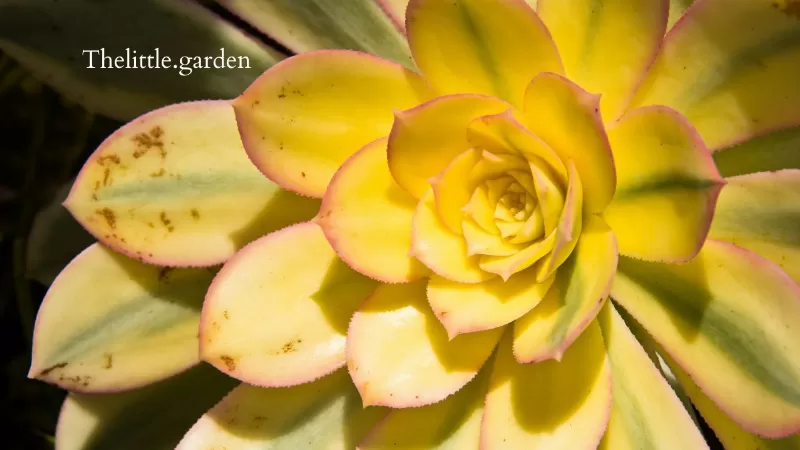
Succulent with yellow leaves
As a succulent enthusiast, you’ve likely faced the dilemma of yellowing leaves on your beloved plants. It’s a common concern that can leave even experienced gardeners scratching their heads. But fear not! We’re about to embark on a journey through the world of succulent care, unraveling the mystery of yellow leaves and equipping you with the knowledge to keep your plants thriving.
When it comes to succulents, yellow leaves can be like a secret language your plants use to communicate. Sometimes, it’s just a natural wardrobe change, akin to leaves changing color in autumn. In these cases, there’s no need to intervene – let your succulent do its thing!
However, when those yellow leaves start feeling mushy or looking particularly unhealthy, it’s time to put on your plant detective hat. These symptoms are often your succulent’s way of waving a distress flag, signaling that something in its environment needs attention.
Succulents are the desert royalty of the plant world, adapted to thrive in arid conditions. When we shower them with too much love (and water), their leaves can turn yellow and mushy.
Action: Remove mushy yellow leaves and adjust your watering schedule. Allow the soil to dry out completely between waterings.
On the flip side, neglected succulents might show their thirst through yellowing and browning leaves.
Action: Don’t remove these leaves. Instead, gradually increase watering frequency and watch your plant perk up.
Insufficient light can cause succulents to grow leggy and lose their vibrant colors, eventually turning yellow.
Action: Move your plant to a brighter location. Remove extremely elongated or discolored leaves to encourage compact growth.
While succulents love light, too much direct sun can cause sunburn, appearing as white or brown spots.
Action: Move the plant to a slightly shadier spot. Remove severely damaged leaves, but leave mildly affected ones.
This fungal issue occurs in poorly draining soil or with overwatering, causing leaves to yellow or blacken.
Action: Remove affected leaves, unpot the plant, trim damaged roots, and replant in fresh, well-draining soil.
Infestations from mealybugs or aphids can cause yellowing where they feed.
Action: Remove heavily infested leaves and treat the plant with an appropriate insecticide.
Succulents need soil that allows excess water to escape easily.
Action: Don’t remove leaves for this issue. Instead, repot your succulent in a well-draining mix.
Lack of nutrients can lead to yellowing leaves and a thin appearance.
Action: Leave the yellowing leaves and fertilize with a balanced, succulent-specific fertilizer.
The wrong pot can stress your plant, leading to discoloration.
Action: Repot into a breathable container with drainage holes. Remove any severely damaged leaves.
Cold temperatures can cause leaves to yellow, brown, and become mushy.
Action: Remove frost-damaged leaves and protect your plants from future cold exposure.
Lower leaves naturally yellow and fall off as part of the plant’s growth process.
Action: No need to remove these leaves; let them fall off naturally.
If you’re facing a yellowing succulent crisis, don’t panic! Here’s a step-by-step guide to nurse your plant back to health:
Remember, patience is key in plant care. With the right attention and adjustments, your succulents can bounce back to their vibrant, healthy selves.
Caring for succulents is an art that combines attention to detail with a dash of plant intuition. By understanding the reasons behind yellowing leaves and taking appropriate action, you’re well on your way to becoming a succulent whisperer.
Remember, each plant is unique, and what works for one might not work for another. Observe your succulents closely, adjust your care routine as needed, and don’t be afraid to experiment (gently, of course!).
We’d love to hear about your succulent care experiences. Have you successfully revived a yellowing plant? Share your stories and tips in the comments below. And if you found this guide helpful, why not spread the succulent love by sharing it with your fellow plant enthusiasts?
Happy growing, and may your succulents always be plump, vibrant, and thriving!
Key takeaways: Discover 5 enchanting flowers to create a magical fairy garden Learn the symbolic…
Watermelon Red Crape Myrtle is a classic, versatile tree with stunning pink-red blooms Grows 20-25…
Key Takeaways: Oriental lilies are prized for their large, fragrant blooms They thrive in well-draining…
Key takeaways: Amaranth is easy to grow in containers, perfect for beginners and experienced gardeners…
Vibrant, low-maintenance flowers for sunny spots Continuous color throughout summer Perfect for borders, ground cover,…
Here's how implementing no-dig techniques can transform your container gardening: Build Richer Soil: Layers of…