- Easy to start, even in small spaces like balconies or patios.
- Provides fresh herbs for cooking, drinks, and decoration right outside your door.
- Most herbs are low-maintenance and rewarding.
- Selecting the right containers and soil is key to success.
- Regular harvesting encourages more growth.
Imagine stepping just outside your kitchen door and snipping vibrant, fragrant herbs for your dinner. That dream is easily achievable with a container herb garden. Whether you have a sprawling backyard, a cozy patio, or just a sunny windowsill, growing herbs in pots brings fresh flavor and delightful aromas right to your fingertips. I’ve been cultivating these aromatic treasures in containers for years, and the simple act of tending to them and using their bounty is one of the most rewarding parts of gardening. Let’s dive into how you can create your own flourishing container herb garden.
Essential Tips for Your Container Herb Garden Success
Growing herbs in containers is wonderfully straightforward. They aren’t overly demanding, offering generous rewards for minimal effort. A little attention goes a long way in yielding beautiful, fragrant plants ready for snipping.
Here are some foundational tips to help your herbs thrive in pots:
- Choose the Right Pot: Ensure containers are large enough to accommodate the mature size of the herbs you plan to grow. Overcrowding can stunt growth.
- Drainage is Non-Negotiable: Your containers MUST have drainage holes. While I’ve occasionally experimented without them, it requires very careful watering to avoid soggy roots, which most herbs detest.
- Group Compatible Herbs: Ideally, plant herbs with similar light and water needs together. However, many herbs are quite forgiving, and you might find success mixing varieties even if their preferences aren’t identical.
- Repot When Needed: If herbs become root-bound or a pot gets overcrowded, don’t hesitate to transplant them into larger containers or divide them. Sharing divisions with friends is a lovely way to spread the joy!
- Mindful Watering: My rule of thumb is to water thoroughly until water drains from the bottom, then let the soil dry out slightly before watering again. Watch for droopy leaves – a clear sign they’re thirsty.
- Occasional Feeding: Give your herbs a boost with a balanced liquid fertilizer about once a month during the growing season.
- Sunny Spot: Most culinary herbs are sun-worshippers. Place your container herb garden in a location that receives at least 6 hours of direct sunlight daily.
- Snip Early and Often: The more you harvest herbs, the bushier and more productive they become. Regular pinching encourages new growth.
- Perennial Possibilities: Many herbs grown in containers, even in colder climates, can surprisingly survive the winter if left in their pots, rewarding you with early growth the following spring. Chives, mint, parsley, sage, and thyme are often good candidates.
- Companion Planting in Pots: Feel free to plant annual flowers alongside your herbs in containers, provided their growing requirements (like sun and water) are similar. Sweet alyssum spilling over the edges of an herb pot is particularly charming.
Remember, when selecting herbs, especially if you intend to use them in cooking, look for plants that haven’t been treated with pesticides.
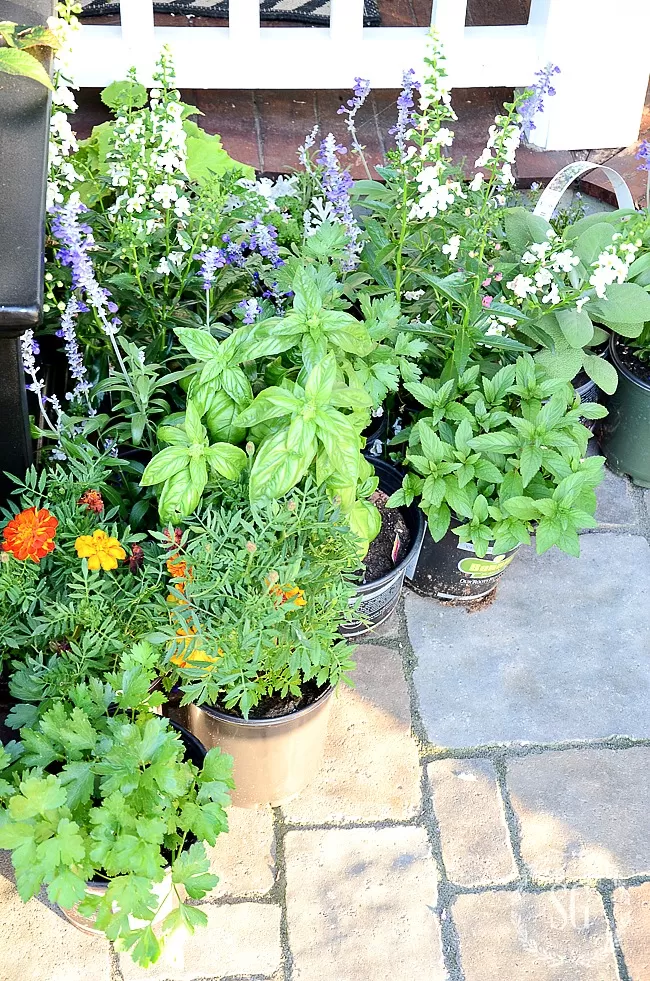
Row of various herb plants in plastic pots ready for transplanting into containers
Most herbs are easy to grow and happily make a home in pots. Here are some of the easiest and most rewarding herbs to include in your container herb garden:
Mint: The Energetic Expander
My childhood memories are steeped in the scent of mint from my grandmother’s garden. It’s an herb that instantly transports you with its invigorating fragrance. Mint is an absolute essential for summer containers, perfect for fresh teas, garnishes, or just enjoying its vibrant presence.
Mint Growing Tips for Containers
While mint is famously easy to grow, especially in pots, its vigorous nature requires a bit of strategy:
- Scientific Name: Mentha species
- Common Name: Mint (Peppermint, Spearmint, Chocolate Mint, etc.)
- Zone: Varies by species, generally hardy in Zones 3-8.
- Light: Full sun to partial shade.
- Water: Prefers consistently moist soil; dislikes drying out.
- Container Isolation: Plant mint in its own pot. It’s incredibly invasive and its roots will quickly colonize and potentially choke out other plants in a shared container.
- Regular Pruning: Keep mint looking its best by pinching or snipping back the stems frequently. This encourages bushier growth and prevents it from becoming leggy.
- Perennial Potential: Don’t discard your mint pot in the fall! Many varieties are perennial and will return bigger and better next year.
- Variety Exploration: Beyond common spearmint and peppermint, explore fun varieties like chocolate, apple, or pineapple mint for unique flavors and aromas.
I usually grow both peppermint and spearmint to have on hand for drinks and cooking.
Close-up of pots on a potting bench, one containing small basil plants
Basil: The Taste of Summer
Basil is the quintessential summer herb for me. Its unmistakable aroma instantly brings to mind warm days and delicious meals. It’s perfectly suited for a container herb garden. Did you know this beloved culinary herb is actually part of the mint family?
We adore making pesto, freezing large batches in ice cube trays to savor the taste of summer all winter. It’s a simple joy made possible by having fresh basil readily available. While basil is generally friendly, I often plant it in its own pot. Not because it’s aggressive like mint, but simply because a happy basil plant, given enough space, can grow quite large, and I always want plenty of it!
Basil Growing Tips for Containers
Success with basil in pots depends on providing the warmth and moisture it craves:
- Scientific Name: Ocimum basilicum
- Common Name: Basil (Sweet Basil, Genovese Basil, Thai Basil, etc.)
- Zone: Typically grown as an annual.
- Light: Full sun (at least 6-8 hours daily).
- Water: Prefers consistently moist soil; wilts quickly if it dries out.
- Warmth Lover: Basil needs heat to thrive. Don’t plant it outdoors until late spring after all danger of frost has passed and nighttime temperatures are consistently warm.
- Pinch to Bush: Regularly pinch off the central growth tips (and use them!) to encourage the plant to branch out rather than grow tall and leggy. This also prevents it from flowering prematurely, which can make the leaves bitter.
- Aggressive Harvesting: Don’t be shy about cutting basil! Pruning aggressively promotes continuous new growth, giving you a steady supply of leaves.
Exploring different basil varieties like sweet basil or smaller Greek basil can add diversity to your container garden and your culinary adventures.
Thyme: The Ground Cover Gem
Thyme is one of the most amiable herbs for a container herb garden. It’s attractive, low-growing, and gets along beautifully with many other plants, both in and out of pots. Another member of the vast mint family, thyme’s delicate appearance belies its hardy nature.
I use thyme frequently in cooking and love how its fine texture looks tucked into a bouquet of garden flowers. It’s truly a must-have for its versatility and charm.
Thyme Growing Tips for Containers
Thyme is remarkably forgiving, particularly regarding water:
- Scientific Name: Thymus vulgaris (and other species)
- Common Name: Thyme (Garden Thyme, Lemon Thyme, Creeping Thyme, etc.)
- Zone: Varies by species, many are hardy in Zones 4-9.
- Light: Full sun.
- Water: Drought-tolerant; prefers soil to dry out between waterings.
- Low Maintenance: Thyme is a low-growing perennial that requires little fuss once established.
- Variety Abounds: With over 50 varieties, you can find thyme with different scents, flavors, and growth habits.
- Dry Feet are Happy Feet: Avoid overwatering. Thyme prefers well-drained soil that gets a chance to dry out significantly between deep waterings. Planting it with other herbs that like drier conditions (like rosemary or oregano) is ideal.
Close-up of low-growing thyme in a clear glass jar used as a makeshift pot
Using more mature, slightly woody thyme shoots for flavoring stocks, soups, and sauces during cooking is excellent, while the tender tips and leaves are best for finishing dishes.
Rosemary: The Pungent Evergreen
Rosemary is a robust, fragrant evergreen herb with needle-like leaves and woody stems. Like many popular herbs, it’s part of the adaptable mint family. It’s a culinary powerhouse that can grow into substantial bushes in warmer climates, often surviving year-round. Even in areas with colder winters, it’s a fantastic addition to a container herb garden, providing fresh flavor throughout the growing season.
Rosemary Growing Tips for Containers
Rosemary is fairly straightforward, but has a few specific needs:
- Scientific Name: Salvia rosmarinus (formerly Rosmarinus officinalis)
- Common Name: Rosemary
- Zone: Typically hardy in Zones 7-10, often grown as an annual or overwintered indoors elsewhere.
- Light: Full sun (at least 6-8 hours daily), ideally with good morning sun.
- Water: Prefers soil to dry out slightly between waterings; dislikes soggy conditions.
- Water Wisely: It likes water but good drainage is crucial. Allow the soil to dry out a bit between waterings to prevent root rot.
- Keep it Trimmed: Regularly harvest rosemary to keep its growth in check and prevent it from becoming leggy or taking over a shared container.
- Good Airflow: Ensure rosemary has good air circulation around it. Avoid planting very tall, dense plants right next to it. It pairs well with lower-growing, dry-loving herbs like thyme or oregano.
Beyond its culinary uses in dishes with meats or infused oils, mature rosemary stems can even be used as flavorful skewers for grilling!
Parsley: The Beloved Garnish
Parsley holds a special place in my heart, tied to my Hungarian/Polish heritage. Growing up, curly parsley was a staple, used generously in almost every savory dish my grandmother made. While I still love curly leaf, I grow both curly and flat-leaf (Italian) varieties in my containers.
Having fresh parsley in a pot right outside my kitchen is incredibly convenient. A quick snip, rinse, and chop adds instant freshness to meals. And following my grandmother’s wisdom, freezing homegrown parsley ensures I have that touch of summer flavor available for soups and stews all winter long.
Close-up of vibrant curly parsley in a pot
Parsley Growing Tips for Containers
Parsley is often treated as an annual, but it’s a biennial that grows leaves the first year and flowers/seeds the second:
- Scientific Name: Petroselinum crispum
- Common Name: Parsley (Curly Leaf, Flat Leaf/Italian)
- Zone: Typically grown as an annual, but can be hardy in Zones 5-9 if protected.
- Light: Full sun to partial shade (prefers some afternoon shade in hot climates).
- Water: Prefers consistently moist soil; dislikes drying out.
- Sun Needs: Parsley enjoys sun but can handle partial shade, especially during the hottest part of the day.
- Thirsty Herb: Keep the soil consistently moist. Unlike thyme or rosemary, parsley doesn’t like to dry out.
- Cut for Growth: Regularly harvest parsley by cutting the outer stems near the base. This encourages the plant to produce more leaves from the center.
- Plant Plenty: One small plant won’t provide a large harvest. Plant several parsley plants in your container to ensure a steady supply. As one plant is used up, you can easily replace it.
While French (curly) and Italian (flat-leaf) parsley are most common, there’s also Hamburg parsley grown for its edible root.
Oregano: The Hearty Spreader
Oregano is an absolute champion for a container herb garden. It’s incredibly hardy and a prolific grower, offering a robust flavor perfect for marinades and Italian cuisine. It’s also very agreeable and can be planted alongside many other herbs.
While oregano benefits from being pinched back to prevent flowering and encourage leaf production, I sometimes let a few stems flower. The delicate pink blossoms are not only pretty but also edible, with a milder flavor than the leaves, making them a lovely garnish.
Close-up of bushy oregano growing in a pot
Oregano Growing Tips for Containers
Oregano is forgiving and relatively low-maintenance:
- Scientific Name: Origanum vulgare (and other species)
- Common Name: Oregano (Greek Oregano, Italian Oregano, etc.)
- Zone: Varies by species, many are hardy in Zones 4-10.
- Light: Full sun.
- Water: Drought-tolerant; prefers soil to dry out between waterings.
- Easy Companion: Oregano plays well with others and is a great choice for mixed herb containers.
- Watering Rhythm: Water thoroughly, then let the soil dry out before watering again. This makes it a good companion for herbs like rosemary or thyme that share this preference.
- Pinch Back: Regularly pinch or snip back the stems to encourage dense, bushy growth and prevent legginess.
- Excellent for Drying: Oregano is one of those herbs whose flavor actually intensifies when dried, making it ideal for preserving your harvest.
Fresh oregano stands up well to longer cooking times, making it perfect for sauces. Adding fresh oregano and a crushed garlic clove can elevate simple jarred spaghetti sauce to something special. Don’t forget to add a sprig or two to your fresh garden bouquets!
Sage: The Striking Accent
Sage is sometimes overlooked, but it’s a fantastic addition to a container herb garden. Its often variegated, velvety leaves add beautiful texture and visual interest to any pot composition.
Sage is typically a perennial and brings a warm, complex flavor to many dishes, especially those with meats, stews, or beans. It’s a classic flavoring for Thanksgiving stuffing and breakfast sausage but is also wonderful infused in brown butter, used in egg dishes, or added to tomato sauce and bread. It’s a key component of a traditional bouquet garni.
Close-up of textured sage leaves in a pot
Sage Growing Tips for Containers
Sage is a sturdy, reliable herb that performs well in pots:
- Scientific Name: Salvia officinalis (and other species)
- Common Name: Sage (Garden Sage, Pineapple Sage, Purple Sage, etc.)
- Zone: Varies by species, many are hardy in Zones 4-10.
- Light: Full sun to partial shade (prefers some afternoon shade in hot climates).
- Water: Prefers soil to dry out slightly between waterings; dislikes soggy conditions.
- Harvesting: Clip stems just above a set of leaves to encourage branching.
- Peak Flavor: For the most potent flavor (highest essential oils), harvest sage in the morning after the dew has dried.
- Mid-Season Pruning: Clipping the plant back hard around mid-season and drying the leaves helps promote vigorous new growth for the latter half of the season.
Sage’s striking foliage and enduring flavor make it a valuable player in any container garden setup.
Other Wonderful Herbs for Containers
Many other herbs thrive in pots and can expand your container herb garden beyond the basics:
- Catnip: (Plant separately, like mint!)
- Dill: Best planted from seed directly into the pot in late spring.
- Lemon Balm: Offers a lovely citrusy scent and flavor.
- Marjoram: A milder cousin of oregano.
- Tarragon: Adds a distinctive licorice-like note.
- Cilantro: Prefers cooler temperatures, can bolt (go to seed) in heat. Plant in succession.
- Bay Laurel: A slow-growing evergreen that can be overwintered indoors in colder climates.
- Chamomile: Grown for its calming flowers used in tea.
Collection of various potted herbs on a rustic outdoor surface
Whether you’re planting your very first container herb garden or your hundredth, there’s always something new to discover. The simple pleasure of tending to these giving plants and the reward of using their fresh flavors is immense. Herbs truly are some of the most useful and generous plants you can grow!
Tending an herb garden, big or small, in the ground or in pots, is a sheer pleasure that connects you to nature and enhances your daily life.
Want to explore more about growing herbs? Check out these related articles on our site:
Several potted herbs sitting inside glass mason jars
Making a simple Mason Jar Herb Garden: https://www.stonegableblog.com/10-minute-mason-jar-herb-garden/
Painting a container for your herb garden DIY: https://www.stonegableblog.com/container-herb-garden-diy/
Ice cube tray filled with chopped herbs suspended in water, ready for freezing
How to Freeze Fresh Herbs for later use: https://www.stonegableblog.com/freezing-herbs-saving-summer-freshness/
Creating Delicious Garden Herb Salt: https://www.stonegableblog.com/garden-herb-salt/
What are your favorite herbs to grow in containers? Share your tips and experiences in the comments below!