- Bring year-round texture, color, and movement to your outdoor spaces.
- Enjoy low-maintenance beauty that stands up to the elements.
- Keep vigorous varieties contained while showcasing their charm.
- Discover top hardy selections perfect for container gardening.
- Master the simple art of planting and caring for grasses in pots.
Have you ever felt like your patio, deck, or garden edges were missing something? Maybe a touch of natural elegance, a whisper of movement, or simply a plant that looks fantastic but doesn’t demand constant attention? If so, you might just fall in love with hardy ornamental grasses in pots. These resilient beauties offer so much more than just greenery; they provide structure, texture, and a captivating dance in the breeze. And the best part? Growing them in containers is a fantastic way to enjoy their splendor while keeping their sometimes-enthusiastic spread under control.
Growing hardy ornamental grasses in pots allows you to curate stunning displays right where you want them. Imagine pots overflowing with feathery plumes or architectural blades gracing your front steps, adding a focal point to a dull corner, or softening the edges of hardscaping. It’s a versatile design choice that brings life and energy to any outdoor setting, proving that some of the toughest plants can also be the most beautiful.
Why Choose Hardy Ornamental Grasses for Pots?
Choosing hardy varieties specifically for containers is a smart move for several reasons. Hardiness means the grass is more likely to survive colder temperatures, making them a potentially year-round feature, unlike tender annuals or less resilient perennials. In pots, roots are more exposed to temperature fluctuations than when planted in the ground, so selecting plants known for their resilience is key to success, especially in areas with cold winters.
Beyond their ability to withstand the cold, hardy ornamental grasses are celebrated for their tough, adaptable nature. They often tolerate a range of soil conditions once established and are remarkably drought-tolerant, reducing your watering workload. This natural toughness makes them ideal candidates for container life, where they can thrive with minimal fuss.
Benefits of Growing Ornamental Grasses in Containers
Bringing the grace of ornamental grasses into pots unlocks a world of design possibilities and practical advantages. It’s about harnessing their natural beauty and toughness in a controlled environment.
Beauty: Adding Texture, Color, and Movement
Ornamental grasses are masters of texture and movement. Their blades and plumes rustle and sway in the wind, creating a dynamic, living element in your garden. While many grasses boast lovely shades of green, the palette is far richer. You’ll find varieties with blue, gold, red, and even pink tones, offering exciting opportunities to introduce pops of color and contrast into your container arrangements. Pairing different textures – fine, airy plumes next to bold, upright blades – adds visual interest and depth.
 Pink Muhly Grass in a container garden
Consider the ethereal beauty of Pink Muhly Grass, which cloaks itself in soft, pink clouds in late summer and fall. It adds a dreamy softness that is simply captivating in a pot. Or the cool, steely blue of Blue Dune Lyme Grass, its rigid blades bringing a striking architectural quality that looks stunning against rocks or contrasting foliage.
Texture varies too. Some grasses, like the Blue Zinger Sedge (which is technically a sedge but performs much like a grass), have a graceful cascade, their blades bending gently outwards. Others, like Fountain Grass, have more upright growth with arching plumes. Mixing these textures in pots allows you to create captivating miniature landscapes.
Low-Maintenance & Resilience
Hardy ornamental grasses are, by nature, low-maintenance powerhouses. Once established, they require little attention. They aren’t typically prone to major pests or diseases, and they generally don’t need frequent feeding. This makes them perfect for busy gardeners or those just starting out.
For container-grown grasses, the primary care involves regular watering (more on this below) and an annual trim. Unlike many flowering plants that require deadheading or fussy pruning, most ornamental grasses just need to be cut back to a few inches above the ground in late winter or early spring before new growth appears. This simplicity is a major draw.
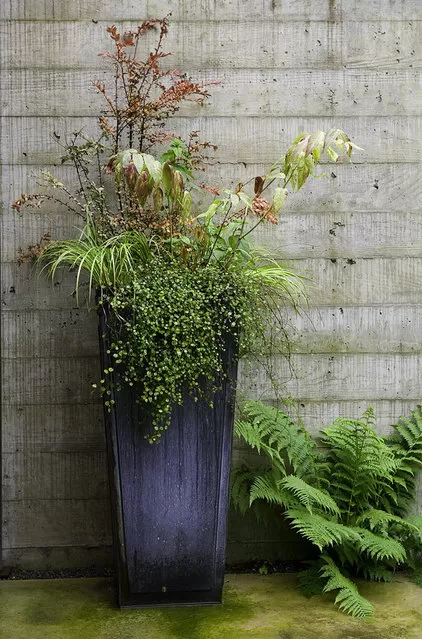
 Potted ornamental grasses displaying lush foliage
Versatility in Design
Putting ornamental grasses in pots gives you complete control over their placement and spread. This is particularly useful for species that can be vigorous in the ground. You can move pots to fill seasonal gaps, change the look of your space, or highlight different plants as they come into their prime.
Potted grasses can serve many purposes:
- Focal points: A single dramatic grass in a striking pot draws the eye.
- Adding height: Tall varieties bring vertical interest to ground-level plantings or deck railings.
- Softening edges: Place pots along patios or walkways to break up hard lines.
- Temporary screens: Group larger pots together for a subtle, movable privacy barrier.
- Mixed arrangements: Combine grasses with flowering annuals or perennials for dynamic container compositions.
Top Hardy Ornamental Grasses for Your Containers
While many ornamental grasses are hardy, here are a few popular and reliable choices often featured and suitable for container growing based on the original text’s examples:
Pink Muhly Grass (Muhlenbergia capillaris)
- Scientific Name: Muhlenbergia capillaris
- Common Name: Pink Muhly Grass, Gulf Muhly
- Zone: 5-9
- Light: Full sun
- Humidity: Prefers moderate humidity but is tolerant
- Water: Drought tolerant once established; needs regular water in containers, especially when young
Pink Muhly is renowned for its cloud-like masses of airy, pink flower plumes in the fall. It forms a neat clump of fine-textured, dark green foliage during the summer. Its spectacular autumn display makes it a star in containers.
Blue Dune Lyme Grass (Leymus arenarius ‘Blue Dune’)
- Scientific Name: Leymus arenarius ‘Blue Dune’
- Common Name: Blue Lyme Grass, Blue Dune Grass
- Zone: 4-9
- Light: Full sun
- Humidity: Adaptable
- Water: Drought tolerant once established; water regularly in containers
This grass is chosen for its striking, intense blue-gray foliage. It has a more upright, architectural form compared to the softer muhly grass. While vigorous in the ground (hence perfect for containing!), ‘Blue Dune’ is a clump-forming cultivar, less aggressive than the species. Its cool color provides excellent contrast.
Blue Zinger Sedge (Carex flacca ‘Blue Zinger’)
- Scientific Name: Carex flacca ‘Blue Zinger’
- Common Name: Blue Zinger Sedge
- Zone: 4-9
- Light: Full sun to partial shade
- Humidity: Adaptable
- Water: Prefers consistent moisture but tolerates some drought; water regularly in containers
Blue Zinger Sedge forms dense clumps of arching, blue-green foliage. While botanically a sedge, it functions similarly to ornamental grasses in the garden. It adds a lovely fine texture and cascades gently over the edges of pots, making it excellent for softening harsh lines.
Cassian Fountain Grass (Pennisetum alopecuroides ‘Cassian’)
- Scientific Name: Pennisetum alopecuroides ‘Cassian’
- Common Name: Cassian Fountain Grass, Dwarf Fountain Grass ‘Cassian’
- Zone: 5-9
- Light: Full sun to partial shade
- Humidity: Adaptable
- Water: Needs regular watering, especially in dry periods; do not let containers dry out completely
‘Cassian’ is a popular cultivar of Fountain Grass known for its compact size and abundant, fuzzy, bottle-brush-like plumes that emerge in summer and persist into fall. The foliage turns lovely shades of gold and tan in autumn, providing extended interest. Its arching form gives it a fountain-like appearance, perfect for adding a soft, flowing element to pots.
Planting and Caring for Hardy Grasses in Pots
Success with hardy ornamental grasses in pots comes down to a few basic principles: providing the right container, good soil, adequate water, and preparing them for winter.
Choosing the Right Pot
Size matters. Select a pot that is wide enough to accommodate the mature spread of the grass’s base and deep enough for its roots to grow comfortably. Grasses can become root-bound over time, so starting with a generously sized container will give you more years before needing to divide or repot. Ensure the pot has drainage holes – this is non-negotiable! Terra cotta pots allow for better evaporation (helpful to prevent soggy roots), while plastic or glazed pots retain moisture longer (can be beneficial in hot climates but require careful watering). Dark colored pots absorb more heat, which can sometimes help warm the soil in cooler climates but can also stress roots in intense summer sun.
Potting Mix and Planting
Use a high-quality potting mix designed for containers. This provides the drainage and aeration that grass roots need. Avoid using heavy garden soil, which can compact in pots. When planting, remove the grass from its nursery pot, loosen any circling roots, and place it in the new container so the top of the root ball is about an inch below the rim. Fill with potting mix, water thoroughly, and top off soil if needed.
Watering Needs
Container plants dry out much faster than plants in the ground. Even drought-tolerant grasses need regular watering in pots, especially during hot, dry periods. Check the soil moisture by sticking your finger about an inch or two deep. If it feels dry, it’s time to water. Water until you see water draining from the bottom of the pot. Reduce watering in fall and winter.
Feeding
Ornamental grasses are generally not heavy feeders. A dose of slow-release granular fertilizer at the beginning of the growing season is often sufficient. Too much fertilizer can lead to lush, floppy growth that is more susceptible to problems.
Pruning and Maintenance
Most hardy ornamental grasses look best if cut back hard annually. Wait until late winter or early spring, just before new growth emerges. Cut the entire clump back to about 4-6 inches above the soil line using sharp pruners or shears. For larger, tougher grasses, electric trimmers or even a hedge trimmer can make the job easier. Wear gloves as some grasses have sharp edges. Dividing grasses every few years (typically when they become root-bound or the center starts to die out) rejuvenates the plant and gives you new plants. This is best done in spring or early summer.
Overwintering Hardy Grasses in Pots
While the grass is hardy, its roots in a container are more vulnerable to freezing and thawing cycles than in the ground. In colder zones ( Zones 5 and below, and sometimes even in Zone 6 depending on the winter), container-grown hardy grasses may need some winter protection.
- Move pots to a sheltered location, such as against a warm wall or in an unheated garage or shed.
- Group pots together to provide mutual insulation.
- Wrap the pots in burlap, bubble wrap, or insulating material.
- Elevate pots slightly to ensure drainage and prevent freezing to the ground.
- Water sparingly through the winter if the soil is dry, but avoid waterlogging.
Potential Challenges
Even hardy ornamental grasses in pots can face minor issues. The most common include:
- Becoming Root-Bound: Indicated by stunted growth or water running straight through the pot. Remedy by dividing and repotting.
- Overwatering: Can lead to root rot. Ensure good drainage and let the top inch of soil dry out before watering again.
- Underwatering: Grass may look wilted or crispy. Increase watering frequency, especially during heatwaves.
- Flopping: Sometimes caused by too much nitrogen fertilizer or insufficient light. Ensure full sun if required by the species and avoid over-fertilizing.
Bringing hardy ornamental grasses in pots into your garden design is a simple yet effective way to add year-round beauty, texture, and movement. Their tough nature combined with striking visual appeal makes them a winning choice for containers on patios, decks, balconies, and beyond. Give them a try, and you’ll quickly see why these resilient plants are a favorite among gardeners seeking low-maintenance impact.
Want to explore more ways to enhance your garden? Check out these related articles:
Landscaping with Grasses for Height and Dimension
Fall Planting
What Blooms in the Fall
Low Maintenance Evergreen Plants