- Transform tired garden edges into crisp, defined borders that elevate your landscape.
- Modern edging solutions keep mulch, gravel, and soil in place while preventing grass encroachment.
- Discover sleek materials like Corten steel and metal, along with structured options like concrete and pavers.
- Living hedges and creative lighting offer unique ways to define garden spaces with contemporary flair.
- Adding landscape edging is a straightforward update that dramatically enhances curb appeal and garden aesthetics.
Have you ever looked at the border between your lawn and flower beds or walkways and felt it needed a little… something? That often-neglected strip can make all the difference in a garden’s overall look and feel. It’s where chaos meets order, and without clear definition, things can quickly get messy. This is where landscape edging comes in. It’s not just about keeping things tidy; it’s about adding structure, style, and a polished finish that makes your garden look intentionally designed. If you’re aiming for a clean, contemporary aesthetic, exploring modern landscape edging ideas is key. Let’s delve into some ways you can create sharp, stylish borders that make your garden truly stand out.
Why Landscape Edging Matters in Modern Design
Landscape edging serves crucial practical purposes, but in modern design, it takes on an aesthetic importance as well. It’s the clean line that separates different garden elements, creating visual interest and a sense of order essential for contemporary aesthetics.
According to landscape architect Rituparna Simlai of Studio Arth, “Lawn edging is a crucial aspect of garden design, as it not only delineates boundaries but also adds a touch of order and definition to the overall landscape.” Beyond just looks, edging helps contain materials like mulch, gravel, or soil, especially when creating raised beds or different garden levels. This containment is vital for maintaining the crisp, clean look characteristic of modern landscapes.
Choosing the right edging material and style can instantly update your yard, giving it a sophisticated edge (pun intended!). Let’s explore some popular modern landscape edging ideas.
Sleek and Durable Modern Edging Materials
Modern landscape design often favors materials that are durable, low-maintenance, and offer clean lines. Here are some top choices for achieving a contemporary edge.
Corten Metal Edging
Corten metal is a standout choice for modern landscapes. Its unique weathering process creates a stable, rust-like appearance that adds a warm, earthy tone while maintaining a sleek, industrial feel. It blends beautifully with both natural elements like stone and planting, and manufactured materials like concrete pavers.
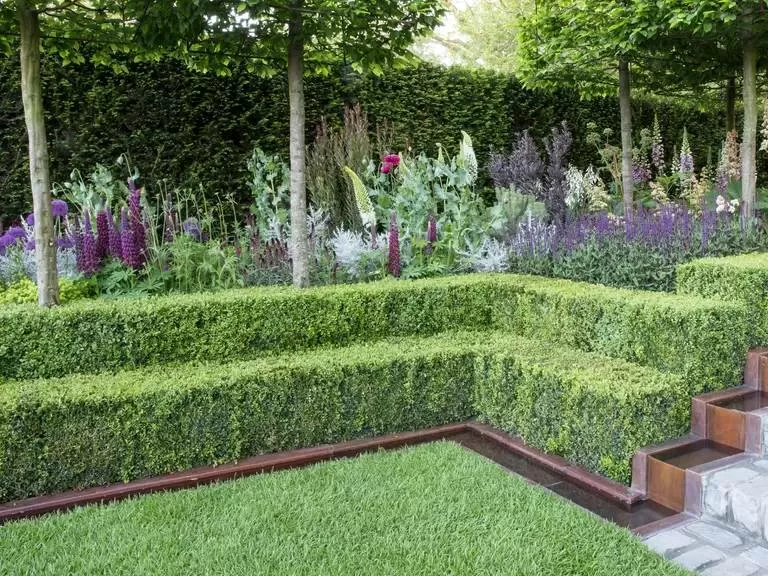 Corten steel landscape edging curves around a garden bed next to a lawn
“A favorite edging option for us at Studio Arth is elegant corten metal,” says Rituparna Simlai. “Its versatility allows it to be bent or curved to accommodate the specific needs of the design, giving us the flexibility to create dynamic and fluid landscapes.” This adaptability is perfect for creating dynamic shapes or following the natural curves of a modern garden layout. Corten can also be used to create varied heights, acting as both an edge and a low retaining wall or planter, further enhancing the visual appeal.
Neat Steel or Aluminum Edging
For a minimalist and fuss-free border, consider neat metal edging made from powder-coated steel or aluminum. This option provides an incredibly sleek and almost invisible line that sharply defines spaces. Available in various colors, you can choose one that blends in or offers a subtle contrast.
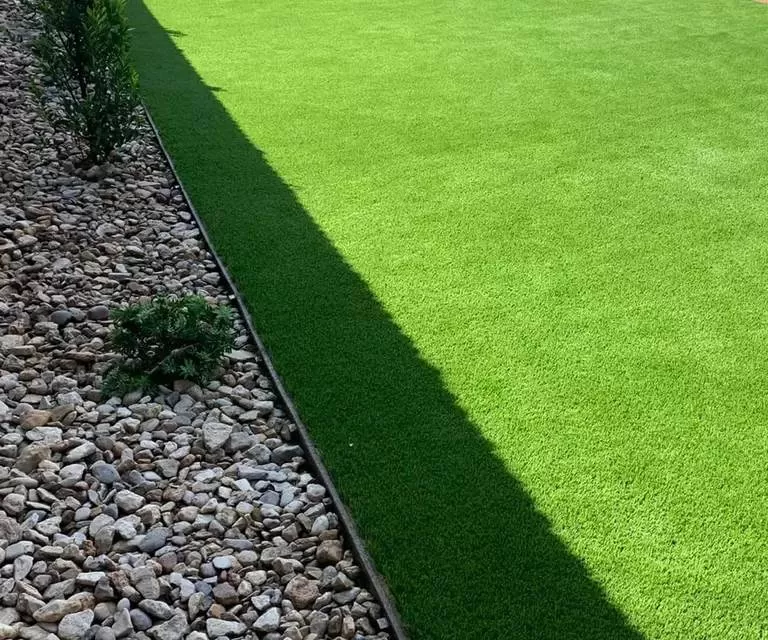 Sleek black metal edging creates a sharp, low border between a lawn and gravel path
Metal edging is durable and effective at preventing grass from creeping into beds. Alex K. Worley, a certified master gardener, notes that metal strips are excellent for defining clean lines. When properly installed, it’s a long-lasting solution ideal for low-maintenance garden designs, providing a clean break without drawing too much attention to itself.
Paver Edge Restraints
While not a visible material itself, a rigid paver edging system is fundamental for creating defined borders, especially when working with modern hardscaping like patios or walkways. These restraints are installed along the edge of pavers or garden beds and can be covered with mulch, soil, or sod to create a seamless, clean transition.
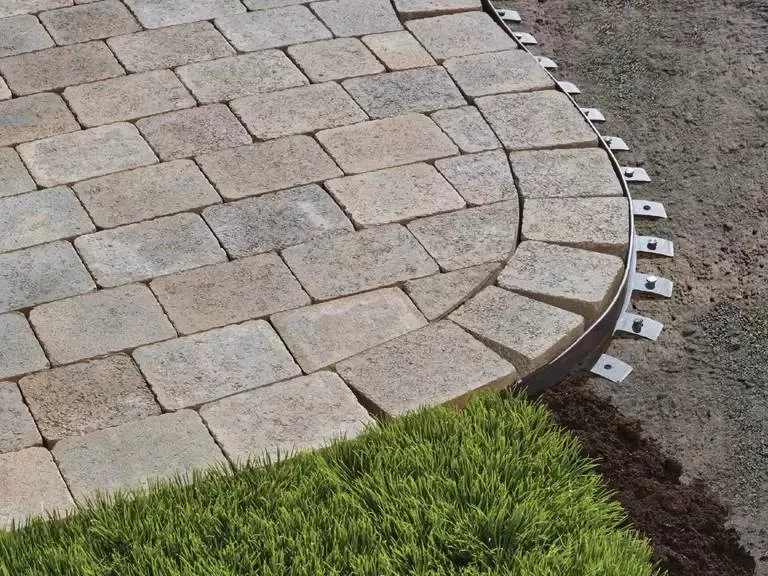 Plastic paver edge restraint spike driven into the ground next to a hardscape edge
Joe Raboine, Vice President of Design at Belgard, highlights that edge restraints allow you to create defined borders, including precise angles and curves essential for modern designs. They are adjustable and held in place with spikes, preventing any future movement and ensuring your edges stay crisp and clean over time.
Concrete Curb Stones and Edging Stones
Concrete offers versatility for creating defined, clean edges that complement contemporary outdoor areas. Available in various shapes, sizes, and finishes, concrete curbs and edgers can be used along driveways, walkways, or garden beds to add a sophisticated touch.
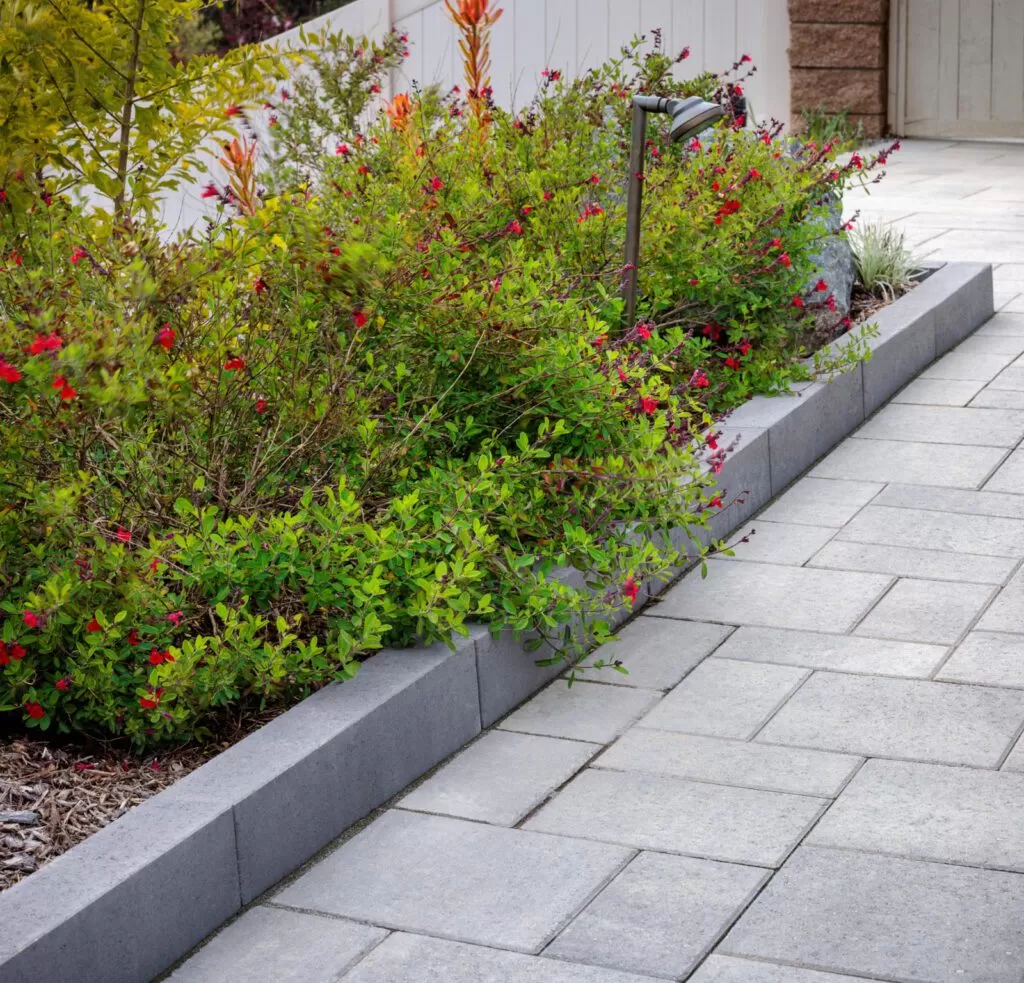 Smooth, dark gray concrete Melville Curb installed vertically as a border for a paved walkway
Modern concrete options, like those with elegant smooth faces and elongated shapes, are perfect for achieving that desired clean look. They can be partially buried for a subtle profile or laid at full height for greater dimension, offering flexibility in design.
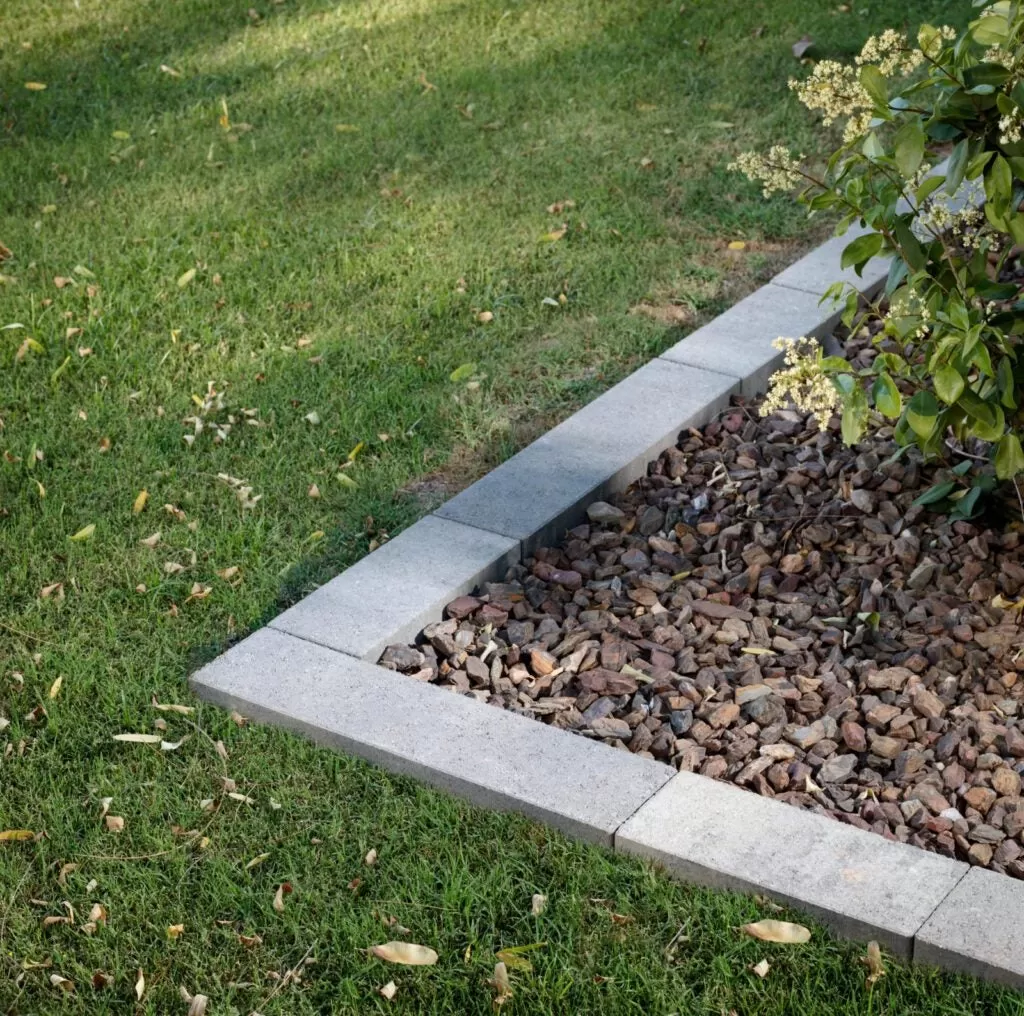 Smooth, dark gray concrete Melville Curb installed flush with the ground level as a subtle lawn border
Concrete edgers not only enhance aesthetic appeal but also effectively contain soil, mulch, and gravel, maintaining tidy boundaries. While some concrete options might lean traditional, selecting smooth, minimalist styles ensures they fit seamlessly into a modern landscape.
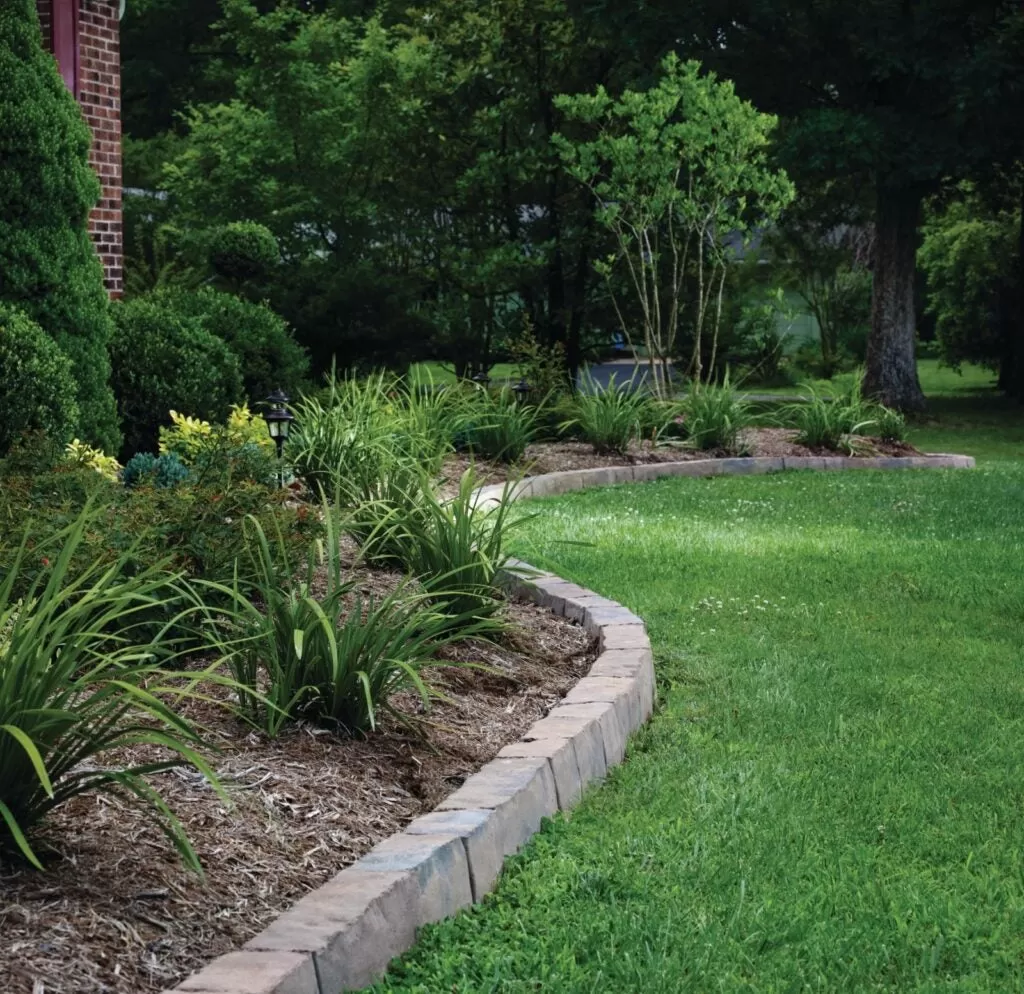 Rough textured concrete Anglia Edger provides a natural stone look border for a garden bed
Whether you prefer a smooth finish or a texture that mimics natural stone in a structured form, concrete provides a durable and versatile option for modern edging.
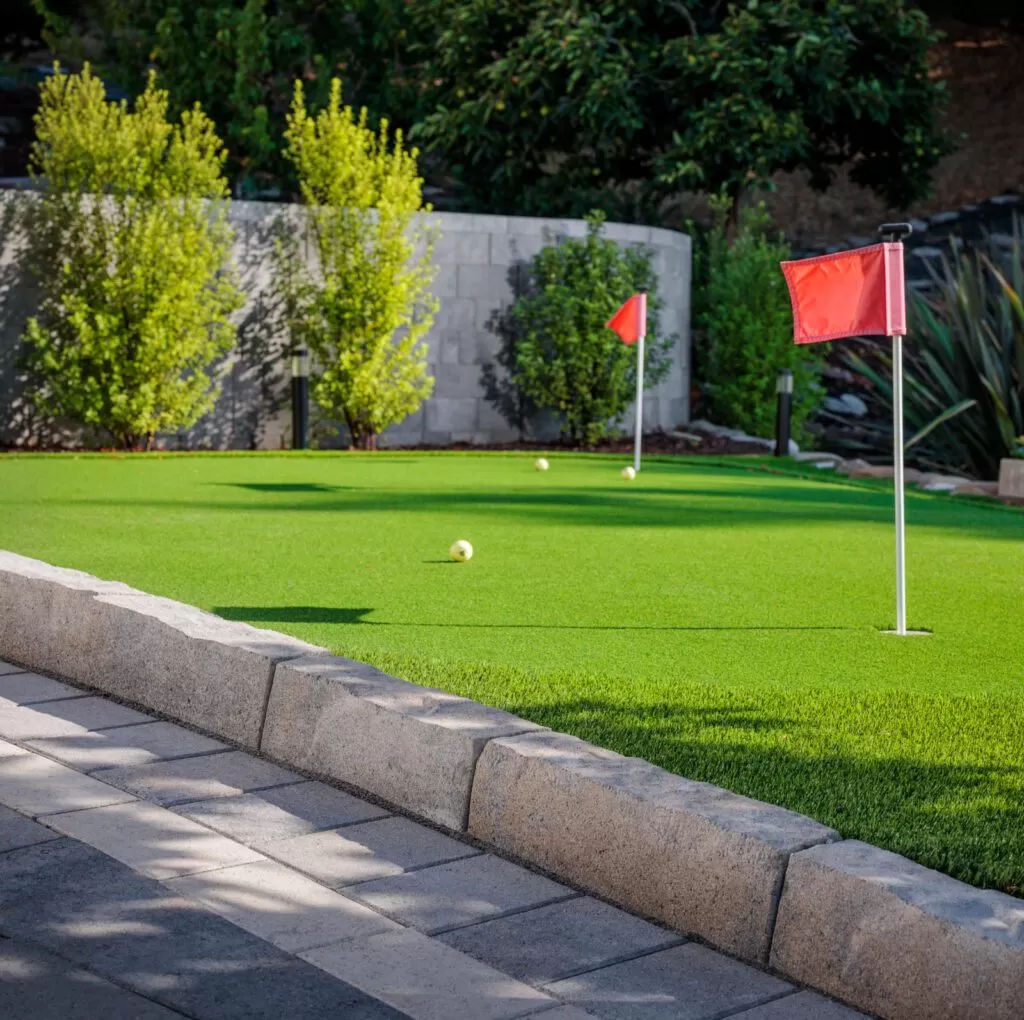 Modern landscape area with paved patio, gravel bed, lawn, and structured hedging bordered by concrete edging
Using concrete or stone edging can create clean lines even in areas with different textures, like bordering a putting green as seen here.
Living Edges and Creative Touches
Modern doesn’t always mean hardscape. Living elements and innovative details can also form stunning contemporary edges.
Smart Evergreen Hedging
For a softer yet equally structured edge, consider using low evergreen hedging. Plants like boxwood (Buxus) are classic choices that fit perfectly into both formal and contemporary designs when kept neatly clipped. They provide year-round structure and a refined appearance.
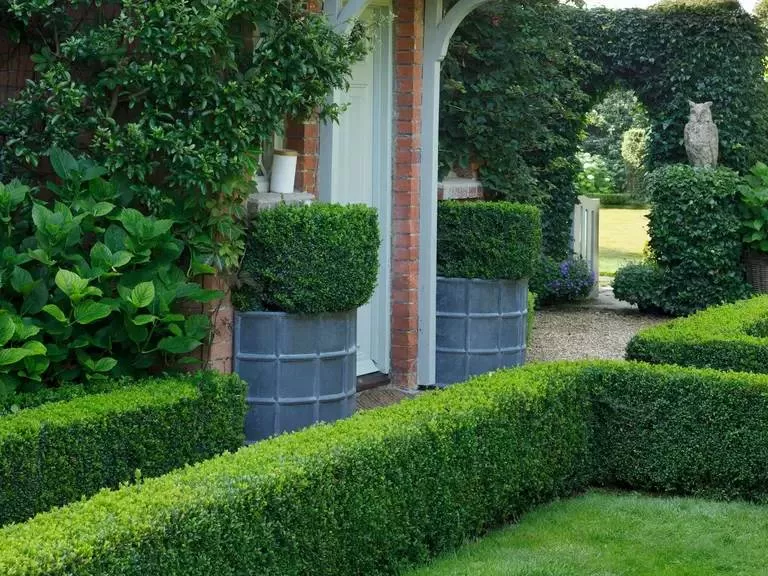 Neatly clipped low evergreen hedge bordering a lawn area, providing a clean, natural edge
Landscaping with boxwood creates a tidy, manicured boundary that requires minimal maintenance beyond regular trimming. This living edge integrates seamlessly with the landscape while providing a clean, defined line that feels both natural and architectural.
Creative Lighting as Edging
Integrated lighting is a sophisticated and functional element in modern landscape design. Recessed lights installed along the edge of a deck or pathway that borders a lawn can define the space and provide practical illumination.
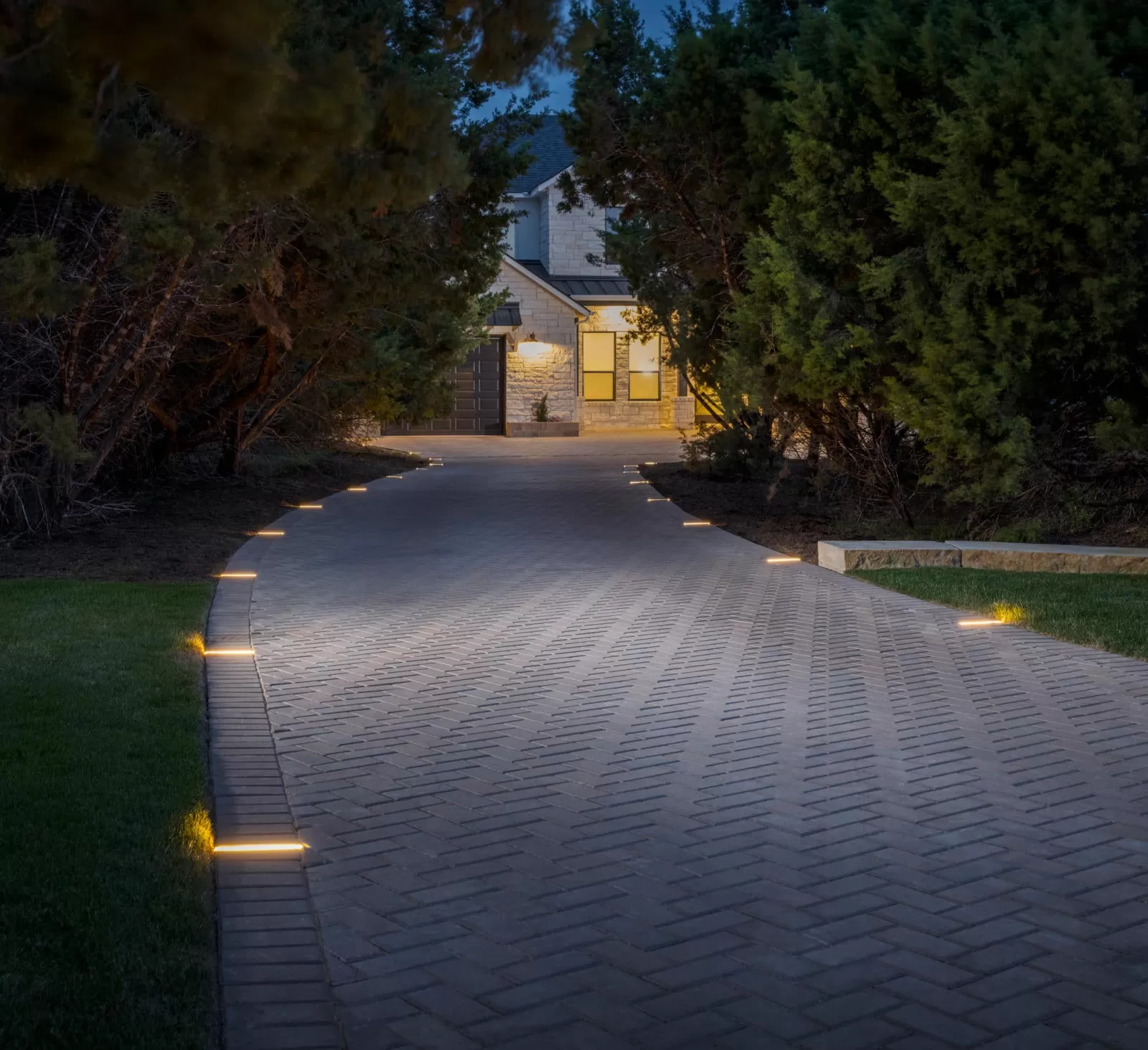 Recessed paver lights integrated into a patio edge next to a lawn
Modern LED lighting offers various options, including colored lights and smart control systems, allowing you to create dramatic and stylish effects.
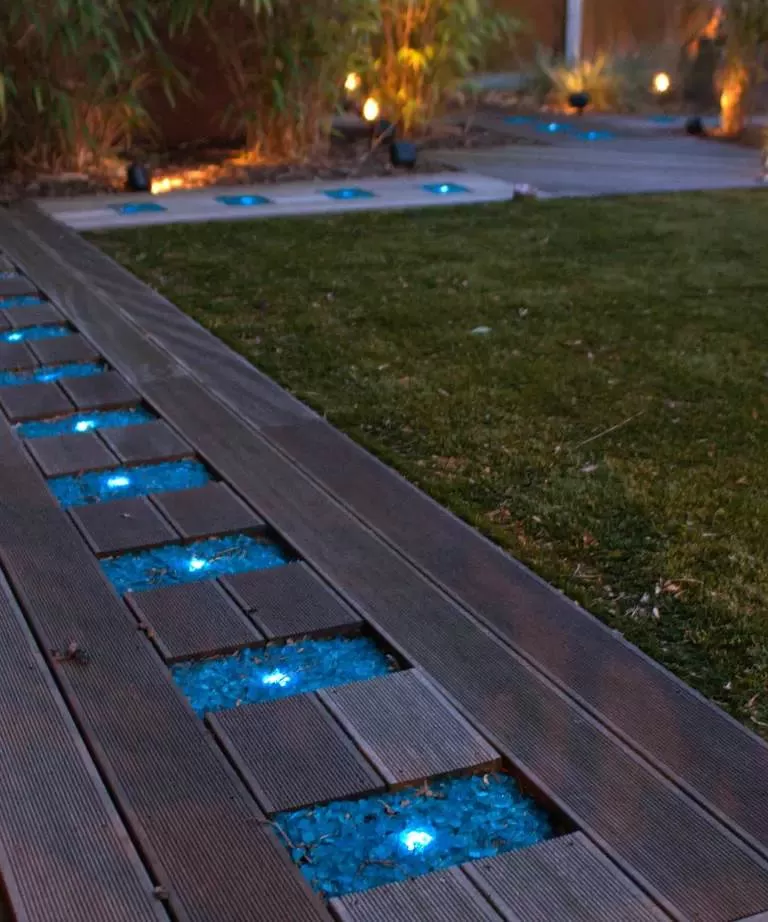 Low voltage landscape lights illuminating the edge between a gravel path and a lawn at dusk
Lighting acts as a border after dark, extending the usability and beauty of your garden into the evening. Jacky Chou, Principal and Director at Archute.com, suggests creative ideas like glow-in-the-dark stepping stones as an alternative form of ‘edging’ that adds a magical touch.
Combining Materials for Decorative Edging
Sometimes, a single material isn’t enough to create the desired impact. Combining two different materials can add depth and visual interest, resulting in a decorative double edge.
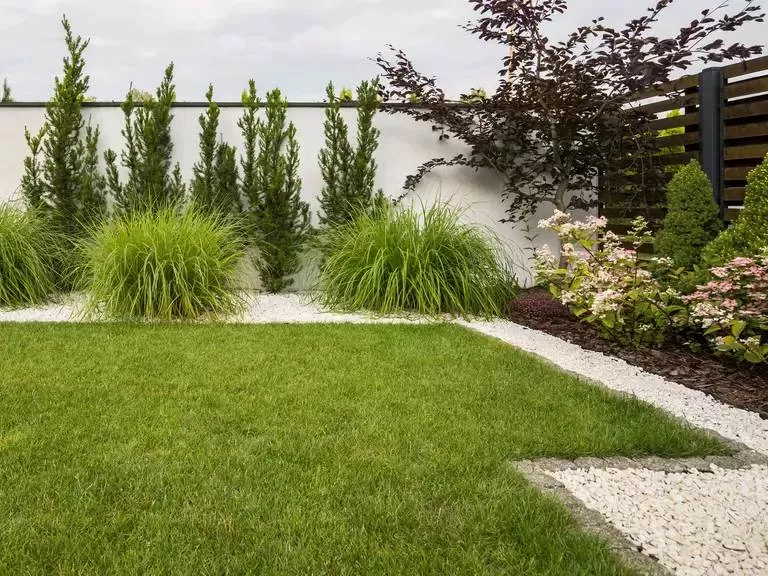 Decorative double landscape edging using gray cobble stones closer to the lawn and a layer of white river rocks
This approach can be particularly effective in modern urban yards. For example, a sharp line of modern paver stones or concrete could be paired with a contrasting band of smooth river rocks or pebbles to create a distinct, layered border that is both practical and visually appealing. The key is selecting materials with clean lines and textures that complement the modern aesthetic.
Integrating More Natural or Traditional Materials (with a Modern Twist)
While not strictly “modern,” some traditional materials can be incorporated into contemporary designs by focusing on how they are used – emphasizing clean installation and structure.
Stacked Rocks
Bordering a lawn with stacked rocks can be a practical and natural-looking option. While it can lean rustic, using large, flat stones layered into a neat, low wall can fit into a minimalist or Japanese-inspired modern landscape.
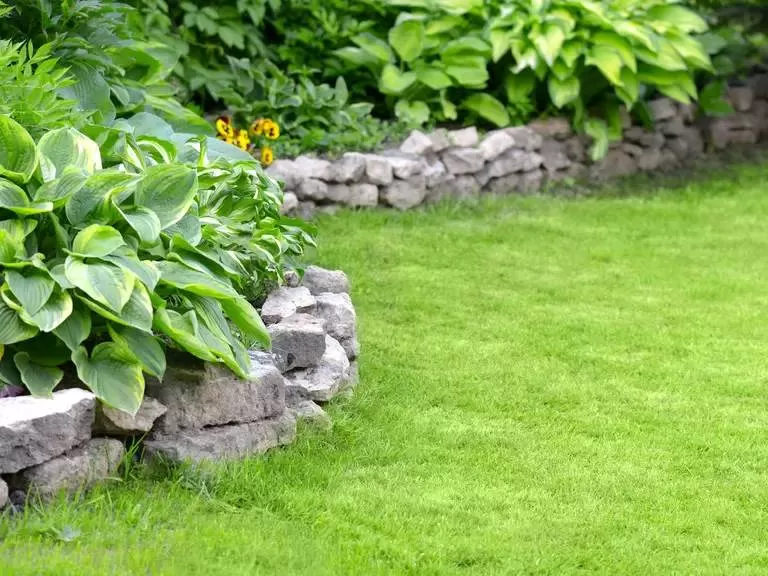 Stacked natural stones forming a low border between a lawn and a garden bed
Choosing specific rock types like smooth granite or layered sandstone and ensuring a clean, stable stack makes this approach more aligned with a modern aesthetic than a loose, rambling pile.
Reclaimed Bricks
Reclaimed bricks can add character, but they can also be used for modern edging. While often associated with rustic styles, laying bricks upright in a narrow trench with mortar creates a sharp, defined edge that works well in contemporary designs, especially those with an industrial edge.
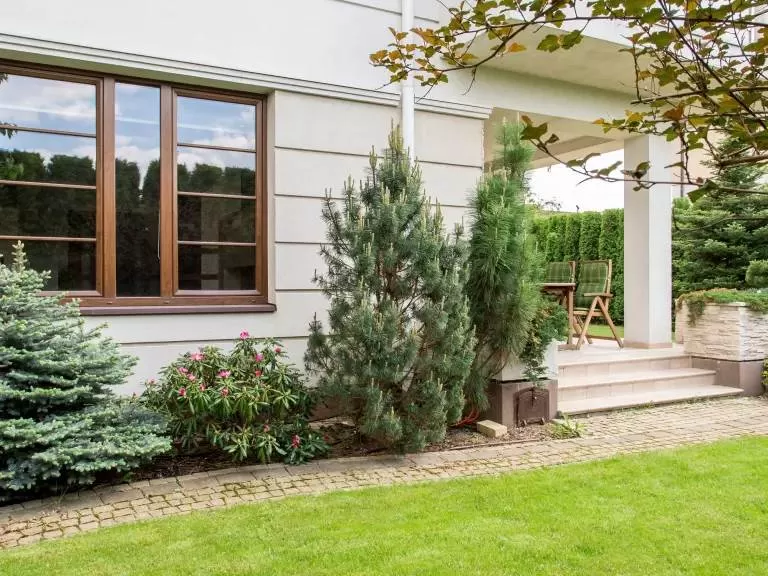 Reclaimed bricks used as upright landscape edging along a curved lawn border
The key is the installation method – prioritizing straight lines or deliberate curves and a clean finish over a weathered, naturalized look. Bricks offer versatility in height and width, allowing for customized borders.
Conclusion
Defining the edges of your lawn and garden beds is a fundamental step in creating a polished and inviting outdoor space. For those who appreciate clean lines and minimalist aesthetics, exploring modern landscape edging ideas opens up a world of possibilities using materials like sleek metals, structured concrete, clean pavers, and even strategically placed lighting or clipped hedges. Whether you choose the weathered beauty of Corten steel, the near invisibility of neat aluminum, or the solid structure of concrete, the right edging will not only keep your garden tidy but elevate its entire appearance.
Ready to give your garden the defined borders it deserves? Which modern edging idea sparked your interest the most? Share your thoughts in the comments below! And if you found these ideas inspiring, don’t forget to share this article with fellow garden enthusiasts. Explore more garden design tips and tricks on Thelittle.garden!