- Successful native flower gardening balances wild charm with thoughtful design, focusing on plant height and growth habits.
- Mimicking natural plant communities is key to avoiding a disorganized, “overgrown” appearance in your garden.
- Strategic selection of native flowers and grasses ensures a cohesive, ecologically rich, and visually appealing landscape.
- Starting with well-matched plant companions paves the way for a thriving and beautiful native flower garden.
The allure of a garden buzzing with life, showcasing the resilience and unique beauty of local flora, is undeniable. This is the heart of native flower gardening – a practice that not only supports local ecosystems but also brings a distinct, natural charm to our outdoor spaces. However, many keen gardeners find their enthusiasm dampened when their well-intentioned native plantings begin to look less like a curated sanctuary and more like an untamed wilderness. The secret to transforming a potentially chaotic collection of plants into a harmonious native haven often lies in understanding one crucial aspect: how to select and arrange plants, especially those with a tendency to reach for the sky.
Contents
- The Common Pitfall: When “Wild” Looks Just…Wild
- Plant Spotlight: Grey-headed Coneflower
- Designing with Nature: The Key to Successful Native Flower Gardening
- Observe Your Local Ecosystems
- The Beauty of “Respectable Sizes”: Choosing Compatible Companions
- Plant Spotlight: Butterfly Weed
- Plant Spotlight: Dotted Blazing Star
- Plant Spotlight: Purple Poppy Mallow
- The Power of Layers and Density
- Practical Tips for Your Native Flower Garden
- Start Small, Grow Wise
- Cues to Care: Showing Intention
- Understanding Plant Needs (Beyond Height)
- Your Journey into Native Flower Gardening
The Common Pitfall: When “Wild” Looks Just…Wild
One of the most frequent challenges I encounter in discussions about native flower gardening is the unintentional creation of a “messy” or “overgrown” look. This often stems from a simple oversight: planting species that grow too tall for their designated spot or without the supportive companionship they’d have in their natural habitat.
A classic example is the majestic Grey-headed Coneflower (Ratibida pinnata). In its native tallgrass prairie setting, this beauty often stands tall amidst a sea of Big Bluestem or Indiangrass, relying on these sturdy neighbors for support. Bring it into a typical garden bed, however, and it’s often treated as a solitary specimen, marooned in a sea of mulch or surrounded by much shorter plants. Unsurprisingly, it can look out of place, or worse, start to flop and lean as it reaches for optimal sunlight without its natural scaffolding. While one solution is to surround it with other tall forbs, this can result in a dense wall of 4-6′ plants, which might feel overwhelming in a smaller suburban front yard, challenging more traditional garden expectations.
Plant Spotlight: Grey-headed Coneflower
- Scientific Name: Ratibida pinnata
- Common Name: Grey-headed Coneflower, Pinnate Prairie Coneflower
- Zone: 3-8
- Light: Full sun
- Humidity: Adaptable, prefers moderate
- Water: Dry to medium; drought-tolerant once established
Designing with Nature: The Key to Successful Native Flower Gardening
The true artistry in native flower gardening lies in emulating the wisdom of nature. We want to capture that wild essence, with its density and layers offering incredible ecological benefits, but translate it effectively for our home landscapes, especially in urban or suburban settings.
Observe Your Local Ecosystems
A fantastic starting point is to become a student of your local environment. Take walks in nearby prairies, woodlands, or natural areas. Observe which plants thrive together. Notice their heights, their forms, and how they intermingle. For instance, in some Midwest prairies, you’ll find Little Bluestem and Sideoats Grama grasses forming a beautiful tapestry with the vibrant spikes of Dotted Blazing Star (Liatris punctata), the cheerful orange of Butterfly Weed (Asclepias tuberosa), the subtle charm of Virginia Mountain Mint (Pycnanthemum virginianum), and the sprawling beauty of Purple Poppy Mallow (Callirhoe involucrata), often accompanied by various sedges. These plants don’t just look good together; their root systems are compatible, and they maintain “respectable sizes” even in a more cultivated garden setting.
The Beauty of “Respectable Sizes”: Choosing Compatible Companions
At the heart of a well-designed native flower garden is the selection of plants that share similar growth styles – their overall shape, how vigorously they grow, and how they spread. The goal is to create a community where plants intermingle to cover the ground beautifully. If the average height of your base layer of plants is around 18-24 inches, you can then strategically introduce taller “accent” plants, like an elegant Asper Blazing Star (Liatris aspera) or the striking architectural form of Rattlesnake Master (Eryngium yuccifolium), for that pop of visual interest without overwhelming the space.
Plant Spotlight: Butterfly Weed
- Scientific Name: Asclepias tuberosa
- Common Name: Butterfly Weed, Orange Milkweed, Pleurisy Root
- Zone: 3-9
- Light: Full sun
- Humidity: Low to moderate
- Water: Dry to medium, requires well-drained soil
Plant Spotlight: Dotted Blazing Star
- Scientific Name: Liatris punctata
- Common Name: Dotted Blazing Star, Dotted Gayfeather
- Zone: 3-8
- Light: Full sun
- Humidity: Low to moderate
- Water: Dry, requires excellent drainage
Plant Spotlight: Purple Poppy Mallow
- Scientific Name: Callirhoe involucrata
- Common Name: Purple Poppy Mallow, Winecups
- Zone: 4-8
- Light: Full sun
- Humidity: Adaptable
- Water: Dry to medium, drought-tolerant
The Power of Layers and Density
Creating layers and encouraging plant density isn’t just about aesthetics; it’s about ecological function. A densely planted native garden naturally suppresses weeds, reduces the need for mulch over time, and provides crucial habitat and food sources for pollinators and other beneficial wildlife. This approach, where plants knit together, creates a living carpet that is both beautiful and resilient. It’s about mimicking how plants naturally compete and coexist in more challenging wild conditions, bringing that balanced vigor into your garden.
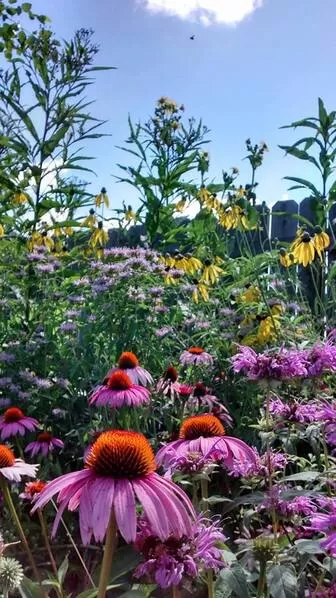 A vibrant native flower garden bed showcasing a harmonious mix of coneflowers, grasses, and other perennials, demonstrating successful plant community design in native flower gardening.
Practical Tips for Your Native Flower Garden
Embarking on your native flower gardening adventure can be incredibly rewarding with a few practical strategies in mind.
Start Small, Grow Wise
Especially if you’re working with smaller beds or are new to native plants, it’s often wise to start with a more limited selection of species. This allows you to learn their growth habits, how they interact, and what thrives in your specific conditions without feeling visually overwhelmed. You can always add more diversity in subsequent years as your confidence and understanding grow. Remember, every garden is a unique, evolving experiment!
Cues to Care: Showing Intention
In urban and suburban settings, it’s helpful to incorporate “cues to care.” These are design elements that clearly signal your native planting is an intentional garden, not an abandoned lot. Things like neat edges, clear pathways, a well-placed bench, garden art, or even small plant identification signs can make a world of difference in how your “wilder” garden is perceived by neighbors and visitors. They show that love and attention are being poured into the space.
Understanding Plant Needs (Beyond Height)
While height is a critical factor in design, don’t forget the other essentials. When grouping plants, ensure they have compatible needs for sunlight, soil type, and moisture. A sun-loving, drought-tolerant prairie plant won’t thrive next to a shade-loving species that prefers moist soil. Matching these fundamental requirements is foundational to a healthy and harmonious native flower garden.
Your Journey into Native Flower Gardening
Native flower gardening is a journey of discovery, connecting us more deeply with the natural world around us. By thoughtfully selecting plants that complement each other in height, habit, and needs, you can create a stunning, ecologically vibrant garden that is both manageable and a joy to behold. It’s about finding that sweet spot where the untamed beauty of native flora meets the gentle hand of intentional design.
What are your favorite native plant combinations, or what challenges have you faced when bringing wild beauty into your garden space? We’d love to hear your experiences and tips in the comments below! Feel free to share this article with fellow gardening enthusiasts and explore more inspiration here at The Little Garden.