- Discover the benefits of replacing your traditional lawn with a low-maintenance, beautiful garden.
- Learn how to combine colors, textures, and plant shapes for dynamic visual interest.
- Explore specific drought-tolerant plant examples perfect for grass-free landscaping.
- Gain confidence in creating a vibrant, water-wise front yard that buzzes with life.
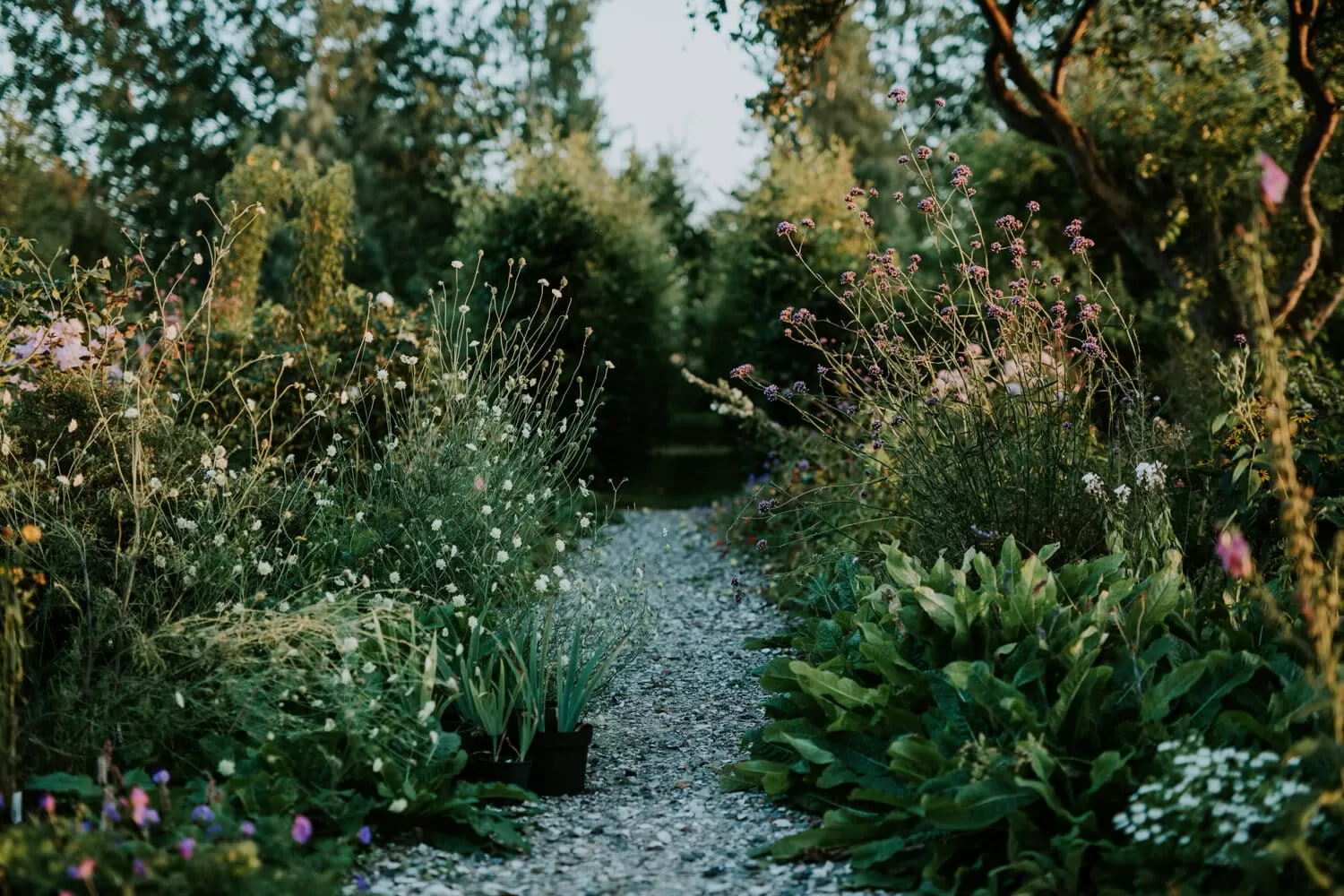
Imagine stepping outside to a front yard that isn’t just a patch of grass, but a vibrant tapestry of colors, textures, and life. A space that requires less water, less mowing, and offers so much more beauty and biodiversity. Switching to a no-lawn front yard is one of the most rewarding decisions you can make for your home and the environment. It’s an opportunity to express your personal style, create a welcoming entrance, and enjoy a garden that truly thrives with minimal fuss. Let’s explore some stunning ideas and plants that can help you achieve this beautiful transformation.
Why Consider a No-Lawn Front Yard?
The traditional lawn has been a staple for decades, but maintaining that perfect green carpet often comes at a high cost: significant water usage, regular mowing (and the associated emissions), fertilizers, and pesticides. Opting for a grass-free front yard addresses these challenges head-on.
- Water Conservation: Many no-lawn designs utilize drought-tolerant and native plants that require far less irrigation once established compared to turfgrass.
- Reduced Maintenance: Say goodbye to weekly mowing! While a no-lawn garden still needs care (weeding, occasional pruning), it’s typically less demanding than a manicured lawn.
- Increased Biodiversity: A variety of plants provides habitat and food for pollinators like bees and butterflies, as well as birds and other beneficial wildlife.
- Enhanced Curb Appeal: Unique plant combinations and hardscaping elements create a distinctive, attractive landscape that can significantly boost your home’s curb appeal.
- Environmental Benefits: Less water, fewer chemicals, and reduced carbon emissions from mowing contribute to a healthier local environment.
Designing Your Dream No-Lawn Space
Creating a successful no-lawn front yard starts with thoughtful design. Think about the style of your home, the amount of sunlight your yard receives, and how you want the space to function.
Planning the Layout and Flow
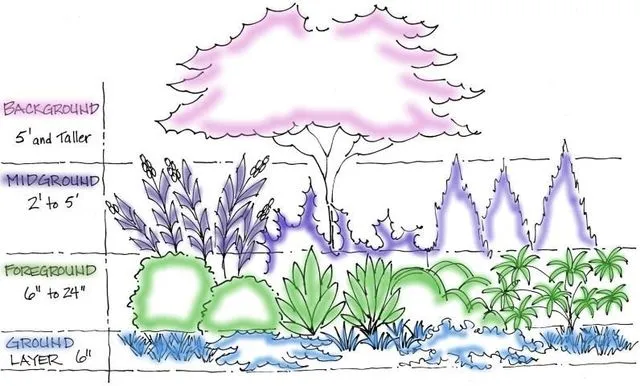
Consider paths, seating areas, or focal points like a beautiful boulder or a piece of garden art. Define planting beds with clear edges using materials like stone, metal, or even just a deeply cut trench. Think about varying heights and shapes of plants to create visual depth and interest throughout the seasons.
Playing with Color and Texture
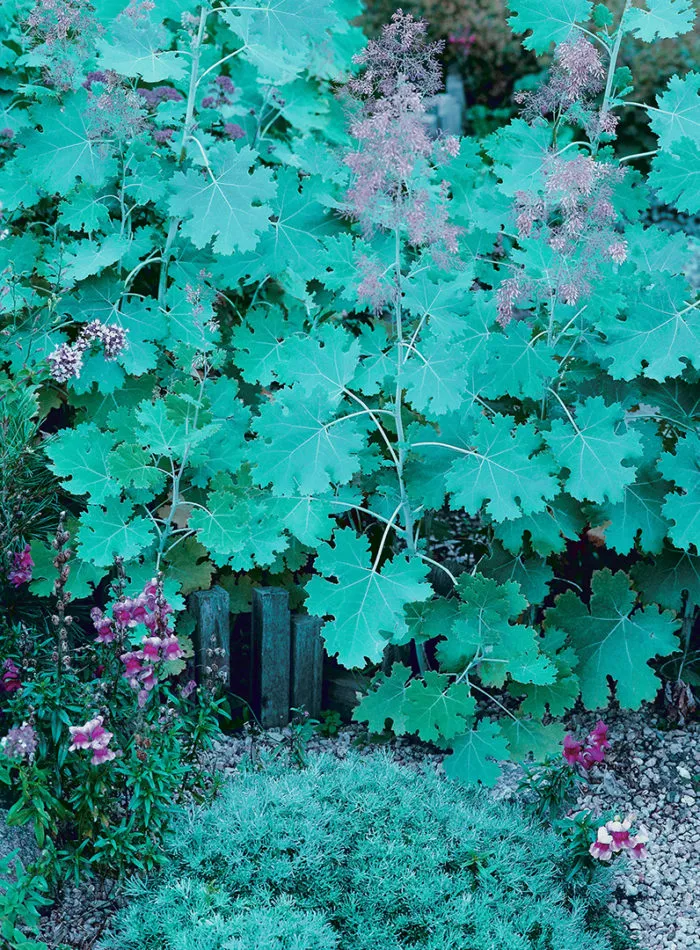
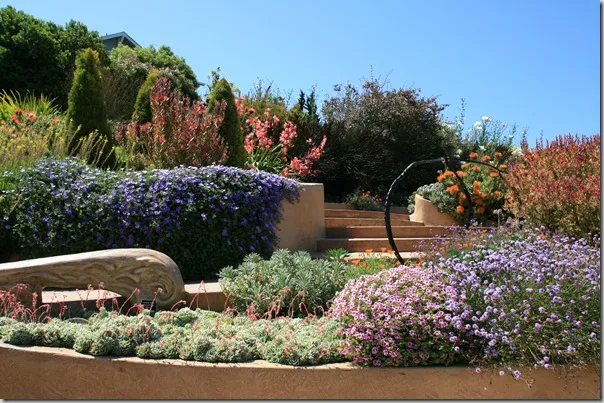
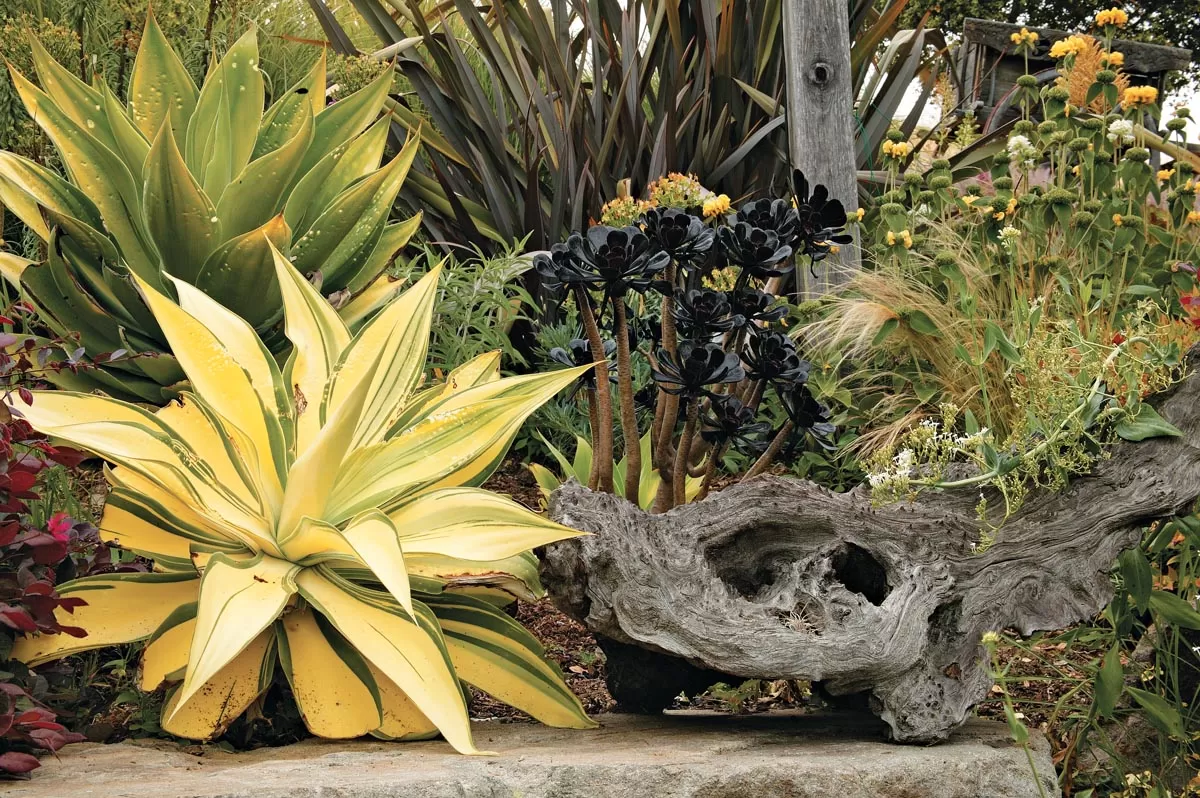
One of the joys of a grass-free yard is the ability to go bold with plant choices. Don’t be afraid to use vibrant hues! However, just like painting a picture, balancing bright colors is key. If you’re drawn to hot colors like gold and chartreuse, pair them with cooling counterparts like lavender and blue.
This contrast prevents the garden from looking overly bright or chaotic, providing visual resting points and highlighting the unique characteristics of each plant. Texture is also crucial. Combine fine-bladed grasses with broad leaves, spiky forms with soft mounds, or smooth foliage with fuzzy textures to keep the eye moving and create dynamic scenes.
 Vibrant no-lawn front yard garden featuring gold, chartreuse, lavender, and blue plants.
Stunning Plant Ideas for a No-Lawn Front Yard
The possibilities are endless, but let’s look at some fantastic performers often used in successful no-lawn landscapes, including those featured in inspiring garden transformations.
Architectural Interest with Grasses and Strappy Plants
Grasses and strappy-leaved plants offer structure, movement, and year-round interest. Their forms provide a strong visual anchor in the garden.
Take, for instance, the steely blue blades of Blue Oat Grass (Helictotrichon sempervirens). Its mounding habit and cool color provide a beautiful contrast to warmer tones and softer textures. Paired with something like the strappy, often colorful leaves of Phormium, you get a fantastic play of shapes and sizes. Even though they share a similar upright form, their vastly different scales and colors make them distinctly unique and eye-catching.
- Plant Information: Helictotrichon sempervirens
- Scientific Name:
Helictotrichon sempervirens - Common Name: Blue Oat Grass
- Zone: 4-8
- Light: Full sun
- Humidity: Moderate to low
- Water: Low once established, average during establishment
- Scientific Name:
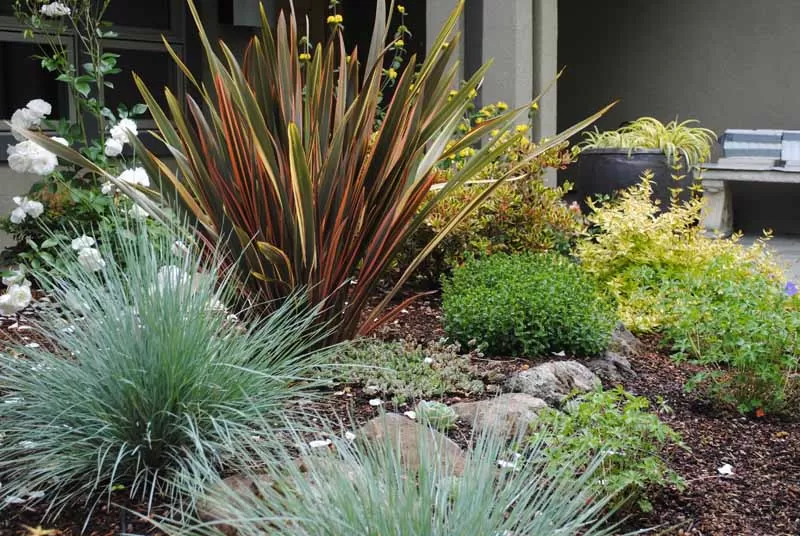 Textural contrast between steely blue Blue Oat Grass and strappy Phormium in a drought-tolerant garden.
- Plant Information: Phormium (cultivars like ‘Maori Maiden’)
- Scientific Name:
Phormium(often cultivars ofP. tenaxorP. cookianum) - Common Name: New Zealand Flax
- Zone: 8-11 (varies by cultivar)
- Light: Full sun to partial shade
- Humidity: Moderate to low
- Water: Low once established, regular during establishment
- Scientific Name:
Adding Vibrant Color and Texture with Shrubs and Perennials
This is where you can really inject personality into your no-lawn design. Choose plants that offer interesting foliage color and texture, as well as blooms that attract beneficial insects.
Consider the bright, variegated leaves of Abelia ‘Kaleidoscope’. Its foliage transitions through shades of green, yellow, and red throughout the seasons, providing continuous interest. Pair it with other low-water, evergreen shrubs like Coprosma ‘Pink Splendor’, which offers glossy leaves often with pink or reddish tones, and the cheerful yellow flowers of Phlomis fruticosa. These plants are incredibly tough and well-suited for warmer climates like Zone 9, thriving even with minimal water.
-
Plant Information: Abelia ‘Kaleidoscope’
- Scientific Name:
Abelia x grandiflora‘Kaleidoscope’ - Common Name: Kaleidoscope Abelia
- Zone: 6-9
- Light: Full sun for best color
- Humidity: Moderate to low
- Water: Low once established, regular during establishment
- Scientific Name:
-
Plant Information: Coprosma ‘Pink Splendor’
- Scientific Name:
Coprosma repens‘Pink Splendor’ (cultivar) - Common Name: Mirror Plant ‘Pink Splendor’
- Zone: 9-11
- Light: Full sun to partial shade
- Humidity: Moderate to low
- Water: Low once established, average during establishment
- Scientific Name:
-
Plant Information: Phlomis fruticosa
- Scientific Name:
Phlomis fruticosa - Common Name: Jerusalem Sage
- Zone: 8-10
- Light: Full sun
- Humidity: Low
- Water: Very low once established, drought-tolerant
- Scientific Name:
To soften these bolder elements and add contrasting color, include plants with gray-green foliage like Nepeta (Catmint) and the reliable Sedum ‘Autumn Joy’. The Nepeta adds a mounding, billowy texture and often purple-blue flowers, while the Sedum provides sturdy structure and late-season blooms that fade from pink to deep russet, offering beauty well into fall and winter.
-
Plant Information: Nepeta (e.g.,
Nepeta x faassenii)- Scientific Name:
Nepetaspecies/hybrids (e.g.,Nepeta x faassenii) - Common Name: Catmint
- Zone: 3-8
- Light: Full sun to partial shade
- Humidity: Moderate to low
- Water: Low once established, average during establishment
- Scientific Name:
-
Plant Information: Sedum ‘Autumn Joy’
- Scientific Name:
Hylotelephium telephium‘Autumn Joy’ (formerlySedum telephium) - Common Name: Autumn Joy Stonecrop
- Zone: 3-8
- Light: Full sun
- Humidity: Low
- Water: Low once established, drought-tolerant
- Scientific Name:
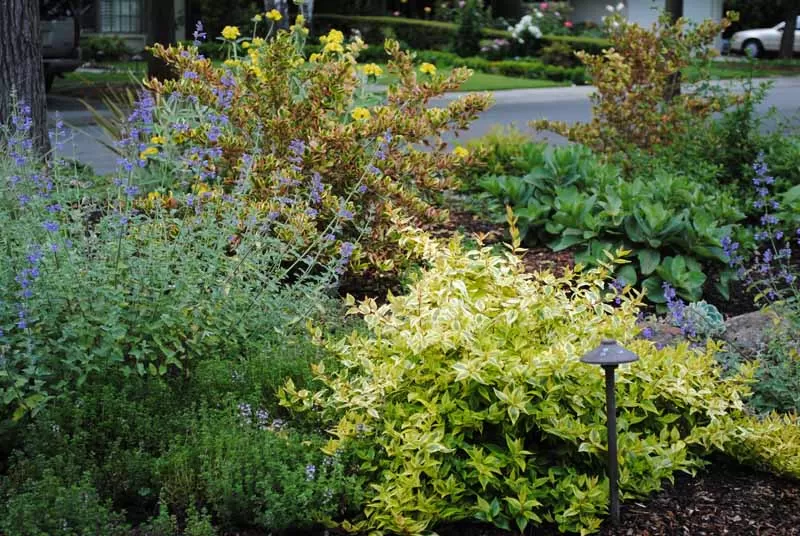 Colorful low-water planting bed with variegated Abelia, Coprosma, and yellow Phlomis flowers.
Attracting Pollinators with Blooming Beauties
A no-lawn yard offers a fantastic opportunity to create a haven for local wildlife. Choose plants known for attracting pollinators.
California’s native Salvia spatheca, known as Hummingbird Sage, is a long-blooming favorite. Its striking magenta flower spires are an absolute magnet for hummingbirds, providing a lively spectacle in your garden. These majestic spires can reach up to 18 inches tall, and running your hand along them reveals a surprisingly smooth, silky texture – a delightful sensory experience!
- Plant Information: Salvia spatheca
- Scientific Name:
Salvia spatheca - Common Name: Hummingbird Sage, Pitcher Sage
- Zone: 8-11
- Light: Full sun to partial shade
- Humidity: Low
- Water: Very low once established, drought-tolerant (California Native)
- Scientific Name:
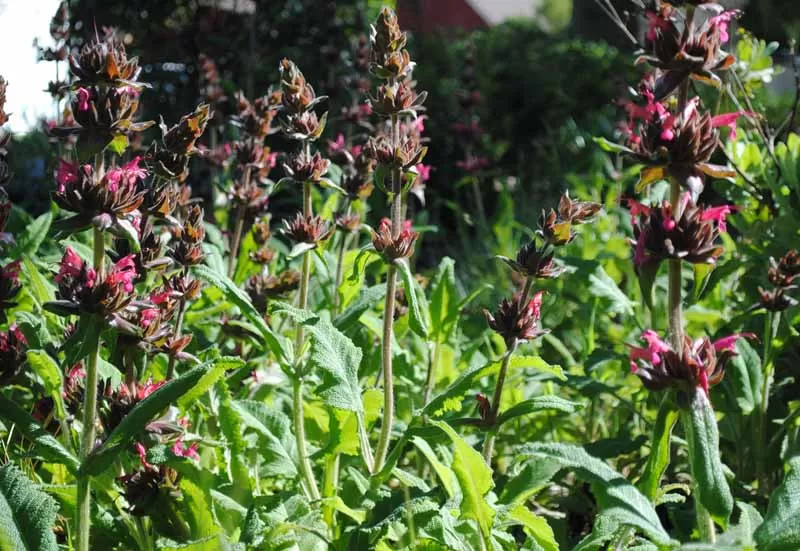 Magenta spires of native Hummingbird Sage (Salvia spatheca) attracting pollinators.
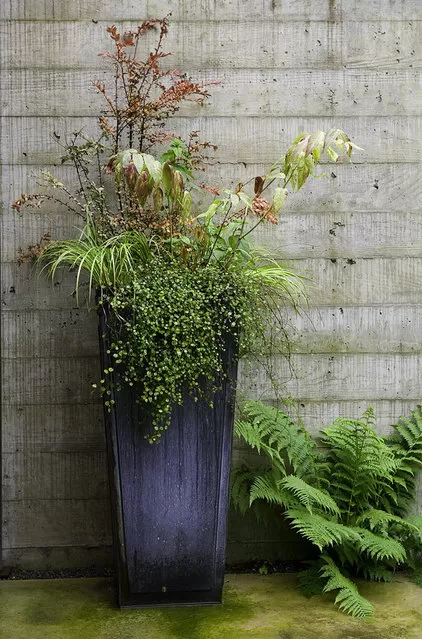
Don’t forget containers! Pots near the entrance or on the porch can tie the landscape design together. A pot sporting brightly colored foliage, like Agapanthus ‘Gold Strike’, can repeat the color and form found in the ground plantings, creating a cohesive look. Choosing a container in a cooling shade, like dark gray, can provide a grounding element that complements the vibrant plants and the house itself.
- Plant Information: Agapanthus ‘Gold Strike’
- Scientific Name:
Agapanthus(cultivar, likelyA. praecoxhybrid) - Common Name: Lily of the Nile ‘Gold Strike’
- Zone: 8-11
- Light: Full sun
- Humidity: Moderate to low
- Water: Moderate, tolerant of some drought once established
- Scientific Name:
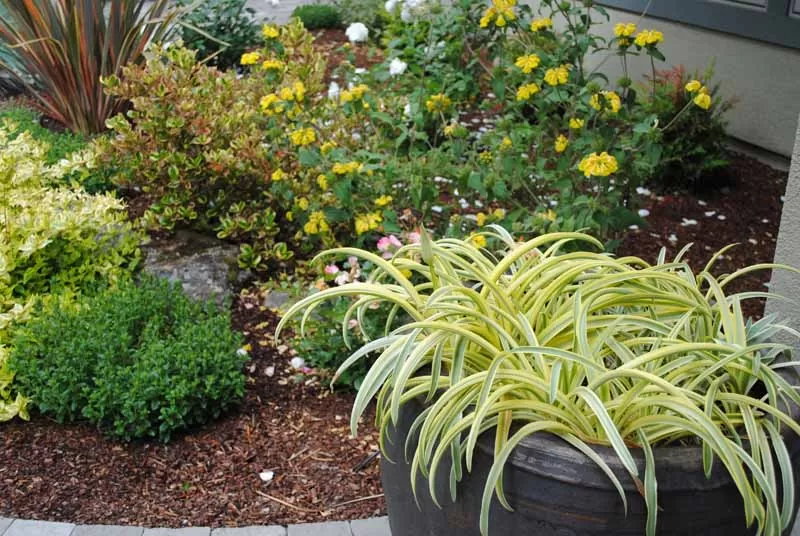 Agapanthus 'Gold Strike' in a dark gray container adding foliage color near a front porch.
Tips for Maintaining Your Grass-Free Oasis
While significantly less work than a lawn, a no-lawn front yard isn’t a no-maintenance yard. Plan for:
- Weeding: Especially in the first year, stay on top of weeds before they get established. Mulch is your best friend here.
- Mulching: A layer of organic mulch (like shredded bark or compost) helps retain moisture, suppress weeds, and improves soil health.
- Pruning: Occasional pruning helps maintain plant shape, size, and encourages bushier growth or more blooms.
- Watering: Even drought-tolerant plants need consistent water during their first season to establish strong root systems. After that, supplemental watering may only be needed during prolonged dry spells.
Creating a no-lawn front yard is a journey, one that allows you to connect with nature, conserve resources, and enjoy a truly unique and beautiful landscape right outside your door.
Transforming your front yard from a thirsty lawn to a vibrant, diverse garden is an incredibly rewarding project. By choosing the right plants, planning your space, and embracing the beauty of diverse foliage and flowers, you can create a welcoming, low-maintenance landscape that benefits both you and the environment.
Have you considered ditching your lawn? What are your favorite no-lawn front yard ideas or plants? Share your thoughts in the comments below! If you enjoyed this article, please share it with fellow garden enthusiasts. And explore more garden inspiration and lawn alternative ideas on our website!