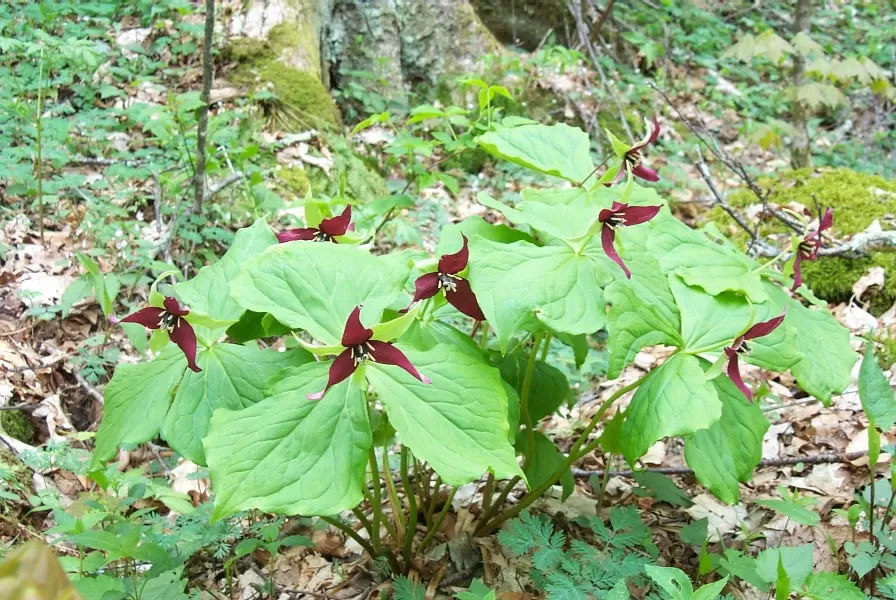
alt text: A close-up of a red Trillium erectum flower, also known as red wake robin, showcasing its vibrant petals and yellow center.
Trillium flowers, with their captivating three-petaled blossoms, are a true springtime treasure. These enchanting woodland plants grace forests and gardens across North America, showcasing a remarkable diversity with over thirty species found in the United States alone. While their elegant simplicity might suggest ease of identification, the world of trilliums is surprisingly complex, even for seasoned botanists. Join us as we delve into the fascinating world of the trillium flower, exploring their unique characteristics, diverse forms, and the importance of responsible cultivation.
Contents
From the vibrant hues of red and yellow to the delicate shades of white and pink, trillium flowers paint a breathtaking tapestry across the forest floor. Their seemingly simple structure – three petals, three sepals – belies a hidden complexity that challenges identification. Variations in color, leaf shape, and flower position create a captivating puzzle for botanists and wildflower enthusiasts alike.
Trilliums are broadly classified into two main groups: pedicellate and sessile. Pedicellate trilliums feature a flower perched upon a stalk, or pedicel, which emerges from the whorl of leaves. The flower can be held erect above the leaves or gracefully nodding beneath them. Sessile trilliums, on the other hand, lack this stalk, with the flower appearing to emerge directly from the leaves.
These trilliums display their blooms on a pedicel, adding a touch of elegance to their appearance. Some species, like the sweet white trillium (Trillium simile), hold their flowers erect, while others, such as Vasey’s trillium (Trillium vaseyi), feature nodding flowers that shyly hide beneath their leaves.
Sessile trilliums possess a unique charm, with their flowers nestled directly within the leaves. Species like the toadshade trillium (Trillium cuneatum) and the yellow trillium (Trillium luteum) exemplify this form, adding a touch of understated beauty to the woodland landscape.
Identifying trilliums can be a rewarding challenge. While the basic three-part structure is consistent, subtle differences in petal shape, color, and flower position can make distinguishing between species difficult. Adding to the complexity, many trillium species readily hybridize, further blurring the lines between distinct forms.
Trilliums face threats from habitat loss and over-collection. If you are captivated by these woodland beauties and wish to cultivate them in your garden, choose responsibly. Support reputable nurseries that propagate trilliums through sustainable methods, ensuring these enchanting flowers continue to thrive for generations to come. Never collect trilliums from the wild.
We hope this exploration of the trillium flower has sparked your curiosity and inspired you to appreciate the intricate beauty of these woodland treasures. Share your own trillium experiences and discoveries in the comments below!
Wichtigste Erkenntnisse: Der Anbau eigener gemischter Blattsalate bietet unübertroffene Frische und Geschmack – direkt aus…
Here's how implementing no-dig techniques can transform your container gardening: Build Richer Soil: Layers of…
Healthy soil is teeming with beneficial microbes that act as a natural defense system for…
Transform your patio into a vibrant, wildlife-friendly oasis. Discover how to create beautiful, low-maintenance container…
Unlock the secret to a beautiful, resilient garden with Sedum & Yarrow blends. Discover why…
Beat the Heat: Discover resilient perennials that thrive in containers during the hottest summer months,…