Harvesting fresh produce straight from your garden, even when snow is falling outside? That’s the magic of indoor hydroponic systems! As someone who loves cooking and needs a constant supply of fresh ingredients, especially herbs, I started looking for a way to garden indoors when winter hit. Concerns about the safety of store-bought produce, like frequent lettuce recalls, also pushed me towards growing my own. This led me on a journey to discover some of the best indoor hydroponic systems available for home gardeners.
Growing hydroponically means cultivating plants in water enriched with nutrients, without using soil. This method often leads to faster growth and can be incredibly rewarding. But with so many options out there, how do you choose the right system for your space and gardening goals?
- Experience the joy of fresh, home-grown produce regardless of the weather.
- Reduce reliance on store-bought herbs and vegetables.
- Discover how different indoor hydroponic systems cater to various needs, from growing herbs to larger vegetables.
- Learn about the features that make a hydroponic system user-friendly and efficient.
Embarking on the path to indoor gardening required finding a system that fit my needs, particularly one that felt “smart” and took some of the guesswork out of the process for a beginner like me. I was looking for specific features to make the experience easier and more successful.
Key Features to Look for in an Indoor Hydroponic System
When searching for the ideal indoor hydroponic setup, I had a few non-negotiable features in mind that I believe are essential, especially if you’re new to hydroponics or just want a more automated experience. These included:
- Automatic Watering or a Sufficient Reservoir: Hydroponics requires consistent access to water and nutrients. A system that handles watering automatically or has a large enough reservoir to minimize frequent refills is crucial for convenience.
- Automatic Lighting: Plants need light to grow. Systems with integrated LED grow lights and timers ensure your plants get the optimal amount of light without you having to remember to turn them on and off daily.
- Ability to Use Your Own Seeds: While proprietary seed pods can be convenient, having the flexibility to use your own seeds is important for long-term sustainability and variety. This allows you to grow exactly what you want and source seeds independently.
Based on these criteria and extensive research, I narrowed down my search to a few popular and highly-regarded systems.
Comparing Popular Indoor Hydroponic Systems
My quest for the perfect indoor garden led me to consider three distinct systems: AeroGarden, Click & Grow Smart Garden, and Gardyn. Each offers a different approach to hydroponic gardening, with its own set of strengths and weaknesses depending on what you want to grow and the space you have.
The AeroGarden Experience
AeroGarden is probably the most widely recognized name when it comes to home hydroponics. It often appears on lists of the best indoor hydroponic systems and is incredibly popular. While I personally own and love a smaller AeroGarden Bounty Elite for growing herbs in my kitchen – it’s fantastic for that specific purpose – I haven’t invested in their larger models like the Farm 12XL or Farm 24XL.
 AeroGarden Bounty EliteMy hesitation with the larger units stems from their structure. They are designed to grow plants vertically but in a way that mimics traditional potted plants growing upwards from a base. This didn’t seem like the most efficient use of vertical space compared to other systems I considered, a point echoed in some reviews I read. While they might be better suited for growing more traditional, bushy vegetables, I felt the spatial limitations might sacrifice the sheer volume of greens I wanted to grow, and I wasn’t keen on managing larger fruiting plants like tomatoes indoors with the added effort of hand-pollination.
The Click & Grow Smart Garden Journey
My first real step into indoor hydroponic gardening was with the Click & Grow Smart Garden, starting with a small 3-pod unit and eventually moving up to the 9-pod model. For someone primarily interested in growing herbs, this system is a dream. It’s sleek, easy to use, and provides a steady supply of fresh herbs for cooking. The Smart Garden 9, priced just under $300, was my main workhorse for years.
 Click & Grow Smart GardenWhile the Click & Grow excels with herbs and looks attractive on a kitchen counter (requiring about 2’w x 1’4”h x 7”d space for the Smart Garden 9), I found its limited space wasn’t quite enough for growing larger quantities or bigger vegetables. My herbs would eventually become too large, sometimes growing into the lights, requiring them to be moved. I personally didn’t have success growing vegetables like tomatoes or peppers, although I know others have. The system uses patented “smart soil” pods containing nutrients, which is convenient but means you buy pods directly from them. The pods are reusable, but I found the filters could develop stubborn mold. A nice feature is that the soil pods make transplanting herbs outside or into containers easy if you choose to.
Despite these limitations for vegetable growing, its ease of cleaning and use makes the Click & Grow potentially the best indoor hydroponic system for herbs for home chefs. However, my goal was to grow more substantial quantities of greens and a wider variety indoors, leading me to look further.
Discovering the Gardyn System
After my experiences and research, I decided to try the Gardyn system. At the time, it felt like a bit of a leap as they were a newer company, but positive stories from the founders and interactions within their user community (the “Gardynrs” Facebook group) gave me confidence. Now, having used it, I truly feel it is the best indoor hydroponic system I’ve found for growing a significant amount of both vegetables and herbs.
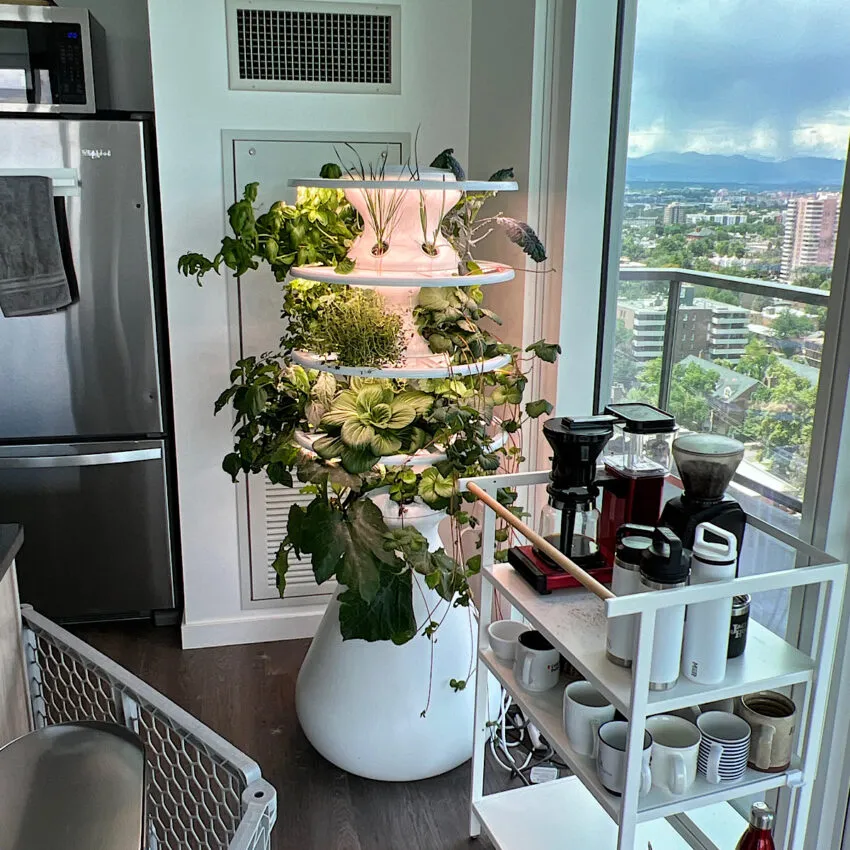
 Gardyn indoor hydroponic system setupThe Gardyn system is visually appealing and utilizes vertical space brilliantly. One unit can grow up to 30 plants at once! The pods come with unique codes the system reads, offering helpful tips on harvesting and care. While the company’s pods are biodegradable (you can plant them directly if you move plants outside), they aren’t designed for dishwasher cleaning for reuse, which I learned the hard way. However, you can easily wash them by hand and use readily available rockwool and your own seeds – a huge plus for independence.
This system truly excels at growing a variety of plants. I fill mine with different types of lettuce and nearly every herb imaginable, typically placing lettuces at the top, herbs in the middle, and bushier plants like celery, swiss chard, mustard greens, and even strawberries on the outer columns. I’ve also successfully grown flowers, peppers, and tomatoes. The vertical design allows for incredible yield in a small footprint.
 Gardyn system overflowing with lush greens and herbs indoorsLook at the sheer abundance from my first Gardyn harvest! The volume of fresh greens this system produces is truly impressive and perfect for constant harvesting for salads and cooking.
 Abundant harvest of lettuce and herbs from a Gardyn indoor gardenMore recently, I experimented with growing strawberries, peppers, and chamomile alongside my staple lettuces and herbs. Sadly, I learned the hard way about bringing new plants indoors – they can introduce pests like spider mites to your hydroponic system! Despite that setback (which wasn’t the system’s fault), the continuous yield is phenomenal.
 Gardyn harvest displayed on a kitchen counterThere are a couple of drawbacks to the Gardyn. After the first month, there’s a membership fee required to keep the automated alerts and some features active. While this fee includes monthly pods, I found I didn’t need the membership after learning the system in the first month, and my plants grew just fine without the app prompts. The system is also larger and more complex than the Click & Grow, making the recommended monthly cleaning more of a chore. Completely harvesting everything and starting over is also a process.
Despite these minor cons, the Gardyn has been a fantastic investment. It took about a month for everything to really get going, and I had some initial sprouting issues (likely due to indoor temperature), but the company replaced the non-sprouting pods for free. The ability to grow such a high volume and variety, combined with the option to use my own seeds, makes me confident I’ll be using this system for years to come.
Making the Right Choice for You
Ultimately, the best indoor hydroponic system depends on your individual goals.
- If you primarily want a simple, attractive kitchen garden for herbs, the Click & Grow Smart Garden is an excellent choice.
- If you’re looking for a system that mimics traditional growing vertically and are interested in potentially larger plants (with spatial considerations), a larger AeroGarden might appeal to you.
- If you want to maximize your yield of greens and a wide variety of herbs and vegetables (that grow above ground) in a vertical space and value the flexibility to use your own seeds, the Gardyn system is, in my experience, hard to beat.
My journey through these systems has shown me that indoor hydroponics is a viable and rewarding way to have fresh produce available all year, adding a touch of green and abundance to your home regardless of the season.
Do you use an indoor hydroponic system? I’d love to hear about your experiences and which system you find works best for your indoor garden! Share your thoughts in the comments below.