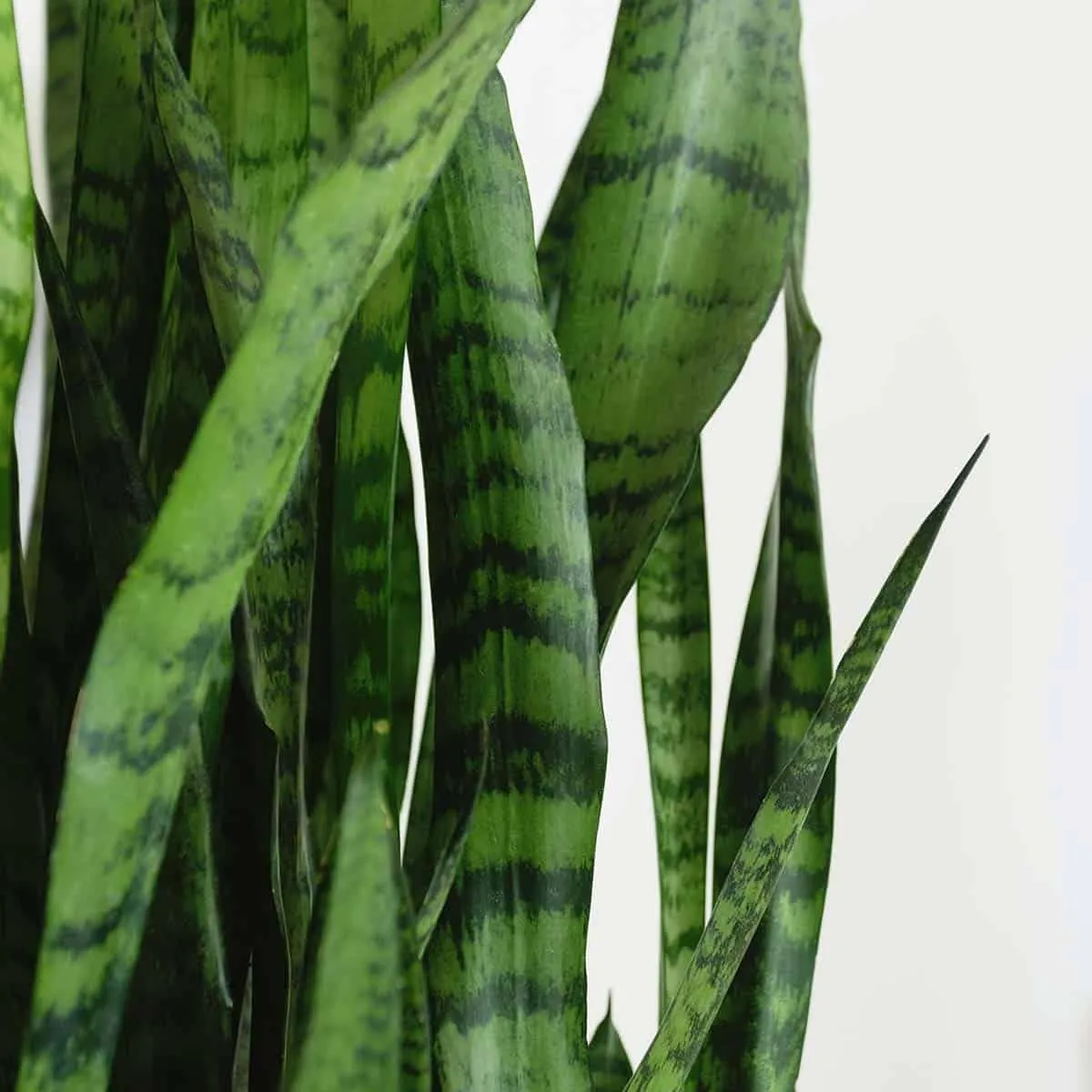
Here’s why the Snake Plant is a minimalist’s best friend:
- Effortlessly stylish with clean, architectural lines.
- Remarkably low-maintenance and forgiving.
- Natural air purifier, enhancing indoor air quality.
- Adds vertical interest without cluttering space.
- Comes in unique varieties to suit different minimalist aesthetics.
Adding greenery to your home brings undeniable life and energy. Plants aren’t just beautiful; they offer incredible benefits, from purifying the air to creating a calming atmosphere. While the lush “urban jungle” look is appealing, it’s not for everyone, especially if you gravitate towards a clean, uncluttered minimalist interior style. Finding plants that complement simplicity without demanding constant attention can feel like a challenge. But what if there was a plant that perfectly embodied the minimalist ethos – sleek, resilient, and undeniably chic? Enter the snake plant, a champion of easy care and the ultimate choice for snake plant minimalist decor.
Why Snake Plants Are Perfect for Minimalist Decor
Snake plants (Sansevieria, now botanically included in the Dracaena genus) are practically tailor-made for minimalist interiors. Their most striking feature is their form: rigid, upright leaves that grow directly from the soil. This creates a strong vertical line, adding height and structure to a room without spreading wide or looking messy.
The leaves themselves often feature graphic patterns or bold, solid colors that fit seamlessly into a clean aesthetic. Unlike many plants with delicate or sprawling foliage, the snake plant’s architectural shape provides a sculptural element, acting almost like living art. They draw the eye upwards and add visual interest through shape and texture rather than overwhelming color or density. Their inherent simplicity and lack of fuss mirror the principles of minimalist design – focusing on essential forms and functions. Plus, they’re known for their air-purifying abilities, contributing to a healthier, more simplified living environment.
Popular Snake Plant Varieties for a Minimalist Look
While the classic Sansevieria trifasciata with its yellow-edged leaves is widely recognized, the world of snake plants offers several varieties that beautifully complement minimalist spaces. Exploring these can help you find the perfect fit for your specific style.
The ‘Laurentii’ is a classic choice, featuring dark green leaves with striking yellow margins. Its bold contrast makes it a statement piece that still maintains clean lines. For a softer, more ethereal feel, the ‘Moonshine’ variety offers broad, silvery-green leaves that seem to glow, adding a touch of understated color. The ‘Bantel’s Sensation’ mentioned in the original text is indeed captivating, with its narrower leaves featuring white vertical stripes, offering a delicate yet graphic texture. If you’re looking for something truly unique, the cylindrical snake plant (Sansevieria cylindrica) with its stiff, round leaves provides an almost abstract, modern look.
 A tall snake plant in a simple pot adding vertical interest to a bright, minimalist room corner.
Snake Plant Care: Keeping It Simple (Just Like Your Decor!)
One of the biggest reasons snake plants are beloved, especially by those new to houseplants or with busy lives, is their incredible resilience. They have earned their reputation as one of the hardest plants to kill, making them a stress-free addition to your minimalist sanctuary. Their needs are basic, fitting perfectly with a low-fuss lifestyle.
Snake Plant Key Information:
- Scientific Name: Sansevieria spp. (Commonly Sansevieria trifasciata, now Dracaena trifasciata)
- Common Name: Snake Plant, Mother-in-Law’s Tongue
- Light: Bright, indirect light preferred; tolerates low light conditions extremely well.
- Water: Allow soil to dry out completely between waterings; highly drought tolerant.
Light Requirements
While snake plants thrive in bright, indirect light, they are famously tolerant of low-light conditions. This makes them incredibly versatile for placement in various spots in a minimalist home, including corners or shelves far from windows where other plants wouldn’t survive. Avoid direct, harsh sunlight, which can scorch their leaves.
Watering Needs
This is where most people go wrong with snake plants – they overwater them. Snake plants store water in their thick, succulent leaves and rhizomes, making them highly drought-tolerant. The key is to let the soil dry out completely between waterings. Depending on the light, temperature, and humidity in your home, this might be anywhere from every 2 weeks to once a month, or even less in winter. When in doubt, wait longer. It’s much easier to revive an underwatered snake plant than an overwatered one.
Soil and Potting
Use a well-draining potting mix, ideally one formulated for succulents or cacti. Ensure the pot has drainage holes to prevent waterlogged soil, which is the primary cause of root rot.
Temperature and Humidity
Snake plants are happy in average room temperatures, typically between 65-80°F (18-27°C). They are not fussy about humidity and tolerate the dry air found in most homes, unlike many tropical plants.
 Sansevieria plant with striking upright leaves in a neutral-toned modern interior setting.
Common Snake Plant Problems and How to Fix Them
For such a tough plant, the list of potential problems is blessedly short. The most common issue is root rot, almost always caused by overwatering.
- Root Rot: Symptoms include mushy, yellowing leaves, often near the base. If you suspect root rot, remove the plant from its pot, trim away any black or mushy roots, and repot in fresh, dry soil. Water very sparingly going forward.
- Pests: Snake plants are generally pest-resistant. Occasionally, mealybugs or spider mites can appear. Wipe leaves with a damp cloth or use insecticidal soap if needed.
Styling Your Snake Plant in a Minimalist Space
The snake plant’s clean lines make it a dream for styling in minimalist homes. Choose simple, geometric pots in neutral colors like white, black, grey, or terracotta to maintain the uncluttered look. A cylindrical or cube-shaped pot enhances the plant’s vertical form.
Place taller snake plants directly on the floor in empty corners to add height and a touch of green without taking up much horizontal space. Mid-sized plants look great on simple plant stands, allowing their architectural shape to be admired. Smaller varieties or young plants are perfect for styling on bookshelves, side tables, or windowsills, adding a touch of life to vignettes without creating visual clutter. Their verticality is excellent for balancing horizontal elements in a room.
 A snake plant in a decorative pot styled on a shelf or side table, perfect for minimalist small space decor.
Conclusion
For anyone embracing minimalist decor, the snake plant offers an ideal blend of style and ease. Its clean lines, sculptural form, air-purifying benefits, and remarkably low-maintenance nature make it the perfect green companion for an uncluttered home. Adding a snake plant is a simple way to bring life, texture, and a touch of nature into your space without compromising your minimalist vision. They are truly a minimalist decor dream come true.
Are you ready to add a snake plant to your collection? Share your favorite snake plant variety or styling tip in the comments below! Explore more easy-care plants and find the perfect simple pots for your minimalist space right here on The Little Garden.