- Unlock the secret to fresh herbs and vegetables right in your home.
- Discover how hydroponic indoor gardens offer a smart solution for year-round harvesting.
- Learn about different systems like Aerogarden, Click & Grow, and Gardyn through real-world experience.
- Gain confidence to start your own soil-less indoor gardening adventure.
As someone who practically lives in the kitchen, constantly reaching for fresh ingredients is second nature. The joy of snipping herbs just moments before adding them to a dish is unparalleled. Yet, living in a climate with distinct seasons, and frankly, growing weary of those recurring lettuce recalls, I longed for a way to keep that fresh-picked goodness going through the colder months. This desire led me down a path I hadn’t explored before: the world of hydroponic indoor gardens. It’s a journey filled with discovery, a little trial and error, and ultimately, immense satisfaction.
Choosing the right system felt daunting at first. I knew I wanted something “smart,” something that could handle some of the basics for a newbie like me. Automatic watering (or at least a large reservoir) and built-in lighting were non-negotiable. Crucially, I also wanted the flexibility to eventually use my own seeds, not be tied forever to proprietary seed pods. After much research, my search for the best hydroponic indoor gardens narrowed down to three popular contenders: Aerogarden, Click & Grow Smart Garden, and Gardyn. Each offered a different approach to growing indoors without soil.
Why Consider Hydroponic Indoor Gardens?
Stepping into the world of hydroponics indoors opens up a fantastic opportunity to enjoy gardening regardless of the weather outside. It allows you to:
- Grow Year-Round: Forget about seasonality. Enjoy fresh produce, from leafy greens to juicy tomatoes, any day of the year.
- Maximize Space: Hydroponic systems, especially vertical ones, allow you to grow a lot in a small footprint.
- Faster Growth: Plants often grow faster in hydroponic setups because nutrients are delivered directly to the roots.
- Reduce Water Usage: Believe it or not, closed-loop hydroponic systems can use significantly less water than traditional soil gardening.
- Skip the Soil Mess: No dirt means cleaner hands and cleaner floors!
For me, the promise of a continuous supply of fresh, safe-to-eat produce was the biggest draw, especially with the concerns around store-bought greens.
What I Looked For in a Smart Hydroponic System
My wishlist for a hydroponic indoor garden system was driven by convenience and future flexibility:
- Automation: Features like automatic lights and watering were essential for ease of use, especially as a beginner.
- Water Reservoir: A good-sized reservoir meant less frequent topping up.
- Grow Lights: Integrated LED grow lights are crucial for plant growth indoors where natural light might be insufficient.
- Seed Flexibility: The ability to plant my own seeds eventually was important for cost-saving and variety.
With these criteria in mind, I explored the options available on the market.
Exploring Popular Hydroponic Indoor Garden Systems
My personal experience with indoor gardening systems began small and grew from there. Here’s a look at the contenders I considered and the ones I ultimately tried.
Aerogarden
Aerogarden is perhaps the most well-known name when you search for a hydroponic indoor garden. While I own and love a smaller Aerogarden Bounty Elite for herbs, I ultimately didn’t choose their larger models (like the Farm 12XL or 24XL) for my bigger indoor gardening goals.
 A counter-top Aerogarden unit with built-in LED grow lights, suitable for growing herbs indoors.
My hesitation came from their design; they grow plants outward from the base, similar to a container garden. While great for traditional plant shapes, it seemed less efficient for maximizing vertical space, which was a priority for me. Reviewers often echoed this point. For growing large vegetables like tomatoes, Aerogarden might be suitable, but I personally wasn’t eager to deal with the mess and pollination needs of large fruiting plants indoors. The smaller units, however, are fantastic for a kitchen counter herb garden.
Click & Grow Smart Garden
My very first foray into hydroponic indoor gardens was with the Click & Grow Smart Garden (starting with a 3-pod, then moving to a 9-pod). For years, this was my go-to for fresh herbs in the winter. If you only need herbs for cooking, the 9-pod model (or even larger like the Smart Garden 27, which is essentially three 9-pod units) is more than sufficient for a kitchen garden.
 A sleek Click & Grow Smart Garden unit on a counter, designed for growing herbs and small plants indoors using smart soil pods.
The Click & Grow is undeniably user-friendly and aesthetically pleasing on a counter. It uses patented “smart soil” pods pre-loaded with nutrients. A major plus is that these pods make it easy to transplant your plants into soil if you want to move them outdoors or into pots. However, I found the system’s limited space a bottleneck for growing anything substantial beyond herbs. Even my vigorous herb plants would eventually get too big and hit the lights. I also struggled with mold developing in the reusable pod filters over time, and cleaning them was a challenge. While some people successfully grow small vegetables like tomatoes or peppers, I didn’t have luck with them in this system. My primary goal was to grow more than just herbs and keep everything indoors year-round, leading me to seek something with greater capacity.
Gardyn
After researching various options and learning from my experiences, I took a chance on Gardyn. At the time, it felt like a bit of a leap with a newer company, but after connecting with other users and learning about the founder’s vision, I felt confident. Now, I truly believe Gardyn is the best hydroponic indoor garden system I’ve used for growing both vegetables and herbs.
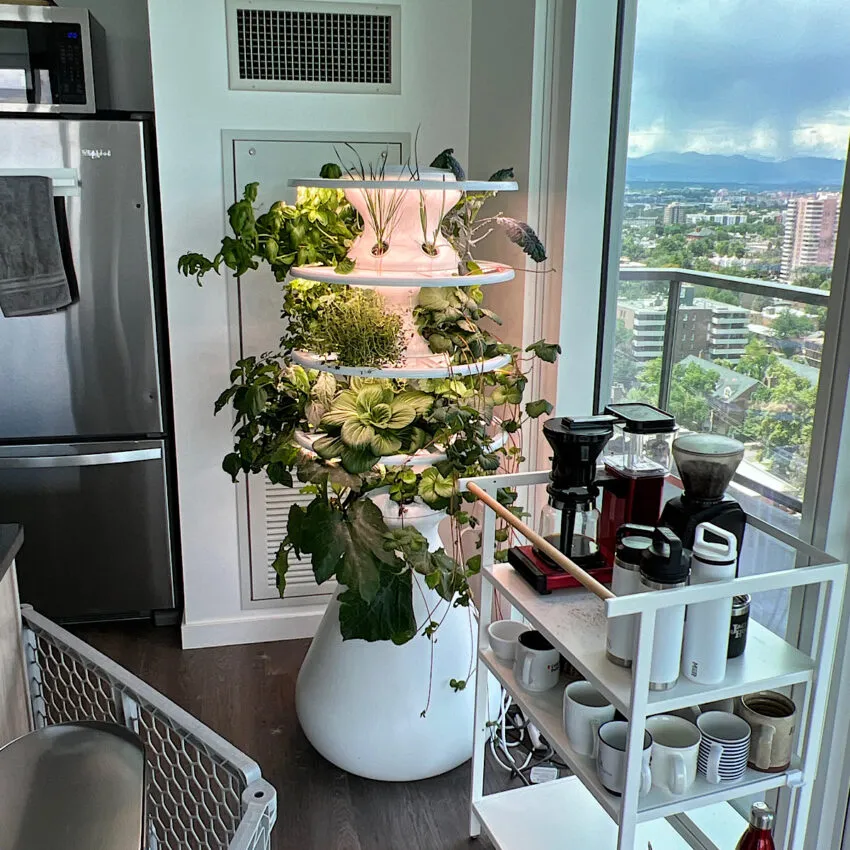
 A tall, vertical Gardyn system showcasing its space-saving design for high-density hydroponic indoor gardening.
The Gardyn system is a beautiful, vertical tower designed for maximum plant density – you can grow up to 30 plants at once in a relatively small floor footprint. The pods (called yCube’s) have codes the system can read, offering helpful tips through an app. The yCube’s are biodegradable, which is great if you decide to transfer plants, but they aren’t designed for dishwasher cleaning (learned that the hard way!). However, a major advantage is that you can easily use your own seeds with rockwool (which the system uses) purchased cheaply, eliminating dependency on buying their specific pods indefinitely.
Growing vegetables works wonderfully. With 30 slots, I dedicate most of the top to different lettuces, the middle section to a variety of herbs, and the lower, outer spots to bushier plants like celery, swiss chard, mustard greens, or even strawberries. I’ve also experimented with growing Fiesta Gitana flowers, tomatoes, and peppers. I’ve even seen other users successfully grow vining plants like beans using support strings. It seems almost anything that grows above ground is possible!
 The author's Gardyn system in a later phase, showing growth of more experimental plants like strawberries, peppers, and chamomile alongside traditional greens.
The sheer volume of greens I harvest from my Gardyn is incredible. Having a constant supply of fresh lettuce and herbs right in my home has been a game-changer for cooking.
 A significant harvest of fresh leafy greens and herbs piled high, illustrating the yield capacity of a Gardyn hydroponic indoor garden.
While there are many pros, there are a couple of cons. After the first month, there’s a membership fee to keep the automated alerts and features working. I found I learned enough in the first month that I didn’t need the ongoing prompts, and my plants thrived without the membership. However, the membership does include 10 pods per month, which could be valuable depending on your growing cycle (my first 30 pods lasted about 4 months). Cleaning the Gardyn system monthly, as recommended, is more involved than cleaning a smaller unit like the Click & Grow, but it’s manageable. Restarting with all new pods also takes some time.
Despite these minor drawbacks, my experience with Gardyn has been overwhelmingly positive. It took about a month to really get going, and I had some pods that didn’t sprout initially (which the company replaced for free), but once it’s established, the yield is fantastic. I’m confident this system will be a long-term fixture in my home, providing me with fresh, homegrown goodness whenever I need it.
Conclusion
Diving into the world of hydroponic indoor gardens has completely transformed my relationship with fresh produce, especially during the months when outdoor gardening isn’t possible. From small herb gardens to large-scale vertical systems, there’s a hydroponic solution for almost any space and need. My journey through using different systems has shown me that finding the “best” one really depends on your personal goals – whether you want a simple herb garden, space-saving high yield, or maximum flexibility. For me, the Gardyn system has proven to be the ideal fit for growing a diverse and abundant harvest of both vegetables and herbs right in my home.
What about you? Have you tried any hydroponic indoor gardens? I’d love to hear about your experiences and recommendations in the comments below! If you found this article helpful, consider sharing it with fellow garden enthusiasts. You can also explore more indoor gardening content on Thelittle.garden!