- Capture the essence of summer with a vibrant indoor landscape.
- Learn how to design and build a beautiful, living beach scene in a glass container.
- Discover the best plants and decorative elements for your summer-themed terrarium décor.
- Get step-by-step guidance on creating drainage, layering sand, and planting.
- Unlock creativity with ideas for hardscape, shells, sand art, and miniature scenes.
Summer is a time of sun-kissed days, warm breezes, and the allure of the coast. While not everyone lives near the beach, you can capture that carefree, vibrant energy right in your home with stunning summer-themed terrarium décor. Imagine a miniature world under glass, complete with sandy shores, lush “dunes,” and sparkling decorative elements that evoke memories of seaside getaways. Building a beach-themed terrarium isn’t just a craft project; it’s an opportunity to create a living piece of art that brings a slice of summer joy indoors, perfect for brightening any room. Let’s dive into how you can make your own little piece of paradise.
Designing Your Coastal Oasis
Before you even gather your materials, take a moment to visualize your perfect summer scene. What beach inspires you? Is it a tropical paradise with turquoise waters and bright white sand, or a more rugged coastline with earthy tones and driftwood? Having a specific place or feeling in mind will guide your design choices, from the color palette of your sand and stones to the style of plants you select.
Consider the overall mood you want to create. Do you prefer a minimalist look focusing on natural textures and subtle colors, or a playful scene complete with miniature beach chairs and tiny umbrellas? Your design can range from elegantly simple to wonderfully whimsical.
 Beautiful turquoise waters and white sand beach inspiring a tropical summer terrarium theme.
Choosing Your Summer Decor Elements
The beauty of a summer terrarium lies in its ability to incorporate various beach-inspired elements.
- Hardscape: Think beyond just rocks. Driftwood pieces can mimic ocean-tossed logs, while interestingly shaped stones can represent cliffs or scattered pebbles. Hardscape is crucial for adding dimension and scale to your miniature landscape.
- Sand: The foundation of your beach! You can use fine craft sand or aquarium sand. Experiment with different colors – classic white, soft beige, or even striking black or colored sand for a dramatic effect. Layering different colors can create a fun sand art feature.
- Shells: If you have shells collected from past vacations, this is a perfect way to display them. Remember to clean them thoroughly. Avoid collecting new shells from live beaches to protect the environment. A few well-placed shells can add authentic detail.
- Other Beach Treasures: Sea glass, small smooth pebbles, or even dried starfish can enhance the theme.
- Figurines & Miniatures: For a playful touch, add tiny sunbathers, a miniature lighthouse, palm trees, or even pirate figures. These add personality and narrative to your scene.
 Assortment of seashells for decorating a summer beach-themed terrarium.
Preparing Your Terrarium Materials
Once you have your vision, gather all your supplies. You’ll need a clear glass container (open-top is best for most beach-themed plants), drainage material, substrate (soil), sand, your chosen plants, decorative elements, and tools like long tweezers or a small shovel.
Cleaning is a crucial first step. Wash your glass container thoroughly to remove any dust or residue. Clean any hardscape pieces, shells, or decorative items you plan to use. This helps prevent introducing unwanted contaminants into your miniature ecosystem. Make sure everything is completely dry before you begin assembling.
 Collection of materials including glass container, sand, stones, and tools for building a beach terrarium.
Building the Foundation: Drainage and Sand
Open terrariums, unlike closed ones, require a drainage layer because they don’t have drainage holes like regular pots. This layer prevents water from pooling at the bottom and causing root rot.
Creating the Drainage Layer
Pour about an inch or two of drainage material into the bottom of your container. Suitable options include gravel, lava rock, or LECA clay balls. This false bottom provides space for excess water to collect away from plant roots.
 Lava rock gravel for creating a drainage layer in an open terrarium.
 Close-up of a lava rock drainage layer being added to a glass terrarium container.
Laying the Sand
Next, add your sand layer. This will form your “beach.” You can create a simple flat beach or sculpt small slopes and bays. If you want to try sand art, carefully layer different colors of sand. Use a piece of cardboard or plastic wrap to hold back other layers while you pour, or simply use a spoon or funnel for precision. Build up the sand in the area where you want your beach to be, keeping in mind that the planted area will need more depth for the soil and plant roots.
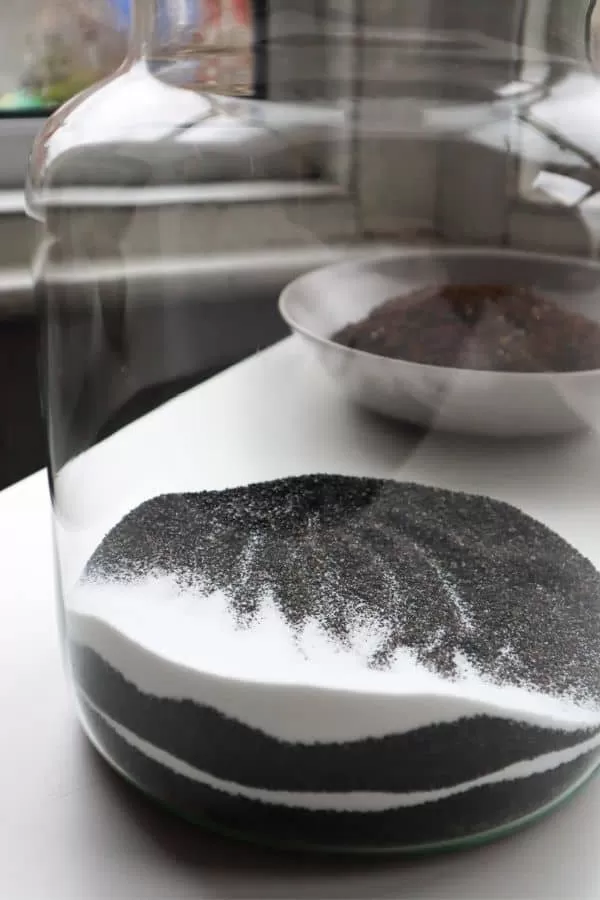 Layered black and white aquarium sand creating a decorative beach effect in a terrarium base.
Adding the Lush Landscape: Substrate and Hardscape
Now it’s time to add the soil (substrate) for your plants. The type of substrate depends on the plants you’ve chosen.
- For tropical plants: Use a light, airy mix that drains well but retains some moisture. A blend with perlite, orchid bark, and a bit of earthworm castings works well.
- For succulents/cacti: You’ll need a gritty, fast-draining mix specifically formulated for arid plants.
Pour the substrate into the section of the terrarium where you plan to place your plants. Ensure the substrate is deep enough to comfortably hold the plant roots.
This is also a good time to place any larger hardscape elements like rocks or driftwood. Anchor them firmly into the substrate before you start planting to ensure they are stable. If you’re creating a cliff face or rocky outcrop, position your stone now.
 Chunky terrarium substrate mix suitable for tropical plants.
 Placing a large Gobi stone hardscape element into the terrarium substrate.
Choosing and Planting Your Summer Flora
Selecting the right plants is key to a thriving summer terrarium. For an open terrarium, choose plants that tolerate similar light levels and humidity and don’t mind slightly drier conditions than closed terrariums. Succulents and air plants are popular choices for beach themes due to their drought tolerance, but small tropical plants can also work if you’re careful with watering and humidity.
When planting, gently remove the plant from its nursery pot and loosen the roots. Dig a small hole in the substrate with your finger or a tool and carefully place the plant. Start with larger plants and then add smaller ones. Use long tweezers or a stick to position plants and smooth the soil around them, being extra careful not to disturb your sand design.
 Using a long terrarium tool to carefully plant small plants around delicate sand layers.
Here are some plants often used in terrariums that could fit a summer theme:
- Pink Aglaonema
- Scientific Name: Aglaonema (various cultivars with pink)
- Common Name: Chinese Evergreen (Pink varieties)
- Zone: Indoor plant (Suitable for Zone 9-11 if grown outdoors)
- Light: Low to medium indirect
- Humidity: Moderate to high
- Water: Keep soil evenly moist but avoid sogginess.
- Goeppertia kegeljanii
- Scientific Name: Goeppertia kegeljanii (formerly Calathea musaica)
- Common Name: Network Calathea, Mosaic Plant
- Zone: Indoor plant (Suitable for Zone 11+)
- Light: Medium to bright indirect
- Humidity: High
- Water: Keep soil consistently moist, use distilled or filtered water.
- Tillandsia capitata
- Scientific Name: Tillandsia capitata
- Common Name: Air Plant
- Zone: Indoor plant (Suitable for Zone 9-11)
- Light: Bright indirect
- Humidity: Moderate to high
- Water: Mist or soak 1-2 times per week, allow to dry completely between waterings.
- Peperomia tetraphylla ‘Hope’
- Scientific Name: Peperomia tetraphylla ‘Hope’
- Common Name: Peperomia ‘Hope’
- Zone: Indoor plant (Suitable for Zone 10-12)
- Light: Low to medium indirect
- Humidity: Moderate
- Water: Allow soil to dry slightly between waterings.
- Nephrolepis cordifolia
- Scientific Name: Nephrolepis cordifolia
- Common Name: Lemon Button Fern, Erect Sword Fern
- Zone: Indoor plant (Suitable for Zone 8-11)
- Light: Medium indirect
- Humidity: High
- Water: Keep soil consistently moist.
 Pink Aglaonema and Calathea musaica plants newly planted in a summer-themed terrarium.
 Small Peperomia Hope plant being added to the terrarium landscape.
Adding the Finishing Touches
With the plants in place, it’s time for the fun part – adding your decorative elements! Carefully arrange your shells on the sandy beach area, place your driftwood pieces, and position any miniature figures. This is where your personality truly shines in the summer-themed terrarium décor. Remember, sometimes less is more; don’t overcrowd the scene.
Air plants, like Tillandsia capitata, don’t need to be planted in soil and can be simply placed on rocks, sand, or driftwood.
 Arranging seashells on the sandy beach area of the finished terrarium.
 Placing a spiky Tillandsia capitata air plant as a decorative element in the terrarium.
Take a step back and assess your design. Do you need a little more greenery or perhaps another shell to balance the look? Minor adjustments now can make a big difference. Adding small pieces of fern fronds can create a grassy, dune-like texture.
 Adding Lemon Button Fern fronds to provide additional green texture and fill space in the terrarium.
Once you’re happy with your miniature summer world, give the plants a gentle watering using a spray bottle. This allows for more precise watering and helps keep your beautiful sand layers undisturbed. Place your finished summer-themed terrarium décor in a spot that receives appropriate light for your chosen plants, usually bright, indirect light. Water again when the soil feels dry to the touch, much like you would with other houseplants.
 Completed summer beach-themed terrarium featuring plants, sand, stone, and shell decor.
Creating a summer-themed terrarium décor is a wonderfully rewarding project that brings the joy and beauty of the seaside into your home. With a little planning and creativity, you can build a miniature escape that brightens your space and reminds you of sunny days all year round.
Making your own summer-themed terrarium décor is a fantastic way to express your creativity and enjoy the relaxing process of bringing a miniature landscape to life. We hope this guide inspires you to create your own piece of summer paradise. Have you built a beach or summer-themed terrarium? Share your ideas and experiences in the comments below – we’d love to hear about your unique creations! Explore more terrarium ideas and plant guides on our website for endless inspiration.