- Okra thrives in warm weather and needs plenty of sun.
- Choose a large container and well-draining soil.
- Give plants adequate space to grow tall and branch out.
- Water consistently, but okra is surprisingly drought-tolerant once established.
- Harvest pods when small and tender for the best flavor and texture.
Dreaming of fresh okra pods straight from your garden, but limited on space? The good news is you don’t need acres to enjoy this prolific, heat-loving vegetable. Okra container planting is a fantastic way to bring this Southern staple to your patio, balcony, or small backyard garden. My own adventure with growing okra in containers started unexpectedly during a time when we were all exploring new hobbies at home. It was a delightful surprise to find how well these tall, striking plants adapted to pot life, rewarding us with delicious harvests and beautiful blooms. Let’s dig into how you can achieve similar success with okra in your own little garden pots.
Why Grow Okra in Containers?
Container gardening offers incredible flexibility. You can place your plants exactly where they’ll get the sun they need, move them if conditions change, and control the soil environment more easily. For okra, which loves heat and sunlight, this is a significant advantage, especially in climates with unpredictable weather or shorter growing seasons. Growing okra in pots also makes it easier to manage potential pests and diseases compared to large in-ground beds.
Choosing the Right Container and Soil
Okra plants can grow quite tall – sometimes 5-6 feet or more! They need a sturdy base and enough room for their roots to develop. Aim for containers that are at least 10-12 inches in diameter and depth, though larger is always better. A 5-gallon bucket or a half whiskey barrel works wonderfully. Ensure your container has ample drainage holes; okra dislikes soggy feet.
Fill your chosen pot with a high-quality potting mix. A good mix provides drainage while retaining enough moisture and nutrients. You can enhance a standard potting mix by adding some compost for extra fertility and moisture retention. Avoid using heavy garden soil, as it compacts easily in containers, hindering root growth and drainage.
Starting Your Okra Seeds
Okra is a warm-season crop, meaning it absolutely loves heat. Don’t rush planting. Wait until all danger of frost has passed and nighttime temperatures consistently stay above 60-65°F (around 15-18°C). In cooler climates or to get a head start, you can sow seeds indoors 3-4 weeks before your last expected frost.
Sow okra seeds about ½ to 1 inch deep directly into your container. If starting multiple seeds in a large pot, space them out according to the plant spacing recommendations (we’ll cover that next). Once seeds germinate and seedlings emerge, thin them to the strongest one or two plants per container, depending on its size. Remember, even in pots, these plants need their space to thrive.
Sunlight Requirements
Sunlight is non-negotiable for productive okra. These plants are sun worshippers and need a minimum of 6-8 hours of direct sunlight daily to flower and produce pods abundantly. When considering okra container planting, choose the sunniest spot available on your patio, deck, or in your garden. If you’re starting seeds indoors, place them near a sunny window or under grow lights until it’s warm enough to move them outside.
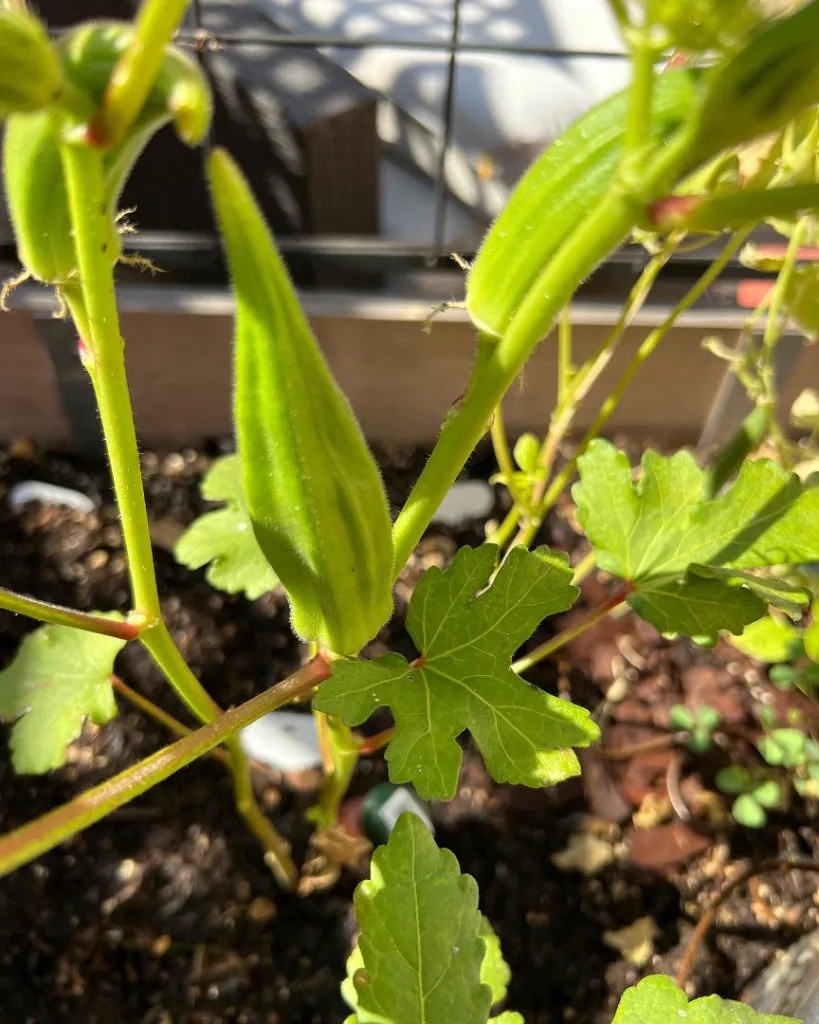 Okra plants growing tall in raised beds alongside other vegetables
Watering Your Container Okra
While okra is known for its drought tolerance, especially once established, container plants dry out much faster than those in the ground. Consistent moisture is key for healthy growth and continuous production. Water deeply whenever the top inch of soil feels dry. In the heat of summer, this might mean watering daily. However, be careful not to overwater, as this can lead to root rot. The good drainage of your potting mix is crucial here. The original article noted okra’s surprising resilience during a Los Angeles drought and heatwave, a testament to its ability to handle less-than-ideal water situations once it has a strong root system.
Feeding Your Okra Plants
Okra are considered moderate to heavy feeders, especially when grown in containers where nutrients can leach out. Incorporating compost into your potting mix is a great start. You can also feed your plants every 3-4 weeks with a balanced liquid fertilizer or a fertilizer formulated for vegetables. Follow the package instructions carefully to avoid over-fertilizing.
The original article mentioned companion planting okra with nitrogen fixers like beans or peas. While this is easier in larger raised beds or multiple containers placed together, the principle applies. Ensuring your container soil is rich in nitrogen will support the vigorous leafy growth needed for good pod production. Placing your okra containers near pollinator attractors like lavender can also benefit flowering and subsequent pod set.
Spacing Your Okra Plants
Even in containers, giving okra plants adequate space is important. If you’re planting multiple okra plants in a very large pot or trough, aim to space them at least 12-18 inches apart. In smaller containers (10-12 inches), it’s best to grow only one plant per pot. Adequate spacing ensures good air circulation, reducing the risk of fungal diseases, and gives each plant room to develop its full potential, both above and below the soil line.
 Close-up view of multiple okra plants growing in a large raised bed or container, showing leaf structure
Identifying and Harvesting Okra
Okra plants produce beautiful, hibiscus-like flowers before forming pods. The pods grow rapidly after the flower fades. Timing your harvest is perhaps the most critical step for enjoying tender, delicious okra. Pods are typically ready to harvest just a few days after the flower drops, when they are 2-4 inches long.
Look for pods that are still tender and snap easily when bent. The original article shared a valuable lesson: larger pods become tough and fibrous, even with cooking. Using a sharp knife or pruning shears, cut the stem just below the cap. Harvesting frequently, ideally every day or two once production begins, encourages the plant to produce more flowers and pods throughout the season. Don’t be discouraged if your first few pods are smaller or if you miss a harvest and find giant, tough ones – it’s all part of the learning process!
 Two very large, overgrown okra pods on the plant, demonstrating what happens if harvest is delayed
Okra Plant Profile
Here’s a quick overview of the plant you’ll be growing:
- Scientific Name: Abelmoschus esculentus
- Common Name: Okra, Lady’s Finger, Gumbo
- USDA Hardiness Zones: Typically grown as an annual in zones 2-11; can overwinter as a perennial in zones 9-11.
- Light: Full sun (6-8+ hours daily)
- Humidity: Tolerant of high humidity.
- Water: Moderate; allow soil to dry slightly between waterings, but don’t let it become bone dry.
Your Okra Harvest: What to Expect
Okra plants are prolific producers once they start, especially if you harvest regularly. You might not get a huge yield from a single plant, which is why planting several, even in multiple containers, is often recommended if you want enough for a meal. My own experience mirrored this; one plant was fascinating but didn’t provide enough for a recipe, while having a few more made a significant difference.
Okra typically produces throughout the warm season until temperatures cool significantly or frost arrives. In warmer climates (Zones 9-11), okra can sometimes continue producing into the fall or even overwinter as a perennial.
 Okra flowers blooming on the plant, with a lavender plant visible in the background
Okra container planting is a rewarding experience, offering fresh pods and a taste of summer right on your doorstep. With the right container, plenty of sun, consistent watering, and timely harvesting, you’ll be enjoying your homegrown okra in no time.
Have you tried growing okra in containers? Share your tips and experiences in the comments below! If you’re looking for more guides on container gardening, explore other articles on Thelittle.garden for inspiration.